Ukraine Secures Significant Gains in Zaporizhzhia Amidst Mounting Russian Disinformation
Ukrainian forces have achieved their largest territorial gains in two and a half years, recapturing over 200 square kilometers in Zaporizhzhia in just five days. This significant breakthrough comes amidst a persistent pattern of exaggerated and false claims from the Russian Ministry of Defense, which are increasingly being contradicted by both battlefield realities and pro-Russian military analysts, highlighting a widening credibility gap.

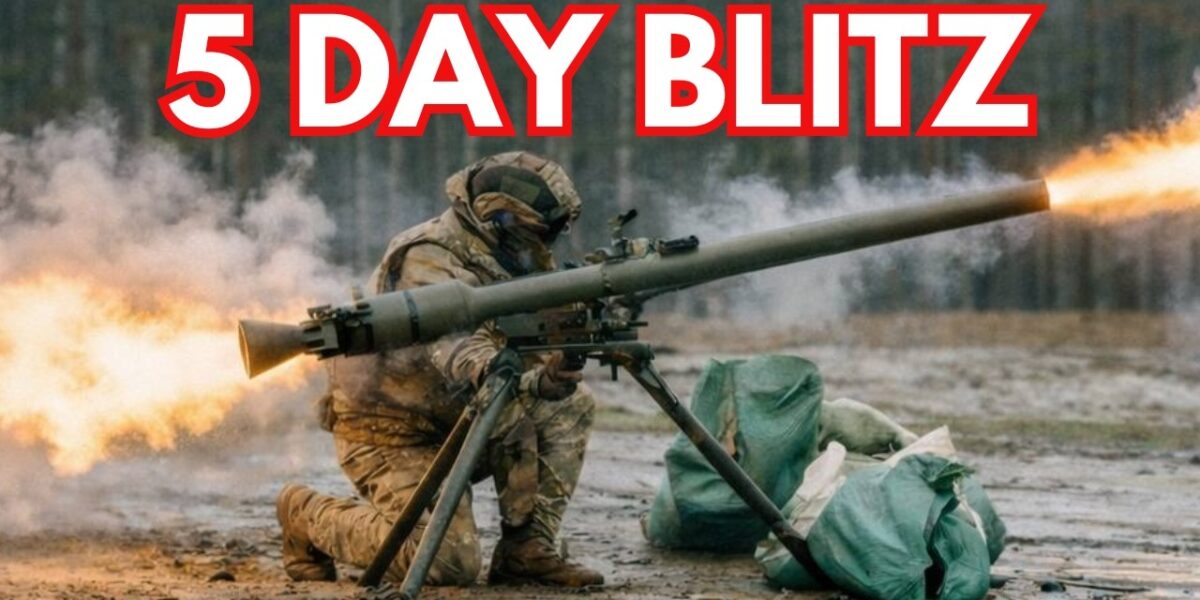
Ukraine’s Biggest Battlefield Gain in 2.5 Years: 200 Sq Km Retaken
In a significant turn of events on the Ukrainian front, Kyiv’s forces have achieved their most substantial territorial gains in two and a half years, recapturing over 200 square kilometers from Russian control in just five days. This breakthrough, primarily concentrated in the Zaporizhzhia region, not only marks a tactical victory for Ukraine but also casts a harsh spotlight on the persistent pattern of exaggerated and often false claims emanating from the Russian Ministry of Defense regarding battlefield successes.
The swift advance, which saw Ukrainian units reclaim an area almost equivalent to all Russian gains for the entire month of December, is the most extensive land retaken by Kyiv’s forces in such a short period since the June 2023 counter-offensive. This resurgence underscores Ukraine’s capability to exploit vulnerabilities and execute effective counter-offensive operations, even as the broader conflict grinds on.
The Zaporizhzhia Breakthrough: A Detailed Look
The recent Ukrainian offensive has unfolded across multiple sectors, with a particular focus on Western Zaporizhzhia. Initially, Russian military bloggers, such as Rybar, acknowledged a sharp complication in the situation, noting that “Ukrainian formations have launched an offensive on a sector approximately 20 km wide.” This assessment, while from a pro-Russian source, validated the scale of Ukraine’s renewed aggression.
Crucially, the offensive has targeted areas along the E105 highway, a vital stretch of road running south between Primorsk and Steepenisk. Ukrainian assault troops deployed in Plavni successfully cut off Russian units in Primorski from their main positions in Steepenisk. This tactic, reminiscent of previous Ukrainian successes, aims to isolate Russian forces, severing their lines of communication and disrupting their ability to receive reinforcements or retreat. Furthermore, Ukrainian strikes across river crossings, including one north of Vasylivka, suggest a deliberate strategy to further isolate the battlefield and cripple Russian resupply efforts in key areas like Kamyansky, Plavni, and Primorski.
While the exact strength of Ukrainian forces accumulated in these newly liberated villages remains a question, the impact on Russian positions has been undeniable. The operation demonstrates Ukraine’s continued commitment to reclaiming occupied territories and employing sophisticated maneuver warfare to outwit their adversaries.
The Shadow of Russian Disinformation: A Persistent Pattern
A recurring and increasingly glaring theme throughout the conflict has been the stark contrast between official Russian battlefield reports and the reality on the ground. The recent Ukrainian gains in Zaporizhzhia serve as yet another powerful illustration of this phenomenon, where official Russian claims of success are often swiftly contradicted by subsequent events or even by pro-Russian military analysts.
The Zaporizhzhia Front: Claims and Contradictions
Just days before Ukraine’s significant advances, the Russian Ministry of Defense (MoD) on February 15th boldly claimed to have captured Zapazn, Maldenifka, and Primorski in the Zaporizhzhia direction. These claims were presented as concrete territorial acquisitions. However, within a mere 24 hours, even a prominent Russian military blog like Rybar began to walk back these assertions. Rybar reported that “recent reports about the liberation of Maldenifeka proved false,” and that “the situation in Primorski has significantly worsened.” They further suggested that earlier claims of “liberation” for places like Rickny were likely based on minimal incursions rather than stable control, describing these as “territories taken on credit.”
This rapid refutation, coming from within the pro-Russian analytical sphere, highlights a growing disconnect between official narratives and the operational realities experienced by soldiers on the ground. Such discrepancies erode credibility and complicate any accurate assessment of the conflict’s progression.
Kupyansk: A Case Study in Isolation and Misinformation
The Kupyansk sector in the northeast offers another compelling example of Russia’s exaggerated claims being exposed. For months, Russian reports, often “completely detached from reality,” spoke of significant advances, including the improbable capture of Kupyansk-Vuzlovy. Yet, recent updates paint a very different picture.
Ukrainian defense forces have now established firm control over Kupyansk, with only a few dozen Russian occupiers reportedly trapped inside a single city block. According to Viktor Trehubov, spokesperson for Ukraine’s joint forces, these surrounded Russians are surviving on airdropped supplies, unable to mount any active operations. Ukrainian forces detected only 22 Russian radio call signs in the city on February 15th, indicating a severely depleted and isolated presence. These remaining Russian soldiers are concentrated in a specific quarter of tall buildings, dug in across high-rises, their only lifeline being FPV drones delivering food, water, and ammunition – a far cry from the victorious narrative once propagated by Moscow.
The Kupyansk operation has become a template for Ukrainian tactics: allowing Russian forces to infiltrate, then planning deliberate, heavily resourced clearance operations to systematically eliminate or isolate them. The near silence from Russian assessments on Kupyansk in recent months, compared to earlier bombastic claims, speaks volumes about the true situation.
Chasiv Yar: Repeated ‘Liberation’ Claims Unravel
Perhaps one of the most egregious examples of Russian disinformation pertains to the town of Chasiv Yar, a strategic location just a few kilometers west of Bakhmut. The battle for Chasiv Yar reportedly began in April 2024. Yet, incredibly, the Russian Ministry of Defense celebrated its “liberation” on July 31st, 2024 (likely a transcript typo for 2025 given the context), and then again, bafflingly, in August 2024, as if the first claim had never occurred.
Months later, even Rybar, the pro-Russian source, admitted that the situation in Chasiv Yar remains “one of the most difficult” due to “false reports about the situation, including those made many months ago.” Rybar clarified that Ukrainian forces “maintain a presence in the western part and are even attacking towards the city center,” directly contradicting the repeated “liberation” claims. This pattern of announcing a victory that simply hasn’t materialized, and then repeating the false claim, highlights a deep-seated issue within Russia’s information apparatus.
Navigating the ‘Grey Zone’ of Warfare
The complexity of the modern battlefield in Ukraine is further compounded by the prevalence of what military analysts refer to as “grey zones.” These are areas where front lines are not clearly defined, and both Russian and Ukrainian forces maintain multiple, often intermingled, positions. This dynamic makes precise territorial tracking “impossible,” as described by multiple experts and soldiers from both sides.
In these grey zones, such as the Dopilia area in Zaporizhzhia, it is inaccurate to visualize neat lines separating opposing armies. Instead, the landscape is a patchwork of contested positions, where small groups of soldiers from either side may be entrenched. Ukraine has increasingly adopted a counterattack system tailored to these conditions. This involves deliberate clearing operations to identify and systematically remove Russian forces while also locating and resupplying or evacuating their own units that may be deep within these contested areas. This nuanced approach requires meticulous intelligence, flexibility, and a deep understanding of the local terrain.
Ukrainian Strategy and Soldier Perspectives
The recent advances and the ongoing fight reflect evolving Ukrainian strategies and the relentless determination of its soldiers. General Oleksandr Syrskyi, Ukraine’s top military commander, has articulated a balanced approach, stating that while the “top priority is liberating territories,” it is equally crucial to “preserve the lives of our soldiers and maintain the combat readiness of units and subunits.” This perspective contrasts somewhat with recent statements from Ukrainian Defense Minister Fedorov, who has frequently emphasized the high number of Russian casualties, citing figures of 50,000 killed or seriously wounded every month.
Insights from the front lines, such as those shared by a Ukrainian soldier known as “Bachmoot Demon,” paint a vivid picture of the intense fighting. He describes the Zaporizhzhia front as “very tense,” noting that the enemy is “throwing everything they have at the attacks,” attempting to consolidate positions in abandoned and destroyed villages. Despite the immense difficulty, with expectations that the fighting “will get even harder in the spring and summer,” the soldier affirmed that “we’ve made progress on two fronts and our forces are advancing.” This sentiment underscores the resilience and offensive spirit of Ukrainian forces, even in the face of a perceived stalemate in some tactical areas.
The Broader Landscape: Challenges and Casualties
While Ukraine celebrates its recent gains and exposes Russian misinformation, the broader conflict continues to present significant challenges. The town of Constantinivka, for instance, remains under “real pressure” from Russian forces.
Pressure on Constantinivka
According to military analyst “Plyifra,” Russian forces are relentlessly attacking areas like Ilanivka and Baristo in waves of small groups, many of which are destroyed, but some manage to reach their objectives. Constantinivka, a critical hub of Ukrainian defense in the region, is facing severe logistical strains. High Russian drone activity makes resupply extremely hazardous, often necessitating the use of Unmanned Ground Vehicles (UGVs) or arduous 10-kilometer walks for soldiers, constantly stopping for shelter. This situation, where even “manned vehicles” are becoming too risky, raises concerns about the sustainability of defense in this vital area, as “the more pressures applied on the logistics, the less effective the Ukrainian defense will be.”
Rising Russian Casualties Amidst False Narratives
Despite Russia’s overall slow and steady territorial advances in some areas, the human cost to their military has been staggering. December and January recorded some of the highest casualty-producing months for the Russian military since the full-scale invasion began, with figures reportedly reaching around 35,000 killed or seriously wounded per month. This spike in casualties coincides directly with a significant uptick in false Russian reporting.
The confluence of these two trends – increasing losses and escalating disinformation – suggests a potential strategy by Moscow to mask its battlefield struggles. Observers speculate that this narrative manipulation might be aimed at appealing to a Western audience, influencing ongoing negotiations, or simply maintaining morale within Russia. However, the disconnect is evident even among Russian soldiers, who reportedly express frustration and confusion when comparing official MoD reports with the harsh realities they face on the front lines.
The Systemic Issue: A War of Perceptions
The persistent pattern of “lying about progress on the battlefield” appears to be a systemic issue within the Russian military and political apparatus. This problem, arguably starting “at the bottom and ending at the top,” reflects a failure to acknowledge and address operational realities. Instances like the Kupyansk commander receiving awards despite his unit’s false claims of capture highlight a culture where accountability for misinformation is lacking, and indeed, fabrication might even be rewarded.
This pervasive disinformation likely skews the understanding of the war among Russia’s senior leadership, including President Putin. If the information reaching the highest echelons is a distorted, overly optimistic view of the front line, it could significantly impact strategic decision-making, including approaches to ongoing peace negotiations. The inability or unwillingness to “button up their reporting” suggests a deeper structural problem that prioritizes narrative control over factual accuracy, with potentially detrimental long-term consequences for Russia’s military efficacy and credibility.
Support on the Ground: The Role of Aid
Amidst the intense fighting and complex informational landscape, the vital role of logistical support and humanitarian aid cannot be overstated. Organizations like “Cars for Ukraine” exemplify the critical efforts to equip front-line units with reliable vehicles. Soldiers often acquire vehicles through personal purchases or donations, but these frequently come with hidden defects or are overvalued, breaking down before even a single mission can be completed. “Cars for Ukraine” addresses this by sourcing quality, fully serviced vehicles with essential modifications like winter tires and added armor, ensuring they are “ready to roll” for evacuating wounded, resupplying troops, and maintaining operational mobility.
These grassroots efforts, funded by public contributions, are indispensable in bolstering Ukrainian forces and mitigating the logistical challenges that can directly impact battlefield effectiveness and soldier safety.
Conclusion
Ukraine’s recent recapture of 200 square kilometers in Zaporizhzhia represents a significant tactical achievement, demonstrating its continued capacity for effective counter-offensives. This victory, however, is set against a backdrop of escalating Russian disinformation, where official claims are increasingly contradicted by both independent analysis and pro-Russian sources. While Ukraine celebrates crucial gains and adapts its strategies to the “grey zone” realities of the conflict, it also faces immense pressure in key areas like Constantinivka, highlighting the enduring logistical and combat challenges. The systemic nature of Russia’s false reporting not only impacts the perception of the war internationally but also raises serious questions about the internal understanding of the conflict within Moscow’s leadership, underscoring the complex and often deceptive nature of the ongoing struggle.
Source: Ukraine’s Biggest Victory in 2.5 Years: 200 SQ KM Retaken (YouTube)

Related Articles
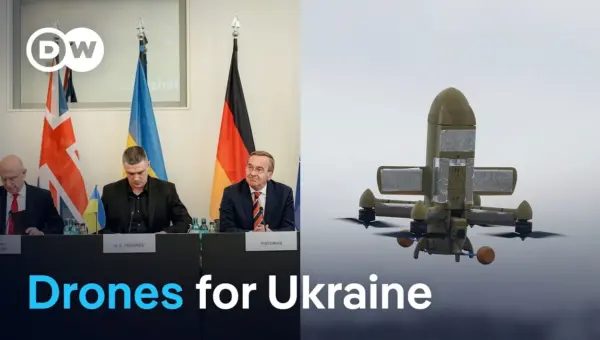
UK Pledges 120,000 Drones to Ukraine in Major Aid Package
Britain has pledged 120,000 drones to Ukraine, marking its largest aid package of its kind, during a meeting of the Ukraine Defense Contact Group in Berlin. The meeting highlighted both strong international solidarity and ongoing challenges in aid delivery, as Germany also boosts its own defense capabilities.


Russia’s War Costs Strain Putin’s Elite Bargain
Russia's prolonged war in Ukraine is straining President Putin's grip on power. Declining oil revenues and escalating military costs are forcing internal power shifts, with intelligence services reportedly gaining influence. This financial pressure is creating significant discontent among the elite and risking broader instability within the Kremlin.


Ukraine Strikes Russian Oil, Army Pushes Westward
Ukraine's spring offensive is underway, with Ukrainian forces making gains and forcing difficult choices for the Russian army. Meanwhile, Ukraine has intensified drone strikes on Russian oil infrastructure, aiming to cut off war funding. International interest in Ukraine's drone technology is growing, potentially reshaping global defense markets.