Middle East on the Brink: Unprecedented U.S. Military Buildup Signals Looming Conflict with Iran
An unprecedented U.S. military deployment to the Middle East signals a potential major conflict with Iran, drawing comparisons to the lead-up to the Iraq War. As diplomacy stalls, experts debate the strategic arguments for intervention against Iran's asymmetric warfare capabilities and the reluctance of regional powers to be drawn into a devastating, prolonged conflict.

Middle East on the Brink: Unprecedented U.S. Military Buildup Signals Looming Conflict with Iran
The Middle East stands at a critical juncture, with a massive deployment of U.S. military assets suggesting the Trump administration is closer to a major conflict with Iran than many Americans realize. Recent reports, including one from Axios, highlight the growing consensus that war with Iran is increasingly imminent, driven by a military buildup on a scale not witnessed in decades.
This deployment significantly eclipses recent U.S. military operations, such as those against Venezuela or even last year’s ‘Operation Midnight Hammer’ strikes on Iran. The sheer volume of forces heading to the region has prompted widespread concern and intense debate among analysts and policymakers regarding the potential for a sustained air campaign against the Islamic Republic.
An Unprecedented Display of Force
The scale of the current U.S. military presence in the Middle East is staggering. Independent analysts, such as Ian Ellis, have meticulously documented the publicly known U.S. military assets converging in the region. The sheer volume is such that visual representations, like charts, are becoming increasingly difficult to contain on a single page, underscoring the magnitude of the deployment.
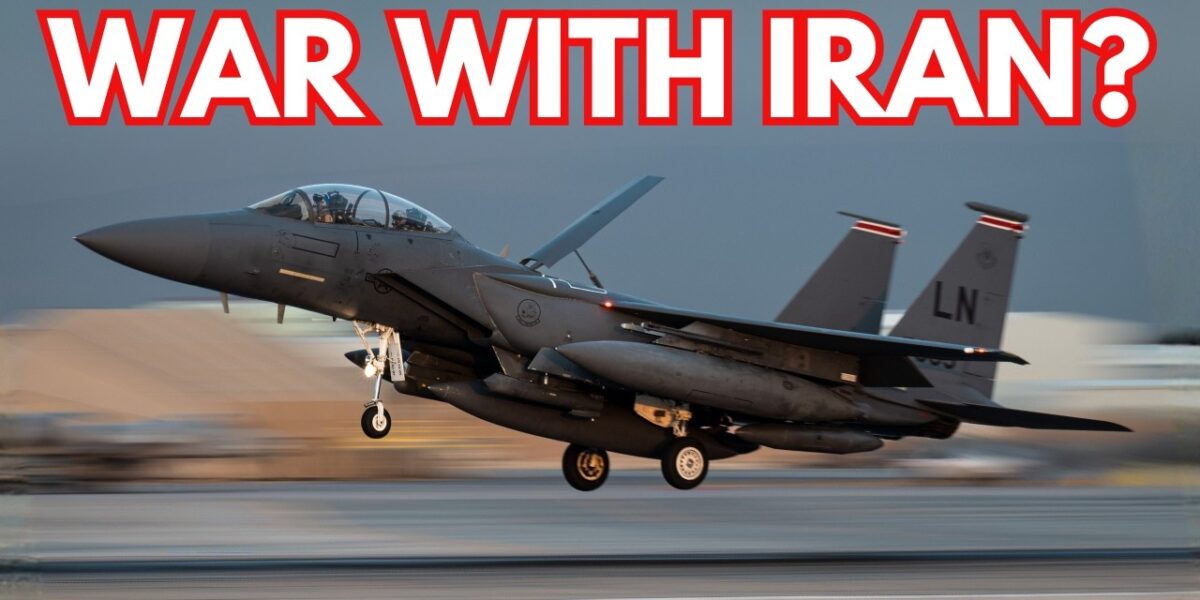
Among the most recent additions to this formidable array are American F-22 Raptor stealth fighters, which have departed the United States en route to the Middle East. Notably, during ‘Operation Midnight Hammer,’ F-22s arrived in the theater just four days before strikes were carried out, a detail that has not gone unnoticed by observers.
Beyond combat aircraft, there is a relentless, non-stop flow of supply and logistics aircraft – including cargo planes and refuelers – originating from the United States and Europe, continuously pouring into the Middle East. This sustained logistical effort indicates a long-term commitment and preparation for extensive operations.
The last time the United States amassed a military force of comparable size in the Middle East was in late 2002 and early 2003, in the lead-up to the eventual invasion of Iraq. This historical parallel provides a stark context for the current situation, though a crucial difference has been identified: the absence of a similar quantity of U.S. Marines and soldiers on the ground, which would typically precede a large-scale land invasion. This suggests that any potential military action against Iran would primarily manifest as a sustained air campaign, according to various defense analysts.
Components of the Buildup:
- Carrier Strike Groups: At least one carrier strike group is already in theater, with another slated to arrive within days. Each group is a formidable naval asset, complete with its associated carrier air wing, including advanced F-35 and F-18 fighter jets. These serve as mobile, sovereign airbases capable of projecting immense power across vast distances.
- Destroyers: As many as 12 destroyers are reportedly already operating in the region. These highly capable warships provide multi-mission capabilities, including air defense, anti-submarine warfare, and precision strike capabilities, crucial for protecting the carrier groups and other naval assets.
- Land-Based Aircraft: The numbers of land-based aircraft are in constant flux, but the region currently hosts a significant number of forward-deployed F-35s, F-15s, F-16s, and A-10s. Additionally, more aircraft stationed in Europe are being moved into positions from which they could conduct strikes on Iran. The F-35s represent cutting-edge stealth and multi-role capabilities, while the F-15s and F-16s provide air superiority and ground attack options. The A-10 Warthogs are renowned for their close air support prowess.
Diplomacy at a Standstill Amidst Nuclear Tensions
The backdrop to this escalating military posture is the ongoing, yet seemingly unproductive, diplomatic engagement surrounding Iran’s nuclear program. Talks between the two sides continue, but the prevailing sentiment among many observers is one of pessimism. Recent reports indicate that while both parties have agreed to continue discussions, this often serves as diplomatic parlance for a lack of substantive progress. A review of the United States’ demands and Iran’s stated willingness (or unwillingness) to negotiate on certain points reveals little room for compromise, making significant breakthroughs appear increasingly remote.
The Axios report further underscored this deadlock, stating, “The Trump administration is closer to a major war in the Middle East than most Americans realize. It could begin very soon.” The report suggested that a U.S. military option in Iran would likely entail a massive, weeks-long campaign, resembling a full-fledged war rather than limited, pinpoint operations. Sources cited in the report indicated that such a campaign would likely be a joint U.S.-Israeli effort, far broader in scope and potentially more existential to the Iranian regime than previous confrontations, such as Israel’s 12-day war last June.
Former IDF military intelligence chief Amos Yadlin, quoted by The Times of Israel, echoed these sentiments, suggesting that a military confrontation could commence “in the coming days” and evolve into an “intensive multi-week campaign.” His personal caution regarding international travel from Israel underscored the heightened state of alert. However, Yadlin also emphasized that a superpower does not engage in war within days, highlighting the necessity of exhausting diplomatic avenues. He also noted that many still oppose an attack and expressed uncertainty regarding the Pentagon’s precise objectives, a common concern given the shifting dynamics of U.S. policy.
Arguments for Intervention: Reshaping the Middle East
Amidst the escalating tensions, prominent voices are advocating for military action. The Atlantic Council, a leading think tank, recently published an article titled “Beating the War Drum,” outlining six strategic reasons why the U.S. should pursue a military option against Iran. These arguments reflect a hawkish perspective on regional geopolitics and U.S. foreign policy objectives.
The Atlantic Council’s Case for Military Action:
- Unique Moment to Reshape the Middle East: Proponents argue that the Iranian regime is currently at its weakest point since its formation in 1979, presenting a unique opportunity for the U.S. to influence Iran’s future and broader regional dynamics. This perspective suggests that a decisive intervention now could establish a new geopolitical order.
- Moral Imperative: This argument posits a moral obligation to support the Iranian people, particularly following recent protests where citizens stood up against the regime. While carrying significant ethical weight, analysts suggest this factor often plays a lesser role in strategic calculations compared to geopolitical or economic considerations.
- Credibility Dilemma: The Atlantic Council highlights the perceived erosion of U.S. credibility stemming from past failures to enforce “red lines,” notably President Obama’s inaction after chemical weapon use in Syria. Engaging militarily with Iran, from this viewpoint, could restore American resolve and deter future challenges to U.S. foreign policy.
- Economic Stakes: This argument considers the dual economic benefits of military action. Firstly, it could facilitate the reintegration of Iran’s vast energy reserves into Western markets. Secondly, by potentially disrupting China’s access to cheap oil from Iran (and previously Venezuela), it could compel Beijing to reconsider its strategic options, particularly concerning potential conflicts in the Taiwan Strait, thereby serving broader U.S. economic and strategic interests.
- “Skin in the Game”: With speculation surrounding the advanced age and potential succession of Iran’s Supreme Leader, Ali Khamenei, the argument suggests that Iran’s future is inherently uncertain. U.S. military involvement now could provide “skin in the game,” enabling Washington to play a decisive role in shaping the post-Khamenei era and influencing the trajectory of the country.
- Iranian Nuclear Program: Despite past negotiations and agreements, Iran has reportedly continued its nuclear program and its pursuit of nuclear capabilities. The Atlantic Council argues that negotiations have proven insufficient, and military action may be the only viable option to permanently dismantle or significantly set back Iran’s nuclear ambitions, aligning with President Trump’s stated commitment that Iran will not possess nuclear weapons.
Warnings Against War: Iran’s Strategy of “Cost Imposition”
Conversely, a chorus of voices warns against the perilous implications of a military conflict, emphasizing Iran’s unique strategic approach. The National Interest, in an article titled “How a US-Iran Clash Could Spiral Out of Control,” articulated Iran’s strategy of “cost imposition.”
The Islamic Republic, acknowledging its inability to win a conventional war against the United States, has developed a strategy focused not on outright victory but on inflicting unacceptable costs. This approach aims to achieve an “honorable defeat” by making the price of an ongoing war so high for the U.S. that Washington would be compelled to seek a swift, negotiated settlement. This strategy, previously demonstrated through its effective, albeit now degraded, proxy network, is deemed “really smart” by some observers, highlighting its potential efficacy against a superior conventional force.
A critical consideration is the American public’s appetite for casualties and prolonged conflict. If the costs of victory in Iran – in terms of lives, resources, and time – are perceived as too high, public support for military action could quickly erode, potentially forcing a premature withdrawal without achieving stated objectives.
Furthermore, there is a significant risk of miscalculation. If Iranian leaders interpret U.S. “gunboat diplomacy” not as leverage for a nuclear deal but as preparation for a regime change operation, they would likely view any confrontation as an existential fight for survival. Under such extreme conditions, Iran would be inclined to employ its full range of capabilities – including its missile arsenal – early in the conflict, before they can be degraded by sustained U.S. air strikes. This scenario could trigger a rapid and uncontrollable escalation, where an initial perceived threat leads to preemptive strikes, followed by immediate retaliation from regional allies like Israel, making de-escalation exceedingly difficult.
Regional Alarm Bells: Middle Eastern Powers Push for De-escalation
The prospect of a U.S.-Iran conflict has sent alarm bells ringing across the Middle East, prompting regional powers to move with “unusual urgency” to contain the confrontation. Iran International highlights that governments from Riyadh to Ankara and Doha are driven not by abstract appeals for peace but by “hard calculation” regarding their own vulnerability.
A war between the United States and Iran would expose the territories, economies, and political stability of these nations to immediate and severe risks. The emerging consensus among these states, shaped by a decade of upheaval, is that while a controlled crisis might be manageable, a full-scale war would not be. The prospect of missiles and aircraft traversing their airspace, and the inevitable “second and third order effects” of conflict, represent an intolerable threat.
Most of these states maintain closer ties with Washington than with Tehran. However, their opposition to war stems less from sympathy for Iran and more from their inherent vulnerability. They find themselves in a difficult geopolitical bind: dependent on the United States for security, yet simultaneously exposed to Iran’s array of missiles, drones, and allied militias. This “dual vulnerability” dictates their approach: they actively oppose war and strive to prevent it, but are also preparing for the grim possibility of diplomatic failure. Should war erupt, most would likely seek to avoid direct involvement while quietly aligning with Washington’s security framework to protect their own territories and long-term interests.
Why the Hesitation? Trump’s Preference for Speed vs. Iran’s Endurance
Despite the massive military buildup, President Trump has, at least thus far, hesitated to initiate strikes on Iran. This hesitation is not due to a lack of overwhelming military capability, as U.S. forces have possessed the capacity for limited strikes for weeks. Al Jazeera offers a compelling analysis for this restraint, suggesting that Washington’s hesitation stems from a fundamental mismatch between Trump’s operational preferences and Iran’s strategic doctrine.
President Trump typically values “speed” and decisive, rapid victories in military engagements. His administration has greenlit operations characterized by their swift execution and immediate impact, aiming to avoid prolonged commitments. Iran, however, has spent decades preparing not for quick conventional victories but for ensuring that any conflict with its adversaries becomes drawn out and costly. Its strategy is not centered on territorial conquest or flashy tactical successes but on “endurance and the imposition of costs.” Iran does not aim for a knockout blow; instead, it seeks to ensnare its enemies in prolonged conflicts that drain resources, erode political capital, and consume time, ultimately exhausting even the most powerful militaries.
A potential parallel can be drawn to the U.S. campaign against the Houthis, which, despite inflicting significant damage, eventually concluded without a clear victory, with U.S. forces simply ceasing operations. This experience suggests a potential reluctance within the U.S. to engage in protracted conflicts in the Middle East, particularly without a clear and achievable end-state that resonates with the American public. Al Jazeera concludes that Trump, while a gambler, is not “suicidal.” He is willing to take risks when the odds are stacked in his favor and the payout is immediate. Iran, however, represents a different reality: a conflict with enormous downsides, limited upsides, and almost no plausible path to a decisive resolution or a clean victory.
Beyond the Buildup: A Negotiating Tactic or Inevitable Conflict?
While the sheer scale of the military deployment strongly suggests preparation for conflict, it is also plausible that the buildup serves as a costly, yet ultimately safer, negotiating tactic. Moving military assets around the world, while expensive, remains financially less burdensome than engaging in full-scale war. This “gunboat diplomacy” could be an attempt to exert maximum pressure on Iran at the negotiating table, compelling concessions without firing a shot.
However, the prevailing sentiment among many analysts is that such an extensive accumulation of firepower is unlikely to go unutilized. All signs point towards the likelihood of some form of sustained campaign being carried out against Iran in the near future. A key date to watch is the window when the second carrier strike group is scheduled to arrive in the theater, further bolstering the U.S. military’s already formidable capabilities.
The Middle East remains a powder keg, with the U.S. and Iran locked in a dangerous dance of military posturing and diplomatic deadlock. The coming days and weeks are poised to be critical, determining whether the current unprecedented buildup culminates in a devastating conflict or, against all odds, leads to an unexpected de-escalation.
Source: Largest Deployment in Decades Suggests War is Near (YouTube)

Related Articles


Trump’s $3 Gas Promise Fades as Reality Sets In
President Trump's promise of $3 a gallon gas is facing delays and shifting timelines. As international tensions and market realities set in, the administration is tempering expectations, raising questions about political messaging and economic control.

US Loses Global Grip as Trump Allies Defy Peace Calls
The U.S. faces a critical juncture as it appears to lose control on the global stage, marked by prolonged international conflicts and domestic economic challenges. Allies seem to defy peace calls, while political figures clash with the Pope over the morality of war.

Trump Tax Cuts Deliver Billions Back to Americans
White House officials detailed the success of President Trump's "working families tax cuts" on Tax Day, reporting that over 53 million Americans have claimed significant tax savings and historic refunds. Treasury Secretary Scott Bessant and Small Business Administrator Kelly Leler highlighted benefits for individuals and small businesses, while also addressing economic outlook and international matters.