Unseen Commander, Unsettling Signals: Xi Jinping’s Control Questioned Amidst High-Profile Purges and a Controversial Comeback
Recent observations surrounding Chinese President Xi Jinping, including an unprecedented three-month seclusion in Beijing and a virtual military inspection, suggest a leader potentially grappling with internal dissent and a military establishment unsettled by purges. Further signaling potential cracks in his control, a politically controversial folk singer with ties to Xi's rivals made a high-profile comeback on state media, hinting at ongoing power struggles within the CCP.

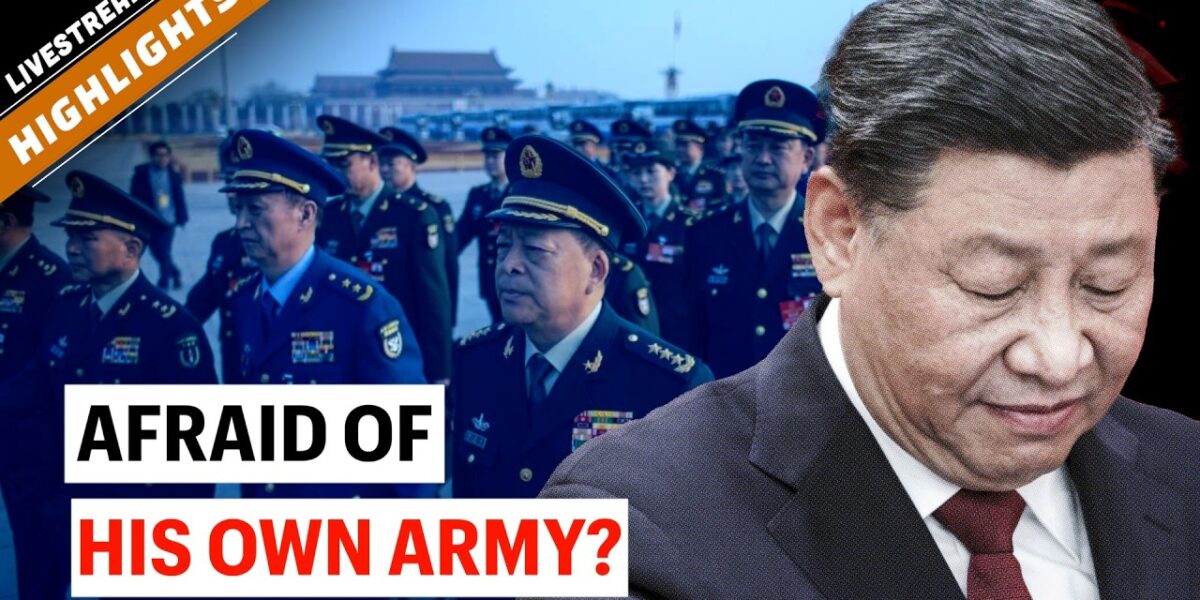
Unseen Commander, Unsettling Signals: Xi Jinping’s Control Questioned Amidst High-Profile Purges and a Controversial Comeback
In the tightly controlled political landscape of China, every public appearance, every absence, and every meticulously staged state media event carries profound significance. Recent observations surrounding Chinese President Xi Jinping, particularly his unprecedented three-month seclusion in Beijing and the curious reappearance of a politically controversial folk singer, have ignited intense speculation among analysts regarding the true extent of his control over the People’s Liberation Army (PLA) and the broader Chinese Communist Party (CCP).
Far from projecting an image of unshakeable authority, these events suggest a leader potentially grappling with internal dissent and a military establishment still reeling from a sweeping anti-corruption purge. The signals, subtle yet potent, hint at a power dynamic far less absolute than often portrayed, raising questions about the stability of Xi’s third term and the future direction of the world’s second-largest economy and its formidable military.
The Invisible Commander: Xi Jinping’s Unprecedented Seclusion
From November 9, 2025, until February 12, 2026, a span of three full months, President Xi Jinping reportedly did not leave Beijing. This extended period of immobility, following an inspection tour of Guangzhou on November 7-8, 2025, stands in stark contrast to his past conduct. Historically, the period around the Western and Chinese New Year has been a particularly busy time for Xi, characterized by extensive travel across the country, often involving personal inspections of military units and regional commands. This tradition served not only as a means of demonstrating his leadership but also as an opportunity to solidify his personal connection with the troops and project an image of active command.
The sudden cessation of this customary travel pattern has been interpreted by some observers as a deliberate choice born out of caution, rather than convenience. The prevailing analysis suggests a leader hesitant to leave the perceived security of the capital, a reluctance that speaks volumes about his confidence in his grip on power, especially in the wake of significant purges within the military hierarchy.
A Tense Gala and Guarded Appearances
Xi Jinping’s first public appearance after the reported removal of high-ranking military officials, including those referenced as "Jang Yosa and Li Juni," came on February 6, 2026. He attended a Chinese New Year gala hosted by the Central Military Commission (CMC) for retired PLA officers in Beijing. While such events are standard fare, the details captured by state media footage were anything but ordinary.
Observers noted the demeanor of CMC Vice Chairman Zhang Youxia (referred to as Jang Ming in the transcript), who was seen walking behind Xi Jinping. His posture and facial expression were described as "cautious and careful," maintaining a noticeable distance from the President. This subtle but significant body language, coupled with a general air of tension among attendees, suggested an environment far from relaxed. Furthermore, the presence of numerous young people in uniform, clearly not retired officers, was interpreted as an unusually heavy deployment of Xi’s personal security detail, underscoring a heightened sense of vulnerability.
Another telling detail emerged regarding Defense Minister Dong Jun, who also attended the gala. His seating arrangement placed him three rows behind Xi, a clear indication of a hierarchical distance. This seemingly minor protocol detail would become even more significant just days later.
The Eerie Virtual Inspection: A Commander in Isolation
On February 11, 2026, still within the confines of Beijing, Xi Jinping conducted his traditional New Year military inspection. However, instead of the customary in-person visits to frontline units, this inspection was carried out virtually, from within the heavily guarded PLA building. This was a stark deviation from a tradition Xi himself had upheld consistently since 2013, with the sole exception of 2023 during the peak of nationwide COVID-19 outbreaks and lockdowns.
The CCTV footage of this virtual inspection was described as "bizarre" and "eerie." It depicted a massive, cavernous hall containing only three tables. Xi Jinping sat at the main table, flanked by Zhang Youxia and, surprisingly, Dong Jun, the newly appointed Defense Minister. This arrangement was particularly striking given Dong Jun’s junior status and his seating position at the previous gala. His elevation to the same level as Zhang Youxia, a CMC Vice Chairman, was not indicative of a sudden promotion but rather, as analysts suggested, a pragmatic move to avoid the visual awkwardness of Xi sitting with only one general in such a vast, empty space. The scene conveyed a sense of isolation, reducing the entire PLA leadership to a small trio staring at a screen.
In his remarks during this virtual address, Xi Jinping stated that "the past year was highly unusual." He praised the military for being "revolutionarily tempered through anti-corruption" and insisted that officers, "especially grassroot troops, were absolutely reliable and and politically solid." The specific emphasis on "grassroot troops" and the omission of general officers from this assurance did not go unnoticed. This linguistic nuance was interpreted as a veiled acknowledgment that the loyalty of higher-ranking officers remained suspect, implying that the extensive purge was far from over and that anyone could still be targeted.
Echoes of Purges: The Shaking Foundations of the PLA
Xi Jinping’s decade-long anti-corruption campaign, particularly within the military, has been unprecedented in its scope and intensity. Launched shortly after he came to power in 2012, it has ensnared hundreds of high-ranking officials, including several former CMC vice chairmen, generals, and admirals. The stated aim is to root out graft and ensure the absolute loyalty of the PLA to the Party and to Xi himself.
However, the sheer scale of these purges also carries significant risks. While ostensibly consolidating power, they can also breed resentment, distrust, and a climate of fear, potentially undermining morale and operational effectiveness. The recent removals of high-ranking officials, including the former Defense Minister Li Shangfu (likely "Li Juni" in the transcript) and others, have sent shockwaves through the military establishment, leaving many senior positions vacant or filled with new, untested loyalists.
The tradition of the CMC chairman personally visiting frontline units before the Lunar New Year is not merely ceremonial. It is a vital mechanism for a supreme commander to gauge the pulse of the military, project confidence, and demonstrate solidarity with the troops. By forgoing this tradition in 2026, Xi Jinping displayed an uncharacteristic apprehension. This reluctance to face the troops in person, choosing instead a heavily guarded virtual address, suggests a deep-seated fear of his own military, or at least elements within it. It implies a lack of sufficient trusted personnel to accompany him or to stand in for him, a critical void in a system that relies heavily on personal loyalty and hierarchical displays of power.
This level of dread, where the supreme commander appears hesitant to engage directly with his forces, is unprecedented in the history of the CCP’s rule. It creates an image of a bare commander, isolated from the millions he ostensibly leads, raising questions about the cohesiveness and political reliability of the PLA at a time of increasing geopolitical tensions.
The Seductress’s Return: A Political Signal from the Shadows
Amidst these weighty political and military machinations, an ostensibly entertainment-related news item has emerged as a potent political signal: the high-profile comeback of folk singer Tan Jing (referred to as Miss Tan/Tongan in the transcript). Once dubbed "China’s most famous military seductress," Tan Jing’s past is deeply intertwined with some of Xi Jinping’s biggest political rivals, including Bo Xilai and Zhou Yongkang, figures implicated in a notorious coup plot against Xi in his early years as CCP leader.
Tan Jing was rumored to have been intimately involved with several high-ranking military and political figures linked to the anti-Xi faction. Beyond the salacious details, there were serious allegations that she acted as a go-between in the coup plot. Subsequently, she was secretly sentenced to seven years in prison for economic crimes, serving under an alias, and was released in 2016. Her disappearance from public life was widely attributed to her political toxicity, particularly in relation to Xi Jinping and his wife, Peng Liyuan, herself a renowned folk singer and a long-time professional rival of Tan Jing.
The "seesaw dynamic" theory posits that when Peng Liyuan’s influence rises, Tan Jing falls, and vice versa. Given this background, Tan Jing’s sudden and prominent reappearance on a CCTV New Year gala (though not the main one, still a significant official platform with strict political vetting) is extraordinary. Not only did she appear, but she was positioned as a headliner. Her name was placed first on the performer list, her picture featured on the event poster, and in leaked stage photos, she stood dead center in the lineup, wearing a distinct dress that set her apart from others.
Under normal CCP rules, a figure with such a politically radioactive past, a criminal record, and a toxic reputation should not be allowed on any core party media platform, let alone be celebrated as a headliner. This comeback, therefore, does not appear to be a redemption story for a fallen star but rather a meticulously arranged political statement. No producer would take such a risk in today’s highly sensitive political climate without serious backing and political motivation.
The timing is crucial: her return comes right after the latest military purges. This suggests that factions within the system, perhaps those disgruntled by Xi’s relentless anti-corruption campaign and his tightening grip, are using this platform to send a powerful, albeit subtle, message. It signals that Xi Jinping does not have "the game fully locked down" and that there are still elements within the system capable of publicly embarrassing him or challenging his absolute authority. It implies that despite his efforts, he does not control every lever of power and influence, even over state media and cultural institutions.
Unpacking the Power Play: Broader Implications
The confluence of Xi Jinping’s extended absence from public travel, his guarded virtual military inspection, and the politically charged return of Tan Jing paints a complex picture of power dynamics within the CCP. These events, when viewed collectively, suggest that while Xi has consolidated immense personal power, his authority is not entirely unchallenged or universally accepted. The ongoing purges, rather than completely eliminating dissent, may have instead created pockets of resistance or subtle forms of defiance.
The PLA, the ultimate guarantor of CCP rule, is undergoing a profound transformation under Xi. His anti-corruption drive, while aiming to modernize and professionalize the military, has also alienated elements within its ranks. The emphasis on "political reliability" over purely military competence can lead to a climate of suspicion and factionalism, potentially impacting military readiness and cohesion. A commander who fears to visit his troops in person signals a deep-seated concern about loyalty at critical junctures.
Furthermore, the Tan Jing episode highlights the enduring influence of factional politics within the CCP. Even in an era of unprecedented centralization of power under Xi, various interest groups and political networks continue to operate, subtly testing the boundaries of his control. State media, often seen as a monolithic propaganda arm, can also become a battleground for these hidden power struggles, with seemingly innocuous cultural events carrying profound political undertones.
For China, these internal power struggles have significant implications. A leadership perceived as insecure or internally divided might face challenges in projecting a united front on the international stage or in implementing ambitious domestic policies. The stability of Xi’s third term, meant to cement his legacy, could be undermined by persistent internal challenges, forcing him to divert attention and resources from critical national objectives.
Conclusion: A Fragile Hegemony?
The events surrounding Xi Jinping’s recent actions and the unexpected reappearance of Tan Jing offer a rare glimpse into the opaque world of Chinese elite politics. They suggest that despite Xi’s iron grip and extensive purges, his power is not absolute and faces subtle yet determined challenges from within the system. The "unseen commander" and the "unsettling signals" from a controversial figure underscore a crucial point: the narrative of total control, so carefully constructed by state propaganda, may conceal a more complex and potentially fragile reality. As China navigates an increasingly turbulent global landscape, the strength and unity of its leadership will be paramount. These recent developments indicate that the internal battles for power and loyalty within the CCP and the PLA are far from over, and their outcomes will undoubtedly shape China’s trajectory in the years to come.
Source: Xi Stayed in Beijing for 3 Months — The PLA Signals He Can’t Ignore (YouTube)

Related Articles
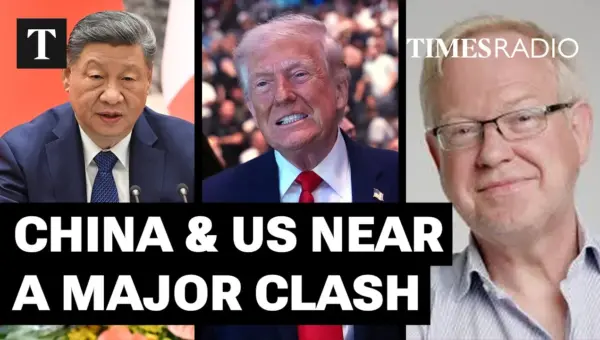
China-US Tensions Flare: Blockade Risk Sparks Superpower War Fears
The U.S. blockade in the Strait of Hormuz has intensified tensions with China, raising fears of a potential superpower conflict. Expert Roger Boyes highlights China's use of a "shadow fleet" and military support for Iran, while President Trump attempts a delicate diplomatic approach ahead of a key meeting with President Xi Jinping.
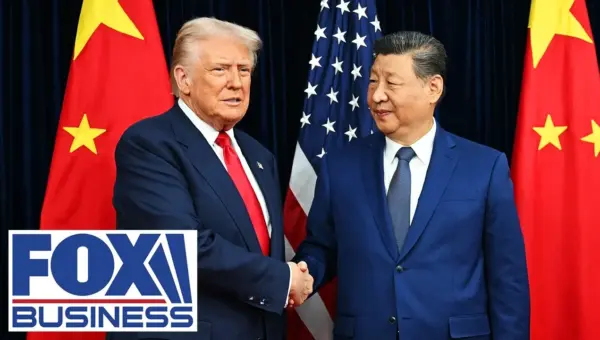
Trump Claims Xi Letter Acknowledged Halt to Weapon Sales
Former President Donald Trump revealed that Chinese President Xi Jinping sent him a letter acknowledging a halt to weapon sales. Trump also discussed his tough trade policies against China, including significant tariffs on cars and other goods. These trade actions and ongoing geopolitical tensions can create market uncertainty for investors.
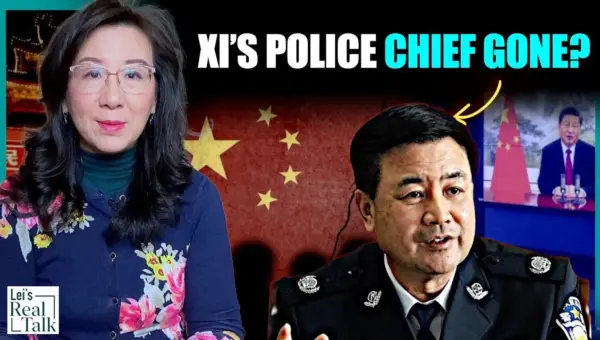
China’s Top Cop Vanishes: Is Xi Jinping Losing Control?
China's top police chief, Wang Xiaohong, has reportedly vanished, sparking rumors of a political purge. This disappearance raises critical questions about President Xi Jinping's grip on power and the stability of the Chinese Communist Party.