The Ominous Silence: Why Western Analysts Keep Misreading Beijing’s Fractured Power Struggle
Western analysts often misinterpret China's political landscape by overlooking crucial cultural nuances and invisible power centers. The ominous phrase "Beijing turned yellow" and the conspicuous silence surrounding a top general's removal reveal a deeply fractured CCP, suggesting Xi Jinping's grip on power may be precarious. This fragmentation, far from reducing risk, makes the regime potentially more volatile and dangerous to the world.

The Ominous Silence: Why Western Analysts Keep Misreading Beijing’s Fractured Power Struggle
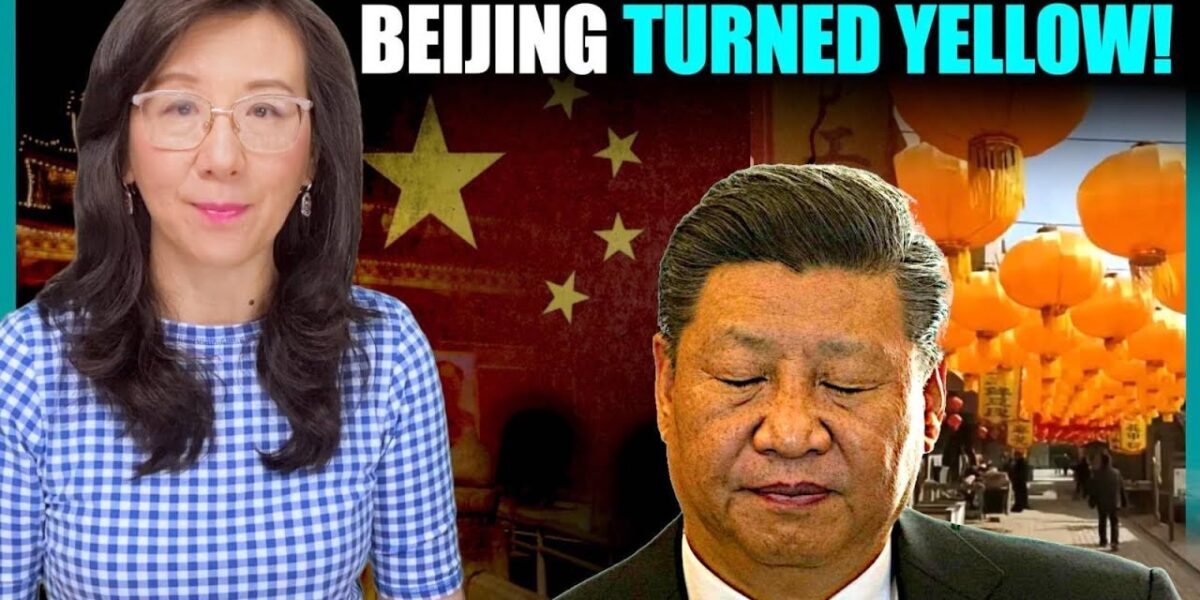
As the Lunar New Year approached, an unsettling phrase began to circulate within China: "Beijing turned yellow." Far from a literal description of the capital’s hue, these words carry a profound and ominous cultural weight, signaling deep-seated political anxiety and a sense of impending doom. This seemingly innocuous phrase, coupled with the authorities’ perplexing decision to display yellow lanterns—traditionally symbols of death and mourning—instead of the customary celebratory red, has laid bare a chasm in how China’s internal dynamics are perceived, particularly between Western observers and Chinese diaspora analysts. At the heart of this divergence lies a fundamental difference in interpreting the unspoken, the invisible, and the cultural undercurrents that define power struggles within the Chinese Communist Party (CCP).
The Ominous Silence: “Beijing Turned Yellow” Signals Deep Unease
The phrase “Beijing turned yellow” is loaded with historical and modern connotations within Chinese culture. Historically, yellow was the imperial color, reserved exclusively for emperors and their families, symbolizing ultimate power and authority. However, in contemporary usage, yellow has acquired several decidedly negative meanings. As an adjective, it often serves as a derogatory term for pornography or moral decadence. When used as a verb, to say something “turned yellow” implies it is finished, ruined, or doomed. Thus, when citizens whisper that “Beijing has turned yellow,” they are not commenting on aesthetics but rather expressing a stark belief that the capital, and by extension the regime, is “done for.”
This unsettling sentiment gained traction just ahead of the Lunar New Year, one of China’s most significant holidays. In a bizarre departure from tradition, local governments in Beijing and several other cities began distributing and hanging yellow lanterns. This act immediately struck many as a profound cultural red flag. In Chinese tradition, red lanterns symbolize celebration, good fortune, and festivity—the ubiquitous symbols of the Lunar New Year. Yellow lanterns, on the other hand, are unequivocally associated with funerals, death, and mourning. The stark contrast sent shockwaves through the populace, prompting widespread confusion and anxiety. While no official explanation was offered for this unprecedented shift, the phenomenon quickly became a source of dark humor, superstition, and, most importantly, a potent symbol of political anxiety. The fact that such a grim joke could spread so widely, right before the nation’s biggest holiday, underscores the deeply uneasy political mood simmering beneath the surface, suggesting a pervasive sense that “Beijing is doomed.”
A Chasm of Interpretation: Western vs. Diaspora Views on Xi’s Grip
This palpable public unease connects directly to a critical and fiercely debated topic among China observers: the true extent of Xi Jinping’s power, particularly in the wake of the recent removal of General Zhang Youxia on January 20th. Outside the inner circles of Zhongnanhai, China’s leadership compound, no one can claim with certainty what precisely transpired or how much real power Xi Jinping currently wields. The expert community, both within and outside China, is sharply divided.
The prevailing view among many Western professional analysts, national security experts, and mainstream China watchers is that Xi Jinping’s power remains largely unchallenged. From their perspective, Xi’s audacious move against two of the most powerful generals in the People’s Liberation Army (PLA) — Zhang Youxia and his ally Liu Jinsong — serves as irrefutable proof of his confidence and firm control. They often interpret this incident as an internal dispute over Taiwan strategy or military management, a strong leader asserting his will over subordinates.
However, a significantly different narrative emerges from many Chinese analysts within the diaspora community. These experts contend that Xi’s power has been weakening over the past year and a half. They argue that General Zhang Youxia, reportedly backed by influential party elders, had subtly but effectively hollowed out Xi’s control over the PLA. From this alternative viewpoint, Xi’s January 20th move was not a demonstration of strength but rather a high-risk gamble𠅊 desperate “reverse coup” aimed at reasserting authority against Zhang Youxia and his network. These two interpretations stand in direct and irreconcilable opposition, highlighting a fundamental disagreement on the very nature of power dynamics within the CCP.
Beyond the Visible: Understanding China Through Cultural Lenses
The persistent divergence in these interpretations begs a crucial question: Why do Western experts and Chinese diaspora analysts read Beijing so differently? And why do Western analysts overwhelmingly conclude that Xi is still firmly in control? The answer, while seemingly a cliché, lies in profound cultural differences that shape perception and analysis.
Consider the realm of classical art. Western classical art, from the Renaissance onwards, has been largely obsessed with realism. It prioritizes perspective, scale, detail, and anatomical accuracy, striving to meticulously reproduce what the eye sees. The core value is fidelity to observable reality. Chinese landscape painting, in stark contrast, operates on entirely different principles. Mountains may appear disproportionately large or too close to human figures, rivers may be out of proportion, and perspectives are often intentionally skewed. This is not a failure of technique but a deliberate artistic choice. Chinese painting is not about realism; it is about creating an aesthetic mood or “realm.” Its most important concept is “liu bai,” or blank space. What is not painted often carries more meaning than what is painted. The vast, unadorned expanses of silk or paper are integral to the artist’s intent, conveying depth, contemplation, and the intangible. Without blank space, Chinese art loses its very essence.
This deep cultural difference extends beyond art into other spheres, including scientific thought and medicine. Western empirical science is fundamentally rooted in observable facts. It focuses on symptoms, measurable data, and tangible evidence, forming the bedrock of Western medicine, which primarily seeks to treat what is visible. Chinese medicine, conversely, is built upon theories of Yin and Yang and the Five Elements. It studies meridians and acupoints𠅎nergy pathways and points that cannot be seen with the naked eye. From a Chinese perspective, merely chasing what is visible means scratching the surface, missing the root causes and the deeper phenomena at play.
Applying this cultural lens to CCP politics reveals a critical analytical blind spot. If one judges CCP politics solely using “hard evidence”—official statements, government announcements, visible actions, data, and news reports—one is highly likely to miss the real story. In this opaque system, what is not said often matters profoundly more than what is said. This is precisely where Western experts, conditioned by a culture that values explicit communication and observable facts, tend to misread the situation. In the case of Xi Jinping’s move against General Zhang Youxia, the true significance lies not in what the CCP has explicitly stated, but in its conspicuous silence, its omissions, and the things that should have happened but conspicuously did not.
The Loud Silence: Unpacking Beijing’s Non-Response to Zhang Youxia’s Removal
Two weeks after General Zhang Youxia’s reported removal, the silence from various official channels has been deafening𠅊 silence that speaks volumes about the true state of affairs within the CCP. A comprehensive list of what is missing reveals a highly unusual and telling situation:
- No Public Military Support: No theater command or military branch has publicly voiced support for the Party Center’s decision to remove the generals. This absence of unified backing from the PLA is highly irregular for such a high-profile move.
- No Government Endorsement: No major government agency or Party organ has come out to endorse the decision. This lack of institutional affirmation suggests a lack of consensus at the highest levels.
- Absence of Loyalty Statements: No senior officials, either central or local, have made loyalty statements to the decision. Such statements are standard practice in the wake of a leadership purge, designed to consolidate power and deter dissent.
- Online Presence Intact: The profiles of the two generals remain on official government websites. This oversight or deliberate omission is highly unusual, as purged officials are typically scrubbed from official records almost immediately.
- No Propaganda Barrage: Aside from the PLA Daily, the vast Party propaganda machine has not launched a full-scale denunciation campaign, which is the standard procedure when the CCP brings down a high-ranking official. The absence of this coordinated character assassination is a significant departure from established practice.
- Politburo’s Silence: Crucially, the Politburo, the Party’s highest decision-making body, has said nothing. Its silence suggests either deep division or a deliberate avoidance of public endorsement.
- NPC Inaction: The National People’s Congress has not revoked the two generals’ delegate status. This legislative body typically acts swiftly to formalize the removal of disgraced officials from their public roles.
All of these actions — or rather, inactions — should have happened but did not. This collective silence is not merely awkward; it is profoundly loud and telling. What Beijing has actually done so far is minimal: only the Defense Ministry announced an investigation, and the PLA Daily ran several editorials attacking the generals. Even these articles, however, were peculiar, filled with coded language and phrases such as “rebirth through molting,” which some analysts interpret as a veiled hint at replacing Xi Jinping for the system to be reborn.
Comparing what is visible to what is missing leads to a stark conclusion: Xi Jinping’s camp clearly controls the Defense Ministry spokesman and the PLA Daily editors. However, at this critical juncture, they do not appear to control the Politburo, the National People’s Congress, or have unified control over the broader PLA. This lack of consolidated support across key party and state institutions is the crux of the matter, indicating a significant fracture in Xi’s authority. Therefore, Rule Number One for understanding CCP politics is not merely to study what is said, but to meticulously analyze what is missing, the silence, the omissions, what gets deleted, and what should happen but somehow never does. It is in these unspoken details that the real story lies.
The Invisible Architects of Power: Party Elders and Princelings
Because Western scholars tend to focus on what is visible and tangible, they often overlook one of the most important, yet largely invisible, power centers in CCP politics: the party elders. While Western experts diligently study Xi Jinping and his immediate power circles, they collectively underestimate the immense influence that retired party elders still hold. The primary reason for this oversight is simple: party elders are largely invisible. They do not give speeches, hold press conferences, or occupy the spotlight of formal office. Yet, invisibility does not equate to inaction, and it certainly does not signify a lack of power.
The Enduring Influence of Party Elders
Historically, party elders have played decisive roles in shaping CCP politics. Mao Zedong, for instance, launched the Cultural Revolution in 1966 when he was already functioning as a party elder, having relinquished the state presidency in 1959. From 1962 to 1965, day-to-day policy was handled by Liu Shaoqi and Zhou Enlai. Yet, in 1966, Mao bypassed normal party-state channels, mobilized young Red Guards, and relied on ad hoc groups led by his wife, Madame Mao, to unleash the Cultural Revolution. This was a classic example of elder politics: an elder using immense prestige and revolutionary authority to override established institutions.
Deng Xiaoping similarly governed China for much of the 1980s and early 1990s without holding the top formal titles of General Secretary, President, or Premier. Yet, he held the final say on China’s direction, with all major political decisions, leadership changes, and crisis responses requiring his approval. Even after relinquishing all titles and stepping down as Chairman of the Central Military Commission in 1989, Deng made the decisive call that shaped the regime’s response to the 1989 pro-democracy movement. When his chosen successor, Jiang Zemin, veered too far left, Deng famously intervened in 1992, embarking on his “Southern Tour” to restart the opening and reform policy. None of this required Deng to occupy the top chair; he governed from behind the scenes as a powerful party elder. This model continued during Hu Jintao’s era, where Jiang Zemin, as a retired top leader, continued to exert decisive influence for years, effectively making Hu a “child emperor” with limited substantive power. Deng Xiaoping normalized this model of elder politics, coordinating with other surviving revolutionary elders who collectively functioned as the final arbiters of power. This informal structure, a hidden layer of authority operating above the formal system, remains very much alive today.
When Xi Jinping first came to power, he was acutely aware of this powerful network of party elders. He attempted to curb their influence by imposing tighter controls over their security details, movements, and travel. However, this did not mean the elders ceased pulling strings; their influence merely became more discreet. When Xi’s often-terrible policies, such as the stringent zero-COVID measures, traumatized the entire country and severely damaged the economy, opposition forces naturally gravitated toward these party elders. Indeed, the creation of new coordination and decision-making mechanisms within the Party at the end of June last year actually formalized the role of party elders, in what many saw as an effort to counterbalance Xi Jinping. Their behind-the-scenes bargaining among top power brokers remains largely invisible to outsiders. This hidden layer of politics remains seriously understudied by Western experts, yet it profoundly impacts how we interpret the current crisis. There is simply no scenario in which General Zhang Youxia would openly pose a threat to Xi Jinping without the explicit backing of party elders. Without their support, Zhang would never have dared challenge Xi. Thus, the struggle between Zhang Youxia and Xi Jinping is not a mere two-man duel; it involves multiple stakeholders inside the Party’s uppermost power structure. To ignore the party elders is to miss half the chessboard. Some refer to the CCP’s party elders as China’s “deep state”—invisible, yet capable of brokering deals, vetoing leaders, and shaping succession. If one only watches who is on stage, one misses who is pulling the strings in the dark.
The Red Aristocracy: Princelings and Economic Control
Closely tied to the party elders is another powerful, often invisible, group: the princeling network. These are the descendants of former CCP leaders, the “red aristocracy.” While most princelings do not hold formal political office, they exert immense control over key sectors of China’s economy, including state-owned enterprises, finance, energy, real estate, and major conglomerates. Not every party elder belongs to this aristocracy; figures like Hu Yaobang, Zhao Ziyang, and Zhu Rongji were technocrats. However, many prominent elders, such as Ye Jianying, were also princelings, holding significant sway through both their revolutionary lineage and their economic networks. Together, the party elders and the red aristocracy form two formidable, largely intertwined, yet invisible power centers in CCP politics. Without the backing of these two groups, Xi Jinping would never have risen to the top.
Xi’s “Declaration of War” and its Seismic Consequences
By moving against General Zhang Youxia, the highest-ranking princeling in uniform, Xi Jinping effectively declared war on both these powerful, invisible camps. These two forces are now converging against him, making it impossible to understand CCP politics without acknowledging their influence. The backbone of the anti-Xi camp is precisely this red princeling network, which now faces an unprecedented crisis. Xi Jinping’s move against Zhang Youxia, described by many insiders as an “ambush,” triggered two seismic consequences:
- Shattered Internal Party Procedures: Xi Jinping shattered the internal party procedures for handling top-tier officials. This act alone has put every senior official on edge. If this precedent stands, Xi can detain or eliminate anyone at any time without due process or organizational checks. The old rule, famously associated with Deng Xiaoping, that internal struggles must not devolve into open killing, has been broken. The system risks becoming a “slaughterhouse,” where everyone is meat on the chopping block, and Xi Jinping alone holds the knife. This is why resistance inside the Party and the PLA is not primarily ideological; it is driven by raw self-preservation.
- Tore Up the Unspoken Pact with Princelings: This consequence is even more explosive. Xi Jinping tore up the unspoken pact that has long governed his relationship with the princelings. General Zhang Youxia’s identity made his removal a red line. He was not merely a top-tier military leader; he was pure-blood red aristocracy, his father a founding general of the PLA. Within the PLA, princeling officers regarded Zhang Youxia as their natural “big brother.” This prestige is something that a fast-tracked vice chairman to the CMC, promoted by Xi Jinping, could never command; in the eyes of princelings, such figures are merely Xi’s “house servants.” Xi Jinping’s actions—no formal procedures, no organizational discipline, a move that looks like private vengeance, using personal forces, with whispers of assassination—sent an unmistakable message: all prior understandings with the red aristocracy are now void.
When Xi Jinping launched his anti-corruption campaign and centralization efforts upon coming to power, there was one core, unspoken deal he made with the red aristocracy: the blade would not fall on the red families. No prison for red princelings, no serious cases directly targeting them. This pact secured their early support, allowing Xi to consolidate power. Even after 2017, as Xi became more arbitrary and the economy deteriorated, the red families grumbled but held back, as their core interests remained untouched. The people who paid a dear price were ordinary citizens and lower-tier elites, not the aristocracy. Now, with Zhang Youxia’s removal, everything changed overnight. The red families realized their “get out of death free card” had been revoked. The knife had drawn blood and now rests on their own necks. Shock has turned into fury. Xi Jinping’s move against Zhang Youxia is, in essence, a declaration of war on the red aristocracy and on the Party’s old order.
This outcome is inevitable: from the perspective of the red families, Xi Jinping cannot be allowed to remain. This conflict is fundamental and irreconcilable. Xi has no way back, and the anti-Xi camp has no way back either. There is no longer any possibility of peaceful coexistence; the fight must produce a winner, and the loser will be wiped out. This is the stark political realism inside Beijing’s power circles right now, even if it remains entirely invisible to outside observers. Thus, when one observes the awkward silence—no unified response from the military, no loud endorsements from the government, no chorus of loyalty from the Party—it is not because officials suddenly grew brave enough to defy Xi Jinping’s orders. What is being witnessed is the result of two invisible forces working behind the scenes: the party elders and the red princelings. These are not individuals who speak in public; they shape outcomes quietly. Yet, many Western analysts consistently leave these two powerful centers out of their analytical models entirely.
The Peril of Simplification: Western Analytical Blind Spots and Policy Risks
Beyond cultural and analytical frameworks, there is another critical reason why Western experts tend to insist that Xi Jinping is still in full control, and this has more to do with professional incentives than ignorance. It is not that most of these experts fail to understand the complex dynamics outlined; in fact, many likely do. However, acknowledging that Xi’s power is fractured significantly complicates policy frameworks in the West. If Xi Jinping is no longer firmly in control, it becomes harder to present a clean, coherent China strategy. It blurs threat assessments, muddies accountability, and makes it challenging to articulate clear policy responses.
The safer analytical choice for many is to treat Xi Jinping as fully in charge and to dismiss any signs of internal fracture as mere smoke screens or regime disinformation. After all, it is much easier to justify policy when there is a single, all-powerful villain at the top, a clear antagonist against whom strategies can be neatly formulated. But this is where the logic breaks down and becomes profoundly dangerous. Whether Xi Jinping is in full control and whether he is dangerous are two entirely separate questions; one does not depend on the other.
In fact, the assumption that Xi Jinping becomes less threatening if he is losing control is precisely backward. A wounded, cornered, and desperate strongman or dictator is often far more dangerous than a confident one. Power fragmentation inside the CCP does not reduce risk; it dramatically increases it. History consistently shows us that wars do not always begin with carefully planned grand strategies followed by perfect execution. They frequently originate from miscalculations, accidents, and uncontrolled escalations within chaotic power systems. When the center is unstable, the risk of reckless moves goes up, and the chances of war increase exponentially.
Therefore, Western analysts must separate these two crucial questions and examine them independently: Is Xi Jinping in full control? And regardless of that answer, is the CCP becoming more dangerous to the outside world? Conflating the two leads to flawed analysis and potentially very costly mistakes in real-world policy. A fragmented and unstable CCP, led by a desperate strongman, poses a unique and heightened threat that requires a nuanced and clear-eyed assessment, unburdened by the desire for analytical simplicity.
Listening to the Unspoken: A New Paradigm for China Analysis
In conclusion, China is not a total black box, but neither is it a clear glass box. If one relies solely on what Beijing explicitly shows—press releases, official statements, staged images—one will inevitably draw the wrong conclusions. The real story of power, influence, and instability lives in what is missing, in the silence, in who doesn’t speak, in who suddenly disappears, and in who should have endorsed but conspicuously did not. Whether Xi Jinping is in full control or losing his grip is one vital question. Whether the CCP system is becoming more volatile and thus more dangerous to the world is a separate, equally critical question.
Behind both lie enormous, invisible forces from inside the CCP system shaping outcomes. A wounded dictator operating within a fragmented power center is, by definition, more lethal. A clear assessment of how wounded Xi Jinping truly is, and how fragmented the system has become, is paramount to understanding the true level of threat and risk they impose on the global stage. To genuinely comprehend what is happening in Beijing, analysts must learn to listen to the silence, pay meticulous attention to the smallest details, and decode the random, coded expressions circulating on the streets, such as the ominous phrase, “Beijing turned yellow.” Adopting this new paradigm for China analysis is not just an academic exercise; it is essential for shaping real-world policy and mitigating real-world risks.
Source: Why the West Keeps Misreading Beijing’s Power Struggle (YouTube)

Related Articles


Oil Prices Surge to $91 Amid Geopolitical Tensions
Oil prices have surged to $91 a barrel, driven by disruptions in the Strait of Hormuz. This is leading to higher gas prices across the U.S., with California facing particularly steep costs. The situation is fueling debate on energy policy, exports, and the transition to renewable fuels.
China’s Iran Gambit: Deception or a New World Order?
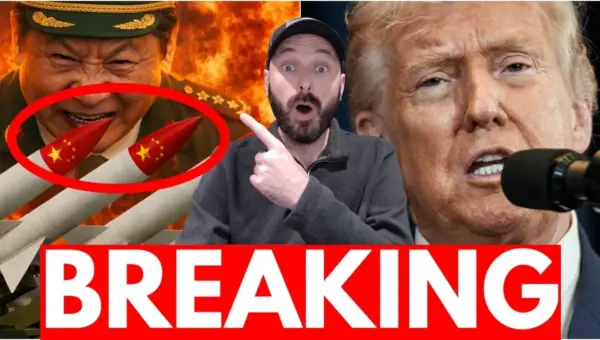
President Trump claims China will stop sending weapons to Iran, but deep skepticism remains due to China's past support and use of spy satellites to aid Iran. This move could be a strategic ploy to weaken the US military.

China Aids Iran Amid US Conflict Escalation
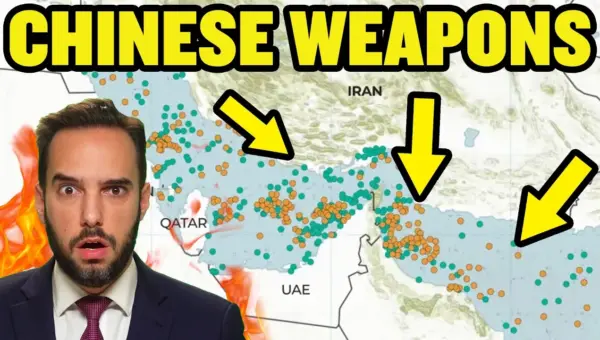
Recent intelligence suggests China is secretly supplying Iran with weapons like MANPADS and sharing critical intelligence, a significant escalation from its previous stance. This move, if confirmed, could deepen regional conflict and lead to severe US economic retaliation, while highlighting long-standing strategic ties between Beijing and Tehran.