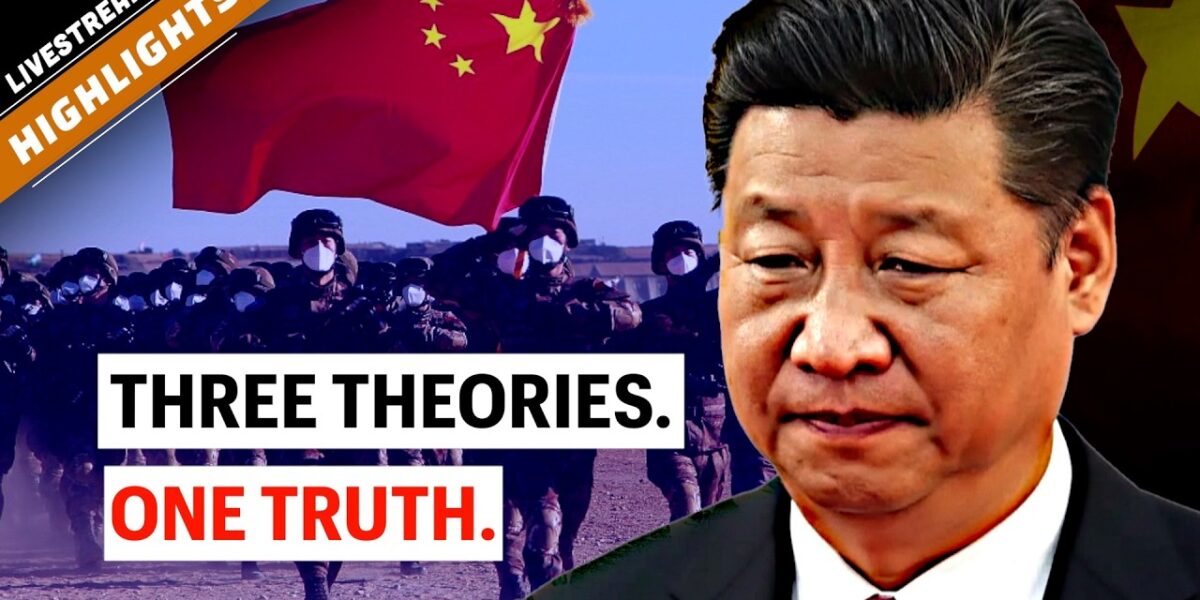
China’s Military Meltdown: Unpacking the PLA Power Struggle and Xi Jinping’s Precarious Grip
Beijing's announcement of the downfall of senior PLA generals Zhang Youxia and Liu Zhenli has ignited a firestorm of speculation, revealing deep rifts within China's military elite. While Western experts suggest Xi Jinping's power remains unchallenged, a compelling counter-narrative points to a desperate power play by Xi to regain control following a rumored health crisis and a challenge from party elders. This unprecedented internal turmoil casts a long shadow over China's stability and its geopolitical ambitions, particularly concerning Taiwan.

China’s Military Meltdown: Unpacking the PLA Power Struggle and Xi Jinping’s Precarious Grip
In a move that has sent shockwaves through the corridors of power in Beijing and ignited a firestorm of global speculation, the disappearance and alleged downfall of two of China’s most senior military figures, General Zhang Youxia and General Liu Zhenli, has laid bare the deep, often opaque, internal dynamics of the People’s Liberation Army (PLA). More than ten days after Beijing’s cryptic announcement, the void left by these high-ranking generals has been filled with competing theories, each attempting to unravel the true nature of what could be the most significant power struggle within the Chinese Communist Party (CCP) in decades.
The implications of such a monumental shake-up within the PLA, the armed wing of the CCP, extend far beyond China’s borders. As the world grapples with an increasingly assertive Beijing, particularly regarding its ambitions for Taiwan, the stability of China’s military leadership directly impacts regional security and global geopolitical equilibrium. Understanding the forces at play – whether it’s an affirmation of Xi Jinping’s absolute control, a sophisticated strategic deception, or a desperate last-ditch effort by Xi to reassert authority – is paramount for international observers and policymakers alike.
The Architects of Power: Who are Zhang Youxia and Liu Zhenli?
To fully appreciate the gravity of their alleged downfall, it is crucial to understand the stature and influence of General Zhang Youxia and General Liu Zhenli within the PLA. General Zhang Youxia, a ‘princeling’ and a long-time confidant of Xi Jinping, held the powerful position of Vice Chairman of the Central Military Commission (CMC), making him the second-highest-ranking officer in China’s military hierarchy, directly beneath Xi Jinping himself. His lineage, as the son of a revolutionary general, cemented his standing within the Party elite, while his career trajectory mirrored Xi’s rise, making him a perceived stalwart of Xi’s authority.
General Liu Zhenli, another highly respected figure, served as the Chief of the Joint Staff Department of the Central Military Commission, a pivotal role responsible for operational command and strategic planning across all branches of the PLA. His position placed him at the heart of China’s military decision-making apparatus, particularly concerning any potential conflict scenarios, such as an invasion of Taiwan. The sudden removal or disappearance of such critical figures, especially without the customary official explanations and ritualistic pledges of loyalty, suggests an internal rupture of extraordinary proportions.
Xi Jinping’s Consolidation of Power: A Decade of Dominance
For over a decade, Xi Jinping has meticulously consolidated his power, dismantling rival factions and reshaping the CCP and the PLA in his image. Upon assuming leadership in 2012, Xi launched an unprecedented anti-corruption campaign, which, while ostensibly targeting graft, effectively purged numerous high-ranking officials, including powerful military leaders like Xu Caihou and Guo Boxiong, both former Vice Chairmen of the CMC. These purges sent a clear message: loyalty to Xi was paramount, and dissent would not be tolerated.
Xi reinforced the long-standing CCP doctrine that ‘the Party commands the gun,’ ensuring the PLA’s absolute loyalty to the Party, and by extension, to himself as its ‘core’ leader. He oversaw a sweeping military reform program, reorganizing the PLA’s command structure, streamlining its forces, and modernizing its capabilities. This era was marked by a relentless drive to centralize authority, with Xi frequently appearing in military fatigues, emphasizing his direct command over the armed forces. The assumption, widely held by many Western observers, has been that Xi’s grip on the military was absolute and unchallengeable. This context is crucial for understanding the first prevailing theory regarding the generals’ downfall.
Theory 1: Xi’s Unchallenged Authority and the Taiwan Divide
The first and most widely accepted theory among Western experts posits that Xi Jinping’s power remains absolute and unchallenged. In this view, the removal of Zhang Youxia and Liu Zhenli is simply another demonstration of Xi’s firm hand, a calculated move to eliminate dissent and reinforce his control over the military. The core argument here revolves around two main points of contention:
The Taiwan Question: According to this theory, General Zhang Youxia was removed due to his alleged anti-war stance regarding Taiwan. It is believed that Zhang harbored significant doubts about the PLA’s ability to successfully invade and conquer Taiwan, fearing massive casualties and a protracted, unwinnable conflict. As a military strategist, he might have presented a more realistic, cautious assessment of the risks involved, clashing with Xi’s more aggressive rhetoric and stated ambition to ‘reunify’ Taiwan, by force if necessary. Such a disagreement, especially on a matter central to Xi’s legacy and China’s national rejuvenation, would be deemed intolerable.
Personnel Decisions and Military Reform: Another reported point of friction was Zhang’s opposition to what he perceived as Xi’s reckless personnel decisions within the military. Xi’s tendency to appoint loyalists, often bypassing traditional meritocratic pathways, could have created resentment and inefficiency within the ranks. Zhang, with his deep institutional knowledge and extensive network, reportedly had broad support among PLA officers who shared his concerns. This widespread backing, in turn, could have been perceived by Xi as a potential threat to his authority, ultimately precipitating Zhang’s downfall.
Critiquing Theory 1: The High-Risk Gamble and Unprecedented Silence
While Theory 1 presents a seemingly logical narrative of a strong leader eliminating obstacles, it struggles to reconcile with the unconventional and politically risky manner in which the generals’ removal unfolded. The standard CCP playbook for taking down senior officials is well-established: a quiet, months-long internal investigation, followed by a gradual consensus-building process within the Party elite, and only then a formal, often delayed, announcement. This methodical approach minimizes political fallout and maintains an illusion of stability and unity.
However, the alleged downfall of Zhang Youxia and Liu Zhenli deviated sharply from this established protocol. It was a high-profile, sudden move that seemed to catch many off guard. If Xi Jinping were truly in absolute control, with unquestioned authority, there would have been no need for such a politically perilous gamble. He could have orchestrated their removal through the traditional, low-risk channels. The abruptness and lack of a coherent narrative from official channels suggest a departure from Xi’s usual calculated approach.
Perhaps the most telling piece of evidence against Theory 1 is the ‘awkward, unprecedented silence’ that followed the announcement. In a political system where loyalty pledges and orchestrated choruses of support are ritualistic, the absence of such coordinated public backing from the military and Party leadership is a significant ‘tell.’ This collective hesitation, rather than a show of unified support, implies a deeper uncertainty and potentially a lack of full consensus around Xi’s move. It suggests that Xi might not have been in the absolute control that Theory 1 presumes when he made this high-stakes decision.
Theory 2: Strategic Deception – A ‘Good Cop, Bad Cop’ Act for the West
A second, more intriguing theory, though less popular, suggests that the apparent power struggle within the PLA is nothing more than an elaborate ‘good cop, bad cop’ performance orchestrated by Xi Jinping and Zhang Youxia themselves. The core idea here is strategic deception, designed to mislead the United States and other Western powers about China’s true intentions regarding Taiwan.
Proponents of this theory point to the flurry of PLA movements observed immediately after Zhang’s alleged arrest: multiple theater commands and service branches reportedly engaged in rocket unit drills, fighter jet exercises, helicopter maneuvers, and ground troop mobilizations. In this view, the entire drama surrounding the generals’ disappearance is a sophisticated ruse meant to mask intensive war preparations for a Taiwan invasion. Zhang and Liu are not truly ‘downfallen’ but are instead busy behind the scenes, coordinating and executing the final stages of a large-scale military operation against Taiwan.
The logic is that by creating an impression of internal strife and leadership instability, China might lull external adversaries into a false sense of security or misdirect their intelligence efforts, thereby gaining a crucial element of surprise for a future offensive. This theory plays into historical narratives of strategic cunning and misdirection often attributed to Chinese military doctrine.
Critiquing Theory 2: The Fatal Flaw of Disunity
While captivating on paper, Theory 2 suffers from a fatal flaw: it hinges on the assumption that Xi Jinping and Zhang Youxia operate as a coherent, unified team. This assumption is fundamentally contradicted by observable evidence and established analyses of their relationship over the past two years. Their interactions have been visibly strained, often characterized by discernible tension in their body language during public appearances.
Moreover, the reported disagreements on critical issues – from personnel appointments and military management to the fundamental question of war with Taiwan – indicate a deep-seated lack of unity. It is highly improbable, if not entirely unrealistic, to believe that two individuals with such open and significant policy divergences could suddenly collaborate on a highly sensitive, sophisticated deception campaign directly tied to war planning. Such an operation would demand an extraordinary level of trust, coordination, and shared strategic vision that simply does not appear to exist between Xi and Zhang.
The idea that they would risk their reputations and political futures on such an elaborate charade, requiring them to disappear from public view while secretly orchestrating a war, strains credulity. The inherent friction in their relationship makes the ‘good cop, bad cop’ scenario an unlikely reality, despite its theoretical appeal.
Theory 3: Xi’s Last-Ditch Gamble – A Desperate Bid to Regain Control
The third theory, predominantly held by many Chinese political commentators and the speaker in the original transcript, presents a far more dramatic and precarious scenario: the alleged downfall of Zhang Youxia and Liu Zhenli represents Xi Jinping’s final, desperate gamble to claw back control of the military after suffering a significant loss of power. This theory paints a picture of a leader whose grip on power has become surprisingly fragile.
The narrative begins with a critical event: Xi Jinping reportedly suffered a severe health episode, most likely a stroke, in early 2024. The health of an authoritarian leader is always a closely guarded secret, as any perceived weakness can trigger intense internal power struggles. Following this health crisis, the theory suggests that Xi lost effective control of the military. General Zhang Youxia, leveraging his extensive influence and reportedly backed by powerful Party elders, stepped in to fill the power vacuum, taking effective command of the PLA, even as Xi Jinping nominally remained the top leader.
In response to Xi’s perceived weakening, a new decision and coordination body was reportedly formed, specifically designed to counterbalance Xi’s authority and prevent him from making unilateral decisions. This move would signify a direct challenge to Xi’s centralized power, a development almost unthinkable just a few years prior.
Upon recovering from his health setback, Xi Jinping reportedly made repeated attempts to reassert his control over the military, but these efforts were met with resistance and ultimately failed. As a consequence of this internal struggle, a whole class of generals seen as loyal to Xi Jinping were allegedly taken down, including figures like Mei Hua and Hu Yong, among others. These purges, rather than being Xi’s doing, are interpreted as moves by the anti-Xi faction to consolidate their own power.
Therefore, in this compelling theory, the move against Zhang Youxia was not a demonstration of Xi’s absolute power but rather his final, high-stakes gamble to regain military control. It was a desperate, risky maneuver undertaken from a position of weakness, not strength. The subsequent ‘awkward silence’ from the military and Party would then be interpreted as a reflection of the ongoing, unresolved power struggle, with various factions hesitant to openly pledge loyalty until the outcome is clear.
The Role of Party Elders and the Third Plenum
The mention of ‘Party elders’ and the ‘Third Plenum in 2024’ adds significant weight to Theory 3. In the CCP system, even retired Party elders retain considerable informal influence, often acting as kingmakers or checks on the power of current leaders. Their backing of Zhang Youxia against Xi would represent a formidable challenge to Xi’s authority, especially if combined with concerns over his health.
The Third Plenum is traditionally a highly significant meeting of the CCP Central Committee, often serving as a platform for major policy shifts or leadership realignments. If Xi indeed suffered a loss of power at such a pivotal gathering, it would underscore the seriousness of the internal challenges he faced. The timing of these events – Xi’s health episode, the Third Plenum, and the subsequent moves against generals – forms a coherent, if alarming, narrative of a leadership in crisis.
Broader Implications: Stability, Taiwan, and Global Order
The true explanation behind the disappearance of Zhang Youxia and Liu Zhenli, regardless of which theory ultimately proves correct, carries profound implications for China’s future and global stability. A genuine power struggle within the PLA, particularly one that weakens Xi Jinping’s control, could have several far-reaching consequences:
Domestic Instability: A fragmented or contested military leadership could lead to internal instability within China, potentially distracting the Party from economic challenges and social unrest. Historical precedents suggest that internal power struggles in authoritarian regimes can be brutal and unpredictable.
Taiwan and Regional Security: The most immediate concern for the international community is the impact on Taiwan. If Xi’s control over the military is indeed precarious, it could lead to either a more cautious approach to avoid further internal strife or, conversely, a desperate lunge for Taiwan as a means to galvanize nationalist sentiment and reassert authority. The uncertainty itself creates a heightened risk of miscalculation.
Foreign Policy Shifts: A weakened Xi or a fractured leadership could lead to shifts in China’s foreign policy. While the overall trajectory of an assertive China is unlikely to change dramatically, the tactical approaches and the speed of its geopolitical maneuvering could be affected. This could manifest in relations with the United States, Russia, and other global powers.
Opacity and Risk: The inherent opacity of China’s political system makes definitive analysis challenging. The lack of transparency surrounding such critical events only amplifies uncertainty and increases the risk of misinterpretation by external actors, potentially leading to unintended escalations.
Conclusion: A Nation at a Crossroads
The alleged downfall of Generals Zhang Youxia and Liu Zhenli marks a critical juncture in contemporary Chinese politics. While the official narrative remains elusive, the competing theories offer a stark glimpse into the potential vulnerabilities of Xi Jinping’s seemingly unshakeable rule. Whether it’s a calculated purge, a grand deception, or a desperate power play, the events underscore the high stakes involved in China’s internal dynamics.
The silence from Beijing, the absence of ritualistic loyalty pledges, and the very act of speculation itself are powerful indicators that all is not well within the highest echelons of the CCP and the PLA. As the world watches, the true story behind this military meltdown will undoubtedly shape not only China’s trajectory but also the delicate balance of power across the Indo-Pacific and beyond. The coming months will likely reveal whether Xi Jinping has indeed weathered a storm or if his gamble to retain control has, in fact, backfired in a way that could redefine his legacy and China’s future.
Source: The PLA Power Struggle: Why Xi’s Gamble Backfired (YouTube)

Related Articles
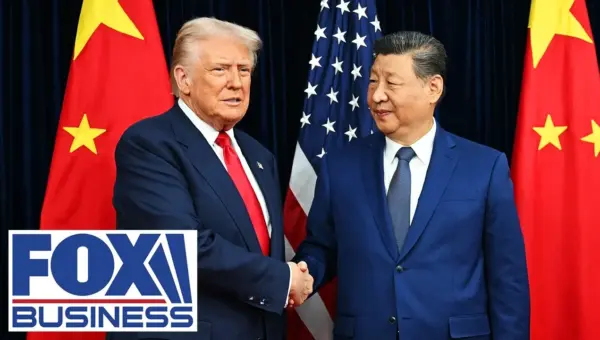
Trump Claims Xi Letter Acknowledged Halt to Weapon Sales
Former President Donald Trump revealed that Chinese President Xi Jinping sent him a letter acknowledging a halt to weapon sales. Trump also discussed his tough trade policies against China, including significant tariffs on cars and other goods. These trade actions and ongoing geopolitical tensions can create market uncertainty for investors.
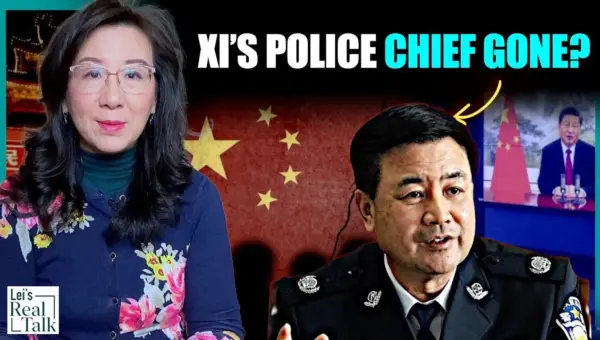
China’s Top Cop Vanishes: Is Xi Jinping Losing Control?
China's top police chief, Wang Xiaohong, has reportedly vanished, sparking rumors of a political purge. This disappearance raises critical questions about President Xi Jinping's grip on power and the stability of the Chinese Communist Party.
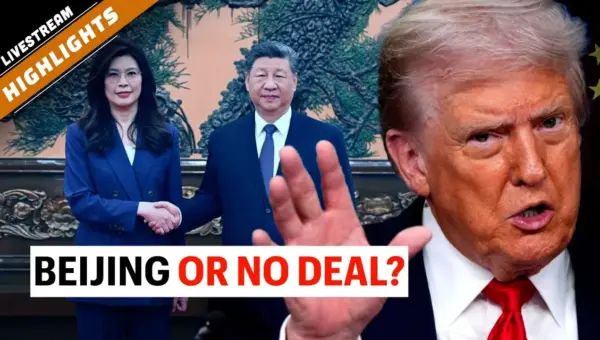
China Plays High-Stakes Taiwan Game Before Trump Summit
China is strategically maneuvering ahead of a potential meeting between Xi Jinping and Donald Trump, using Taiwan as a key focus. Beijing's invitation to Taiwan's opposition party and its military actions aim to gain leverage. The U.S. is responding with its own diplomatic and military signals, creating a high-stakes diplomatic standoff.