Beijing’s Dangerous Gambit: Xi Jinping’s Grip on Power Tested as Missing Generals Fuel Elite Crisis
A dangerous power struggle is engulfing Beijing following the mysterious disappearance of two influential Chinese generals, Jang Youxia and Liu Zhenli. The lack of official information and unprecedented procedural breaches are challenging Xi Jinping's authority, fueling demands from powerful factions to 'produce the person.' With critical political meetings approaching, the crisis threatens to destabilize the regime, potentially leading to abrupt changes or an indefinite entrenchment of Xi's rule.

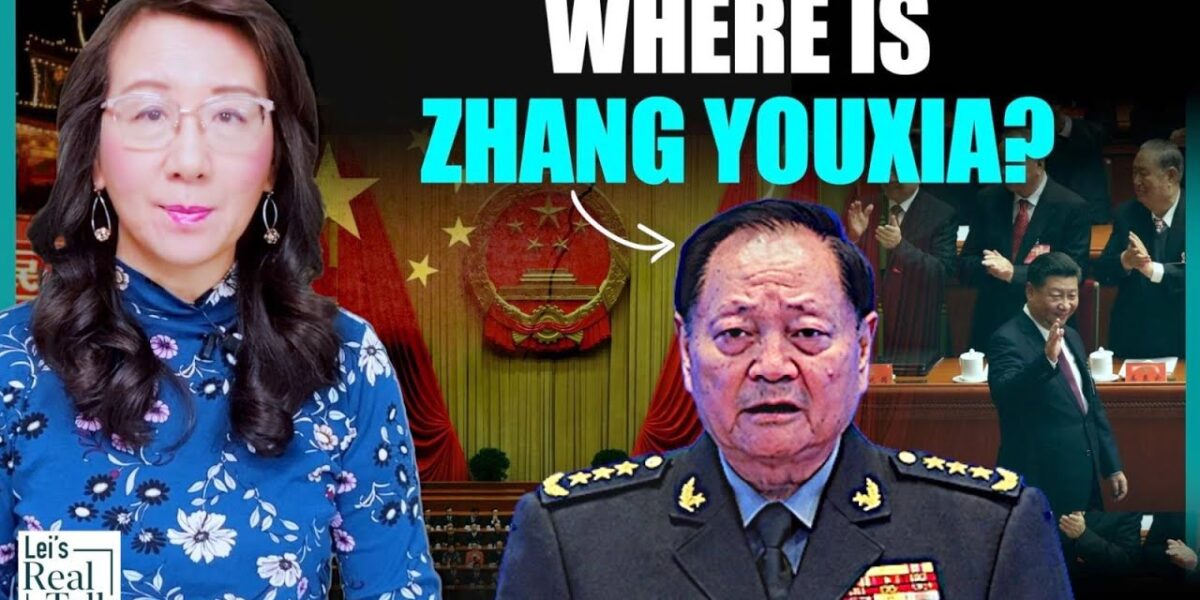
Beijing’s Dangerous Gambit: Xi Jinping’s Grip on Power Tested as Missing Generals Fuel Elite Crisis
Beijing is currently gripped by an extraordinary and perilous power struggle, as the disappearance of two highly influential military generals, Jang Youxia and Liu Zhenli, has sent shockwaves through the highest echelons of the Chinese Communist Party (CCP). For over a month, their whereabouts and fates have remained shrouded in mystery, triggering an unprecedented level of uncertainty and suspicion among China’s political and military elite. This unfolding drama is not merely about the fate of two individuals; it represents a profound challenge to President Xi Jinping’s authority, exposing deep fissures within the party and potentially pushing the regime towards a precipice of instability.
The situation, described by insiders as a delicate balance where “no one is winning and neither side can afford to lose,” underscores the acute sensitivity of the moment. The silence from official channels, coupled with highly unusual procedural breaches, suggests that Xi Jinping’s bold move against these two powerful figures has backfired, leaving him in an increasingly awkward and vulnerable position.
The Enigma of the Missing Generals
It has been four weeks since the initial “shock” — the reported move against generals Jang Youxia and Liu Zhenli. Yet, the most basic facts surrounding their disappearance remain stubbornly elusive. No official statements have been issued regarding their alleged accusations, the circumstances of their apprehension, their current place of detention, or even which state agency is handling their case. Instead, state media narratives have reportedly shifted erratically, from accusations of sabotaging Xi Jinping’s authority to corruption, and then to attempts to divide the party. This lack of transparency, particularly concerning figures of such stature, is deeply unsettling for China’s political class.
Unprecedented Silence and Shifting Narratives
In the tightly controlled world of Chinese politics, such a complete information vacuum is virtually unprecedented. Even during the tumultuous purges of Mao Zedong’s era, there was typically some form of official acknowledgment, however vague, about the fate of fallen leaders. Today, the absence of any formal task force announcement or a clear investigative body has fueled rampant speculation and anxiety. This deliberate blurring of time, location, and responsible agencies has created fertile ground for rumors, leading many to fear that something far more sinister than a standard disciplinary investigation may have occurred.
A Leader’s Awkward Predicament
The institutional silence is compounded by a series of highly unusual signals from key state bodies. Crucially, none of the major military theaters or branches have issued statements of loyalty to Xi Jinping, a customary practice designed to demonstrate cohesion and support in times of crisis. Furthermore, the Politburo and its Standing Committee, the CCP’s highest decision-making bodies, have failed to reach a unified stance on the matter. The National People’s Congress (NPC), China’s rubber-stamp parliament, even convened but conspicuously avoided any discussion of the generals’ case, a clear sign of internal disagreement or paralysis. Adding to Xi’s predicament, the powerful Central Commission for Discipline Inspection (CCDI) publicly signaled that the apprehension of the two generals was not its operation, effectively distancing itself from the controversial move. These collective actions reflect just how precarious Xi Jinping’s position has become; he initiated a significant political maneuver but now appears unable to resolve it cleanly, creating a lingering crisis of legitimacy and control.
The Demand: “Produce the Person”
As the weeks turn into a month, all attention has converged on a dreadful question: Is General Jang Youxia even still alive? Sources close to Jang’s family indicate that despite exhausting every available channel, they have been unable to confirm his real status. This agonizing uncertainty has prompted representatives from several “princeling” families – descendants of revolutionary-era leaders – and various party elders to reportedly pressure Xi Jinping directly, demanding that he “produce the person” – either alive or dead. The implication is stark: if Jang Youxia is alive, he must be presented to provide a procedural explanation for his detention and to mitigate the escalating crisis. Failure to do so, many believe, risks the entire regime being “roasted over an open fire,” as the military and bureaucratic systems watch intently.
Whispers of Detention and Dire Conditions
The internet is awash with conflicting rumors regarding Jang Youxia’s whereabouts and condition. Some reports suggest he is being held at a Ministry of Public Security training base in Changping, on the outskirts of Beijing, or under “organizational supervision” – a form of soft detention – in Shenzhen. However, these claims are often contradicted by the fact that his family has been consistently denied visits. The speaker in the original transcript found such claims unreliable, arguing that if Jang were alive, Xi Jinping would never risk moving him out of Beijing, preferring to keep him under the absolute control of Wang Xiaohong’s security apparatus to prevent any rescue or extraction attempts by rival military factions.
More recent and alarming claims circulating suggest that Jang Youxia may be on the brink of death, held at a Central Guard Bureau facility south of Beijing near Nanyuan airport. These unverified reports allege severe mistreatment, possibly torture, and a hunger strike, leading to a critical medical condition requiring emergency treatment. While these remain rumors, their prevalence and grim nature underscore the deep anxiety and mistrust permeating China’s elite circles.
Red Lines Crossed: A System Under Strain
The true danger of this crisis extends far beyond the fate of Jang Youxia and Liu Zhenli. It lies in the manner of their apprehension, which has reportedly crossed several long-standing “red lines” within the CCP system. Once these unwritten rules are broken, a profound sense of fear and insecurity spreads rapidly, particularly among those who once believed themselves untouchable.
Civilian Overreach: Humiliating the PLA
Multiple circulating accounts suggest that the generals were apprehended in the early morning of January 20th at the central party school by a special task force from the public security system, under the direct command of Wang Xiaohong. This detail is crucial and deeply problematic. Traditionally, when the CCP deals with senior military leaders, their cases are handled through internal military channels – the People’s Liberation Army (PLA) system, including its own courts, legal system, discipline inspection bodies, and detention facilities. Civilian authorities, particularly the police, rarely interfere directly in military discipline, a norm observed by militaries worldwide to maintain institutional integrity.
If public security forces indeed took down serving Central Military Commission (CMC) leaders within the PLA’s own domain, this would constitute a profound institutional humiliation for the military. It signifies the police apparatus asserting dominance over the armed forces, an affront to the PLA’s prestige and autonomy. Both Jang Youxia, a prominent princeling, and Liu Zhenli, a highly respected, combat-oriented commander from the field army system, carry immense prestige within the military. Their alleged apprehension by police security forces would deliver an enormous shock to military morale and be viewed as an unacceptable breach of protocol.
The Unwritten Rule: No Killing of Princelings
Another critical red line, established by Deng Xiaoping and other party elders, dictates that while political infighting is permissible, it should not escalate to the point of killing. This rule was designed to maintain a semblance of stability and prevent internecine warfare among the elite. Jang Youxia, as a princeling, embodies this historical compact. If he is indeed dead, or if his status cannot be confirmed, it signals that this fundamental rule has been violated. Such a breach instantly shatters the sense of safety among the entire elite power community. The fear is palpable: “Today it’s him, tomorrow it could be any family,” leading to a widespread perception that no one is truly safe from Xi Jinping’s increasingly ruthless consolidation of power.
Eroding Trust and Fragmenting Power
The crossing of these red lines has led to two immediate and severe consequences. Firstly, the broader party establishment is rapidly losing trust in Xi Jinping. His actions are perceived as arbitrary and destabilizing, undermining the very procedural norms that have historically governed elite power transitions and purges. Secondly, in response to this erosion of central trust, various factions are reportedly beginning to build their own security mechanisms. When powerful elites cease to rely on the central security apparatus and instead cultivate their own protection networks, the CCP risks transforming from a highly centralized party into a fragmented, multi-armed political bloc. This phenomenon, where every “red family” starts building its “private army,” is ominously described as a classic precursor to civil conflict, reminiscent of pre-civil war conditions.
Beijing’s Factions Mobilize
In this climate of intense suspicion and fear, at least three major forces within the CCP are said to be actively maneuvering, each with distinct strategies for navigating the crisis and confronting Xi Jinping.
The Conservative Negotiators
The first force is the conservative camp, reportedly associated with influential figures like Zeng Qinghong, a former Vice President and a key figure within the Shanghai clique. This faction is attempting to negotiate with Xi Jinping, primarily demanding definitive information about Jang Youxia’s whereabouts. According to sources close to this camp, they have reluctantly agreed to give Xi Jinping a three-month deadline to “produce” Jang Youxia. This compromise is partly intended to save face for the regime, especially ahead of planned state visits. However, many insiders view this as a dangerous concession, believing three months is too long and risks Jang’s life, while simultaneously buying Xi Jinping crucial time to consolidate his position or “flip the table” on his opponents.
The Bureaucratic Watchers
The second force comprises the bureaucratic establishment, often linked to former leaders Hu Jintao and Wen Jiabao, sometimes referred to as the “reformist faction.” This camp is reportedly adopting a more cautious approach, observing the unfolding situation and waiting for the opportune moment to make a decisive move. Their strategy appears to be one of calculated patience, preparing to mobilize their influence and resources when the political landscape shifts decisively.
The Princeling Ultimatum
Perhaps the most dangerous and resolute of the three camps are the core red princeling clans, said to have rallied around Deng Pufang, the eldest son of paramount leader Deng Xiaoping. These powerful families have reportedly lost all patience with Xi Jinping. Their belief is that Xi Jinping must be removed, even if it means fracturing the regime in the process. They see negotiation as a path to certain loss and believe that only direct action can resolve the crisis. Drawing on their extensive resources, old networks, and private security channels, these princeling voices are now openly heard online, issuing clear warnings. Their message is unequivocal: if the generals are not accounted for, they will respond with “non-procedural methods,” with some even hinting at direct retaliation against Xi Jinping’s camp.
Information Warfare and a Nation on Edge
Amidst this high-stakes power struggle, information control has escalated dramatically. On platforms like X (formerly Twitter), systematic operations by the CCP’s propaganda apparatus are reportedly underway, with millions of bot accounts flooding search results for “Jang Youxia” with pornographic content. This tactic, a common method of diverting attention and burying sensitive topics, highlights the regime’s desperation to control the narrative.
However, these efforts are not entirely successful. Everyday, large numbers of Chinese military officers and officials are reportedly circumventing the Great Firewall to seek out real information about Jang Youxia and the broader political situation. For them, this is not abstract politics; it is a matter of personal survival. Their decisions on which side to stand will be based on their assessment of who is winning, making the flow of credible information a critical battleground.
The Looming Showdown: Two Sessions and Politburo Meeting
The next few weeks are poised to be exceptionally critical, with two key political events rapidly approaching: the “Two Sessions” in early March and a crucial late February Politburo meeting. These events represent a strategic window for both Xi Jinping and the anti-Xi factions, with profound implications for the future of Chinese leadership.
The Strategic Stakes for Generals
The “Two Sessions” – the annual meetings of the National People’s Congress (NPC) and the Chinese People’s Political Consultative Conference (CPPCC) – will see delegates from across the country, including nearly all CCP generals, converge in Beijing. This gathering presents a dangerous opportunity for Xi Jinping. If he continues to refuse to back down, he could use the sessions as a pretext to pressure these generals to publicly pledge loyalty while they are physically present in the capital, away from their troops and bases. Those who refuse could face the same fate as Jang Youxia and Liu Zhenli, risking a swift purge. This scenario creates immense pressure on the anti-Xi camp, as time is rapidly running out for them to stabilize the situation before their military allies are potentially exposed and vulnerable.
The historical precedent is vivid: just last year, Jang Youxia himself reportedly used the Two Sessions to orchestrate the removal of several of Xi’s loyalists within the military, including Wei Fenghe. This year, the tables could turn, with Xi Jinping leveraging the same platform to target generals perceived as disloyal, further consolidating his control over the PLA.
A Battle for Succession: Hu Chunhua’s Role
Adding another layer of complexity is the late February Politburo meeting. Xi Jinping’s camp aims to secure retroactive approval for his controversial move against the generals. Simultaneously, the anti-Xi camp, particularly the bureaucratic establishment led by Hu Jintao and Wen Jiabao, is reportedly pushing for Hu Chunhua to be moved from the CPPCC into the State Council as Vice Premier in charge of the economy, replacing a Xi loyalist. This move is not merely a reshuffle; it is seen as a critical prerequisite to position Hu Chunhua as a potential successor to Xi Jinping at the 21st Party Congress. If this promotion is to occur at the Two Sessions in March, it must first be approved at the late February Politburo meeting. The collision of these two critical objectives – Xi seeking approval for his purges, and the anti-Xi camp attempting to elevate a potential rival – makes the upcoming Politburo meeting a pivotal moment to watch.
The Military Balance in the Capital
The prospect of a forced solution, should Xi Jinping refuse to yield, raises questions about the military balance within Beijing itself. Reports suggest intense behind-the-scenes activity among red families, particularly concerning the capital’s garrison.
Xi’s Private Security vs. Red Family Networks
While a close associate of Xi Jinping, Chen Yuan, was reportedly transferred to command the Capital Garrison, many officers within this crucial unit are said to be aligned with red family networks. Consequently, Chen Yuan has allegedly been sidelined, and the Capital Garrison is not under Xi Jinping’s full control. This is a critical vulnerability for Xi, as the red families have historically maintained a tight grip on the garrison to prevent it from falling outside their influence.
Xi Jinping’s primary security forces are described as relying mainly on the Central Security Bureau, an elite unit of approximately 10,000 soldiers, and several thousand personnel from special security units within the Ministry of Public Security – effectively his “private army.” However, the Capital Garrison has a long history of coexisting with the Central Security Bureau and is unlikely to move against PLA units, especially given its ties to red families. This suggests that if PLA units were to enter Beijing, they would likely hold a strategic advantage over Xi’s forces.
However, the decision to deploy PLA units into Beijing carries an immense burden. Pre-battle assessments reportedly anticipate heavy casualties, potentially in the thousands. This is a responsibility that cautious figures like Hu Jintao and Wen Jiabao have never faced, making them hesitant to order such a drastic move, preferring a negotiated outcome to avoid fracturing the party.
The Burden of a Decisive Move
Some powerful voices are urging General Liu Yuan, another highly respected princeling and son of former President Liu Shaoqi, to lead the PLA and act decisively. They believe Liu Yuan possesses the prestige and authority to lead the military as an interim leader and confront Xi Jinping’s faction. However, the anticipated human cost of such an intervention weighs heavily on the minds of the more conservative factions, leading to a stalemate.
The Path Ahead: Indefinite Rule or Abrupt Change?
The stakes of this crisis are monumental. If the anti-Xi camp ultimately refuses to deploy the PLA into Beijing, and if Xi Jinping simultaneously refuses to back down, the consequences could be dire. It would mean that figures like Hu Chunhua cannot be strategically positioned as Xi’s potential replacement, effectively allowing Xi Jinping to entrench himself indefinitely. Such an outcome, many fear, could transform China into a “larger-sized North Korea,” characterized by absolute personal rule and an even more pervasive climate of fear.
Conversely, if Hu Jintao were to make a decisive call and order PLA units into Beijing, Xi Jinping’s camp could be brought down, potentially offering him the face-saving option of stepping down due to “illness.” However, the conservative faction has warned that such a move could irrevocably split the party, pushing figures like Hu Jintao and Wen Jiabao to continue seeking a negotiated resolution, even as time runs out.
Conclusion: A Regime on the Brink
The disappearance of generals Jang Youxia and Liu Zhenli is more than an isolated incident; it is a potent symbol of a deeper, systemic crisis within the Chinese Communist Party. It highlights a fundamental breakdown of trust among the top leadership, where factions increasingly view each other as existential threats. The unprecedented procedural breaches, the demands for accountability, and the mobilization of powerful elite groups all point to a regime grappling with internal turmoil on a scale rarely seen in recent decades.
As the “Two Sessions” loom, the window for a negotiated or decisive outcome is rapidly closing. The longer the uncertainty surrounding the generals’ fates persists, the more corrosive it becomes to the party’s stability and Xi Jinping’s authority. The situation is poised for abrupt, rather than gradual, developments, with the potential to fundamentally reshape China’s political landscape and its trajectory for years to come. The question of “where is Jang Youxia?” has become a dangerous cipher, whose unanswered status implies a deadly fight at the very heart of power, threatening to break the system from within.
Source: Beijing’s Power Struggle: Why Xi Must “Produce” the General (YouTube)

Related Articles

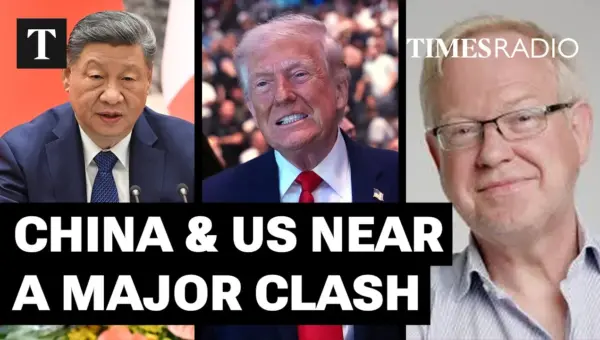
China-US Tensions Flare: Blockade Risk Sparks Superpower War Fears
The U.S. blockade in the Strait of Hormuz has intensified tensions with China, raising fears of a potential superpower conflict. Expert Roger Boyes highlights China's use of a "shadow fleet" and military support for Iran, while President Trump attempts a delicate diplomatic approach ahead of a key meeting with President Xi Jinping.
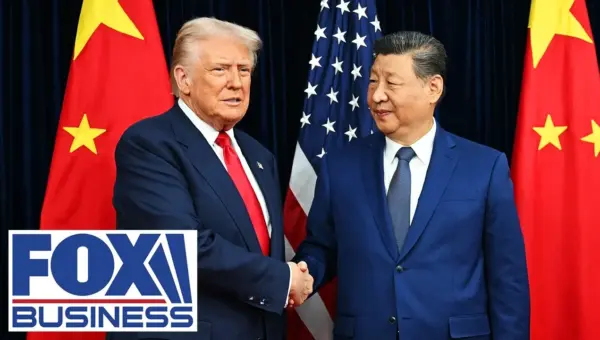
Trump Claims Xi Letter Acknowledged Halt to Weapon Sales
Former President Donald Trump revealed that Chinese President Xi Jinping sent him a letter acknowledging a halt to weapon sales. Trump also discussed his tough trade policies against China, including significant tariffs on cars and other goods. These trade actions and ongoing geopolitical tensions can create market uncertainty for investors.
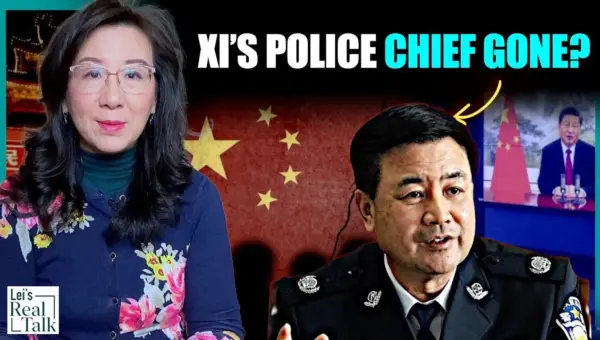
China’s Top Cop Vanishes: Is Xi Jinping Losing Control?
China's top police chief, Wang Xiaohong, has reportedly vanished, sparking rumors of a political purge. This disappearance raises critical questions about President Xi Jinping's grip on power and the stability of the Chinese Communist Party.