Thirteen Days in January 2026: A Democracy Under Siege?
A mere thirteen days into January 2026, leading democracy experts Francis Fukuyama and Larry Diamond warn of an escalating crisis, citing an increasingly unrestrained presidency, plummeting approval ratings, and a pattern of constitutional abuses. Domestic and international allies are unnerved by a shift towards authoritarianism and transactional foreign policy, while deeper societal ideological shifts threaten the very foundations of democratic governance, with the integrity of the electoral process identified as the gravest danger.

Thirteen Days in January 2026: A Democracy Under Siege?
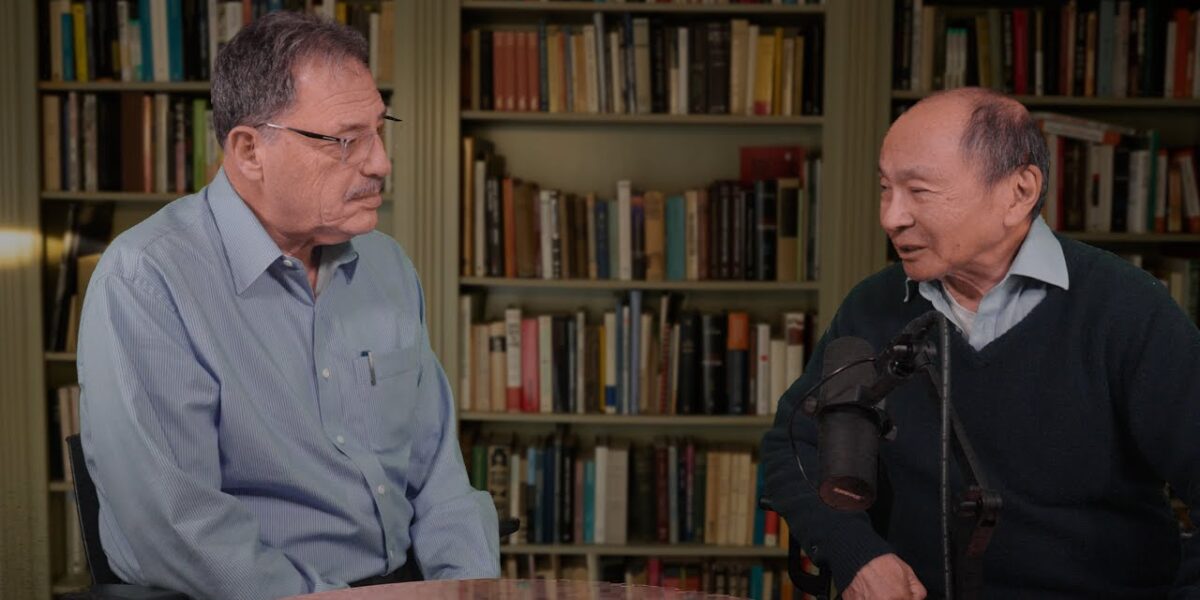
As the nascent year of 2026 unfolds, a mere thirteen days into January have ignited a fervent debate among leading experts on global democracy, painting a stark picture of escalating political turbulence and constitutional challenges. In a recent, candid discussion, Stanford University’s esteemed scholars, Francis Fukuyama and Larry Diamond, dissected a period they describe as “remarkable” and “alarming,” highlighting a confluence of domestic and international crises that threaten the very foundations of democratic governance in the United States and abroad. From unprecedented executive actions to a palpable shift in the global order, their conversation serves as a chilling assessment of a nation’s trajectory at a critical juncture.
The Unrestrained Presidency: A Deepening Crisis of Authority
At the heart of the unfolding drama, according to Diamond, is a presidency revealing itself to be “more unrestrained, more impulsive, more dangerous, more vain, more narcissistic, more imperialistic, and more inclined toward abuse of the Constitution and the rule of law.” This assessment goes beyond immediate anxieties, suggesting a systemic erosion of checks and balances. Fukuyama recalled a pivotal moment – a New York Times interview – where the president, when asked about restraints on his power, reportedly cited “my own morality.” For Diamond, this statement is the “literal definition of saying that he’s unrestrained,” especially for those who perceive little moral compass guiding his actions. The implications are profound, extending beyond partisan divides to challenge the fundamental principles of governance and accountability.
This perception of an unchecked executive has sent ripples across the international system. Allies, not just adversaries, are increasingly “unnerved and alarmed,” as they witness a departure from established norms and predictable policy-making. Domestically, the alarm bells are ringing louder among those who “value the rule of law and the Constitution.” While Democratic voices have been vocal, the conversation highlighted a growing unease even within the Republican Party, suggesting that the president’s actions might be pushing some traditional conservatives to a breaking point.
Domestic Fallout: Cracks in the Republican Wall and Public Disapproval
A significant factor contributing to this shifting landscape is the president’s plummeting approval ratings. Diamond noted that the president’s standing is at its “lowest point that a president has been after one year of his second term since Richard Nixon in 1974,” a historical parallel that evokes memories of profound constitutional crisis. The president is “massively underwater on every single issue,” even those traditionally considered his strengths, such as immigration. This decline in public support, the scholars argue, provides a crucial “permission structure” for hesitant Republicans to finally voice criticism.
Indeed, signs of dissent within Republican ranks are beginning to emerge. Senator Tom Tillis of North Carolina, not seeking re-election, has been “liberated to speak his mind.” While others, like Senator Joni Ernst, have also announced their retirement without speaking out, the critical stance of figures like Senator Rand Paul suggests a potential “dam break.” The theory is that once one Republican criticizes the president and “discovers, well, he’s still standing,” others may lose their fear and follow suit, particularly as the president’s political leverage wanes.
Specific Incidents: A Pattern of Executive Overreach
The discussion delved into several specific incidents from the first 13 days of January 2026, illustrating the president’s increasingly authoritarian tendencies:
- The Minnesota Killing and Politicized Justice: The killing of Renee Good by an ICE officer, and the swift, unsubstantiated branding of her as a “domestic terrorist” by prominent figures like Governor Kristi Noem and JD Vance, exemplified a disregard for due process. The subsequent pressure on federal prosecutors in Minneapolis to investigate Good’s mother, leading to resignations, highlighted the politicization of the Justice Department. This incident echoes broader concerns about the weaponization of law enforcement for political ends.
- The Assault on the Federal Reserve: The shocking move to pursue criminal charges against Federal Reserve Chairman Jerome Powell was described as combining “two bad things that Trump is doing: politicizing the Fed” and “misuse of the criminal justice system.” The Federal Reserve’s independence is a cornerstone of economic stability, and this action, particularly given Powell’s impending departure, was seen as a “show of dominance” – a need to demonstrate absolute power and punish dissent.
A New Era of American Foreign Policy? The “Show of Dominance” Doctrine
The president’s domestic behavior, the scholars contended, is mirrored in his foreign policy. Fukuyama posited a psychological theory: an earlier, successful “once and done attack” on an Iranian nuclear enrichment site, facilitated by Israeli actions, may have convinced the president that he could “pretty much use American power” to target enemies and gain public approval. This perception, they suggested, fueled subsequent actions, such as interventions in Venezuela, despite contradicting earlier promises of “no more forever wars, no more nation building.” The key distinction, however, is the avoidance of “boots on the ground,” allowing the president to claim adherence to his initial pledges while still projecting force.
This “show of dominance” doctrine appears particularly directed at “small, weak powers.” The conversation even touched upon the hypothetical scenario of seizing Greenland if Denmark and Greenland resisted, underscoring a preference for exerting power where resistance is minimal. The real test, they argued, would come “the moment that he actually goes up against either Russia or China directly.”
The Geopolitical Chessboard: China, Taiwan, and Europe’s Dilemma
The discussion then pivoted to the most volatile geopolitical flashpoints, revealing deep anxieties about the future of international stability.
Taiwan: A Looming Shadow
Larry Diamond, a long-standing expert on Taiwan, expressed heightened concern about the island’s security, particularly given the president’s “selfish and self-interested” nature. Doubts were raised about whether the president would genuinely come to Taiwan’s defense in the event of a Chinese blockade or military action. The risk is amplified by the president’s “pension for secret and directly personal diplomacy with authoritarian leaders” like Xi Jinping, potentially leading to inadvertent signals that might embolden China. While China may not be militarily ready for such a radical step, and Taiwan’s internal political dynamics (upcoming elections) might encourage Beijing to wait, the unpredictability of the American president remains a significant worry. The absence of China and Russia as major threats in the published national security strategy document further compounds these concerns, suggesting a transactional approach – prioritizing trade deals (like the sale of advanced semiconductors) over long-term strategic competition.
Europe’s “Suck-Up Policy” and the Need for Strength
European allies, the scholars observed, have been “out of their minds” trying to navigate relations with the current US administration. Their initial strategy, dubbed the “suck-up policy,” involving concessions and appeasement (like the Swiss offering a Rolex and gold bar to avoid high tariffs), has proven effective in isolated instances but is ultimately unsustainable. Fukuyama argued that Europe must abandon this approach and instead adopt a policy of “tougher” retaliation and common action within the EU.
A potential “game-changer” within the EU was identified: the recent decision by Hungary, Slovakia, and Italy to not veto a tougher sanctions policy, despite their opposition, thereby allowing it to pass. This signals a possible shift away from the debilitating “unanimity rule” that has long hampered the EU’s foreign policy decisions. Moving towards “qualified majority voting” is seen as crucial not only for defending democracy within Europe (against illiberal populists like Robert Fico in Slovakia) but also for projecting strength on the international stage. Both scholars agreed that the president “only understands strength and power and counter leverage,” citing China’s ability to extract concessions due to its dominance in rare earth minerals as an example. Nations like China, Brazil, and India, which have “stood up to Trump,” have seen their leaders gain popularity domestically, demonstrating that resistance can be politically rewarding. The hope is that democratic allies will be the ones to apply this “compelling pressure,” rather than adversaries, to avoid further global destabilization.
The “Break Glass Moment”: A Creeping Constitutional Crisis
Despite the international turbulence, the most profound anxieties center on the domestic situation in the United States. The “mounting violation of the Constitution, the rule of law, the necessary autonomy of the Justice Department, the Federal Reserve,” and other institutions is creating a sense of creeping crisis. While no single “break glass moment” – such as directly defying a Supreme Court decision – has occurred, the “pattern is accelerating and accumulating.” The hope, albeit a tentative one, is that this escalating pattern will finally compel “timid Republican senators and house members” to act.
Beyond Trump: The Republican Party’s Shifting Landscape
Speculation about the president’s physical and mental health – “hunched over condition,” “falling asleep in meetings,” “lapses in mental acuity” – led to questions about whether he might even finish his term. While the invoking of the 25th Amendment or a Senate conviction after impeachment were deemed “very improbable,” the discussion turned to the post-Trump Republican Party.
The 2028 Republican presidential nomination is envisioned as a potential contest between figures like JD Vance and Marco Rubio. Vance is seen as projecting “the spirit of Trump,” while Rubio attempts to “subtly straddle the boundary” between Trump’s break with the past and more conventional, law-abiding Republicanism. Rubio’s fate, it was noted, might hinge on the outcome of the Venezuela policy, of which he is a key architect. However, the broader trajectory of the party suggests a deeper, more troubling shift.
The Deepening Ideological Divide: A Sickness in Society?
Beneath the surface of political maneuvering lies a profound “sociological” transformation of the Republican Party, which has moved “substantially to the right.” This shift is characterized by the rise of openly extremist elements, including “open anti-semites like Nick Fuentes” and the use of “overtly Nazi kinds of slogans” within government agencies. What is particularly alarming is not just tactical alignment but the emergence of “true believers” – individuals who are ideologically committed to this new direction, often having no prior Republican affiliation. This includes a segment of “mega wealthy multi-billionaire Silicon Valley tech executives,” whose support adds a new dimension to the movement.
The scholars drew parallels to the rise of authoritarian regimes globally, where “blind obedience, fawning deference, opportunistic agreement, and unquestioning and opportunistic obedience” are key factors. The lack of robust resistance, they argued, is what permits the construction of authoritarian rule. This extends beyond mere opportunism to a genuine “ideological” and “philosophical” movement, one that exhibits “neonazi,” “Groerism,” and “anti-semitism” elements, suggesting a “new current of almost fascistic extremism.”
Even within this ideological movement, however, fissures exist. “Catholic integralists,” who seek a reunification of church and state, often clash with “tech bros” like Curtis Yarvin, who reject the premise of universal human equality and advocate for rule by “smart people.” These internal contradictions, while potentially exploitable, do not diminish the overall worry that this “sickness” has “gone deeper into the society” and possesses “more staying power” than the political survival of any single leader.
The Imperative of Democracy: Safeguarding the Electoral Process
Despite the multitude of challenges – executive abuses, politicized justice, and the erosion of institutional autonomy – the gravest danger, in Diamond’s view, remains “his assault on the freedom, fairness and integrity of the electoral process.” As the nation navigates this turbulent period, the urgent and “sacred imperative” is to ensure the survival and honor of the democratic process through upcoming elections in 2026 and 2028. The first 13 days of January 2026 have laid bare the profound challenges, underscoring the critical need for vigilance and a renewed commitment to democratic principles.
Source: Thirteen Days in January 2026 (YouTube)

Related Articles
Democrat Seeks Defense Chief’s Impeachment Amid War Concerns
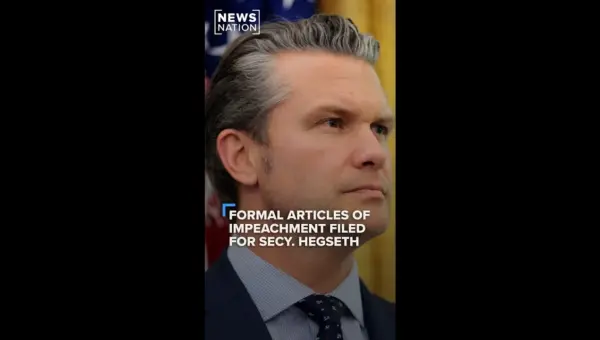
A Democratic lawmaker has filed articles of impeachment against Secretary of Defense Pete Hagseth, citing incompetence and dangerous actions. The resolution highlights concerns over classified information leaks, controversial military strikes, and civilian casualties. The lawmaker seeks bipartisan support, arguing for national interest over party loyalty.
Trump’s Blockade Fails, Allies Shun Mission: A Pattern?
A reported failure of Donald Trump's blockade of the Strait of Hormuz, with ships passing through unimpeded, raises questions about policy effectiveness. This incident, coupled with allies' reluctance to join the mission, suggests a pattern of unintended consequences and strained international relations.
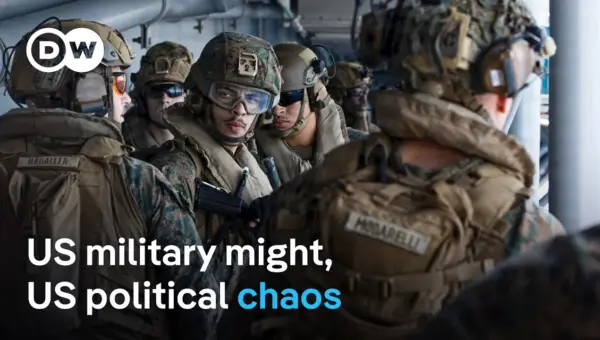
US Military Strength: Tactical Wins, Strategic Gaps?
The U.S. military demonstrates incredible tactical skill, capable of executing complex missions. However, this prowess is often undermined by unclear political goals and shifting strategies set by civilian leadership. Experts argue that holding elected officials accountable for these decisions is crucial, as the military cannot compensate for flawed governance.