Supreme Court Curbs Presidential Tariff Powers
The Supreme Court has significantly restricted the President's power to use tariffs as a political weapon, invalidating the use of AIPA tariffs. This decision promotes more uniform and transparent trade policies, curbing the potential for arbitrary executive action and corruption.


Supreme Court Limits Presidential Tariff Authority
In a significant ruling, the Supreme Court has effectively curtailed the President’s ability to wield tariffs as a unilateral political weapon. The decision invalidates former President Donald Trump’s use of tariffs under the International Emergency Economic Powers Act (AIPA), impacting how future administrations can leverage trade policy for political ends. While the immediate consequences, such as the repayment of collected tariff revenues and potential inflation, have been widely discussed, the ruling strikes at the heart of the executive branch’s discretionary power in international trade.
Tariffs as a Political Lever
During his presidency, Donald Trump viewed tariffs not merely as an economic tool to protect domestic industries, but as a versatile instrument of foreign policy and political leverage. The transcript highlights a belief that the President could unilaterally set tariff rates on specific countries, often in response to personal or political slights. Examples cited include a nearly 40% duty imposed on Swiss products following a conversation that reportedly displeased the President, which was later reduced to 15% after the receipt of a gift. Similarly, threats of high tariffs were reportedly used in an attempt to influence geopolitical outcomes, such as the bid to acquire Greenland.
“Trump saw tariffs not just as an economic tool, but as an all-purpose political weapon that he could turn against any country that he didn’t like, as well as a source of personal enrichment.”
The Perils of Bespoke Tariff Policy
The article argues that such individualized and discretionary tariff policies are detrimental to stable economic planning. Businesses require clear, consistent, and transparent rules to make investment decisions. The ability for a president to arbitrarily change tariff rates based on personal whims creates an environment of uncertainty, hindering long-term planning and potentially inviting corruption. The transcript notes that following the announcement of broad tariffs, numerous U.S. trading partners engaged in negotiations to secure favorable terms, suggesting a system ripe for ‘side payments’ and less-than-transparent deal-making.
Undermining Institutional Legacy
The ruling also touches upon a broader critique of presidential power and legacy-building. The transcript posits that while executive orders and one-off deals can be easily reversed, true institutional legacies are forged through legislation passed by Congress. The article suggests that Trump’s reliance on executive actions and ad-hoc agreements, rather than legislative achievements, has left a potentially ephemeral legacy. The Supreme Court’s decision, by limiting the scope of presidential discretion in tariff imposition, aligns with this principle of favoring established, transparent procedures over executive fiat.
The Court’s Rationale and Future Implications
The Supreme Court’s decision specifically invalidated the use of AIPA tariffs, emphasizing that subsequent authorities invoked, such as Section 122 of the Trade Act of 1974, mandate uniform tariffs rather than country-specific rates. Furthermore, the limited 150-day duration of the Section 122 authority significantly diminishes its utility as a sustained political weapon. While future administrations may still employ tariffs under different statutory authorities, these generally require more formal procedures and reduce the president’s unfettered discretion. This shift is seen as a positive development, promoting a more predictable and less politically charged trade environment.
A Win for Predictability
The article concludes that the Supreme Court’s ruling is a victory not only for the United States but also for the global trading community. By reining in the executive’s ability to use tariffs as a personal or political bargaining chip, the decision promotes greater stability and predictability in international economic relations. It signals a move away from a system where trade policy could be dictated by the caprice of a single individual, towards one that relies on established legal frameworks and transparent processes.
Looking ahead, the focus will be on how the current and future administrations navigate international trade policy within these newly defined boundaries. The long-term impact on U.S. trade relations and domestic industries will depend on the clarity and consistency with which these powers are exercised, and whether Congress takes steps to further codify or amend trade legislation in light of this ruling.
Source: The Supreme Court takes away the Tariff Weapon (YouTube)

Related Articles

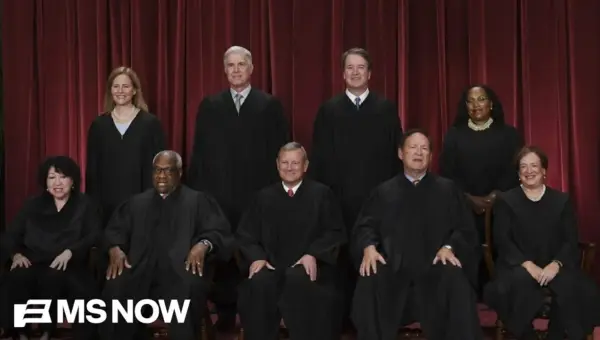
Supreme Court’s Legitimacy Tested: A Look Inside
The Supreme Court is increasingly seen as the "last branch standing" to resolve national disputes, a role that strains its legitimacy. Author Sarah Isker's new book, 'Last Branch Standing,' examines the court's internal dynamics and its complex relationship with public opinion and other branches of government.
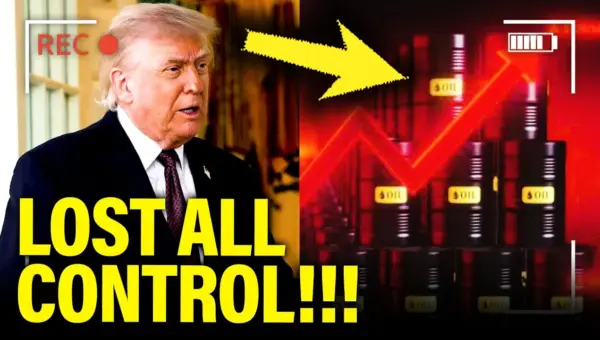
Trump’s Tariffs Ignite Inflation Crisis, Fed Stands Helpless
Inflation has surged to 3.3%, driven by a combination of energy shocks and self-inflicted tariffs. The Federal Reserve's tools are largely ineffective against this supply-driven crisis, leading to a potential for prolonged economic pain and a political opportunity to rethink economic policy.


US Beef Faces Global Strain, Seeks Domestic Boost
American cattle ranchers face rising costs and foreign competition, leading to a new voluntary labeling initiative for U.S. beef launching in 2026. This aims to empower domestic producers and inform consumers amidst complex global trade rules.