World Leaders Balk at Trump’s Iran Stance Amid Trade Realignment
World leaders are reportedly hesitant to support Donald Trump's potential military action against Iran, citing a lack of allied backing. Meanwhile, Canada's Prime Minister Mark Carney is actively building new international partnerships to reduce economic reliance on the U.S. amid ongoing trade tensions.

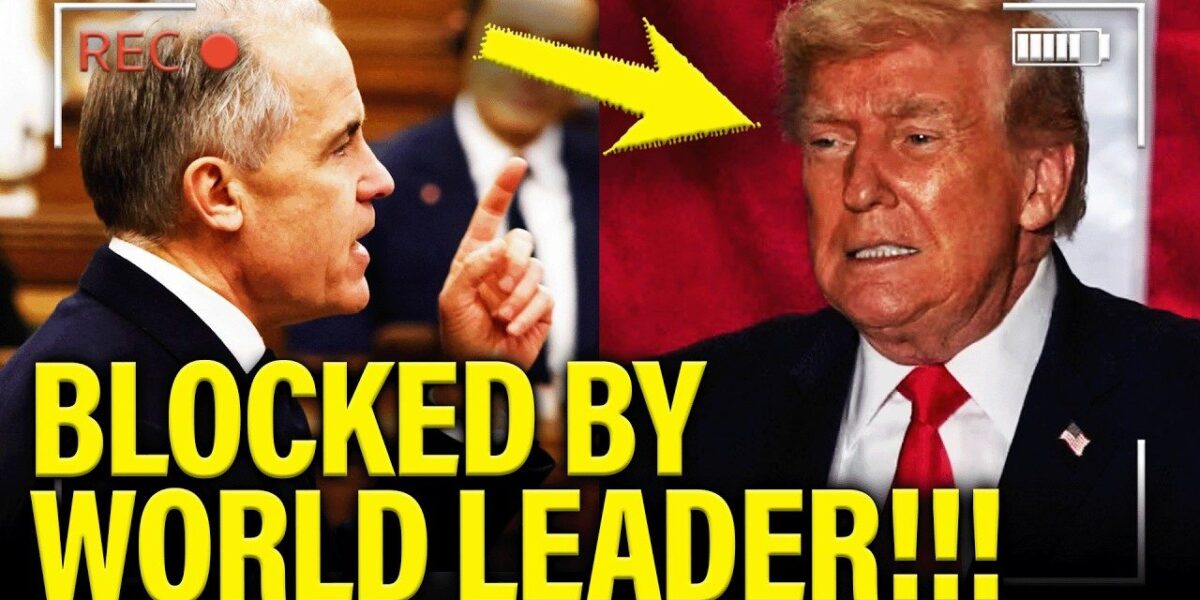
Global Allies Hesitate on Military Action, Canada Charts Independent Course
In a significant diplomatic and military development, world leaders are reportedly expressing strong reservations about Donald Trump’s aggressive posture towards Iran, with several key allies refusing to offer support for potential military action. Concurrently, Canada, under Prime Minister Mark Carney, is actively forging new international partnerships to reduce its reliance on the United States, signaling a broader shift in global economic and political alignments.
Pentagon Cautions Against Iran Strike Without Allied Support
Sources indicate that Donald Trump’s administration is facing internal dissent and external skepticism regarding a potential military strike on Iran. General Mark Milley, Chairman of the Joint Chiefs of Staff, has reportedly advised President Trump that a limited strike to topple the Iranian regime would be untenable without broad international backing. The Pentagon’s top general has cautioned that a lack of allied support, beyond that of Israel, would create significant risks to any operation and to U.S. personnel. Military planners have warned that any strike, even limited, could escalate into a wider confrontation, potentially drawing the U.S. into a protracted conflict in the Middle East. This cautious stance from military leadership, emphasizing shortfalls in critical munitions and the potential for a wider war, contrasts with Trump’s reported frustration over the perceived limitations of military leverage.
“If we don’t have support from any allies other than Israel, we can’t do just a limited strike on Iran to topple the regime. We have no support, Donald.”
– General Mark Milley (as reported)
Despite these warnings, reports suggest Trump remains insistent on his approach. In a public statement, Trump addressed the speculation surrounding General Milley’s position, stating, “The story does not attribute this vast wealth of knowledge to anyone and is 100% incorrect. General Kane like all of us would like to see war would like to not see war. But if a decision is made on going against Iran at a military level, it is his opinion that it will be something easily won.” Trump also asserted his sole decision-making authority, noting, “I am the one that makes decisions. I would rather have a deal than not.”
Canada Diversifies Trade Ties Amid U.S. Tensions
While the U.S. faces international friction, Canada is proactively strengthening its global economic relationships. Prime Minister Mark Carney has embarked on an extensive international tour, visiting India, Australia, and Japan, following earlier engagements in Europe. This diplomatic push aims to forge new trans-Pacific and transatlantic partnerships, seeking to unlock trade, energy, technology, and defense opportunities for Canadian businesses and workers. The initiative is explicitly aimed at reducing Canada’s economic dependence on the United States, particularly amid ongoing trade tensions and tariffs imposed by the Trump administration.
The BBC has reported on Carney’s efforts, highlighting Canada’s strategy to “reduce its US reliance.” During his trip, Carney is scheduled to meet with Prime Minister Narendra Modi in India, Prime Minister Anthony Albanese in Australia—where he will address Parliament, marking a significant diplomatic moment—and Prime Minister Fumio Kishida in Japan. A spokesperson for Carney stated, “In a more uncertain world, Canada is focused on what we can control. We are diversifying our trade and attracting massive new investments to create new opportunities for our workers. We are Canada strong.”
Domestic Echoes: Tariffs and Political Pressure
The impact of U.S. trade policies, particularly tariffs, is resonating beyond international diplomacy. Doug Ford, the Conservative Premier of Ontario, has voiced strong criticism of the tariffs, arguing they harm the Canadian economy and, by extension, American interests. Ford stated that tariffs on Canada are “attacks on the US” and expressed his intention to spread this message through media outlets, including CNN. He highlighted concerns about rising inflation in the U.S. due to these tariffs and the potential for job losses, which he believes could influence upcoming U.S. midterm elections.
“No deal is better than a bad deal, but I think it’s in the best interest of the American people. You’re seeing inflation down there because prices are going up just because of these tariffs. And I’ve always said tariff on Canada is attacks on on the US and I’m going to be spreading that message.”
– Doug Ford, Premier of Ontario
Ford emphasized the interconnectedness of the economies, noting that “9 million Americans wake up every single day to build a a product, a widget, or a service for Ontario alone, and they’re going to feel the crunch.” This sentiment underscores a perceived unity across the Canadian political spectrum, from left-leaning parties to conservatives, in addressing economic challenges posed by U.S. trade policies.
Diplomatic Incidents and Unsubstantiated Claims
The period has also seen notable diplomatic friction and questionable claims involving U.S. representatives. Charles Kushner, the U.S. Ambassador to France and father of Jared Kushner, was reportedly banned from meeting French government officials after failing to appear for a scheduled meeting at the Ministry of Foreign Affairs. This action followed Kushner’s critical remarks on French domestic policy. The French government viewed his comments as interference, and his subsequent refusal to attend the summons led to the diplomatic freeze.
Furthermore, unsubstantiated claims emerged regarding the deployment of U.S. Navy hospital ships to Greenland. Despite claims made by Donald Trump, U.S. officials confirmed to The Wall Street Journal that no orders had been issued for such a deployment. Both U.S. Navy hospital ships, the USNS Comfort and USNS Mercy, were reported to be undergoing repairs or maintenance and were not in a position to be deployed. Questions regarding these claims were reportedly deferred by both the Pentagon and the White House.
Looking Ahead: Shifting Alliances and Geopolitical Uncertainty
The coming months will likely be defined by the evolving relationship between the United States and its traditional allies. The clear divergence in approaches to international security, particularly concerning Iran, coupled with Canada’s strategic pivot towards diversified trade, suggests a potential reshaping of global alliances. As economic pressures mount and diplomatic tensions persist, international markets and political observers will be closely watching to see if other nations follow Canada’s lead in seeking greater economic autonomy and whether the U.S. can navigate these challenges without further alienating its partners.
Source: OMG! FURIOUS World Leaders BLOCK Trump RIGHT BEFORE SOTU!!! (YouTube)

Related Articles
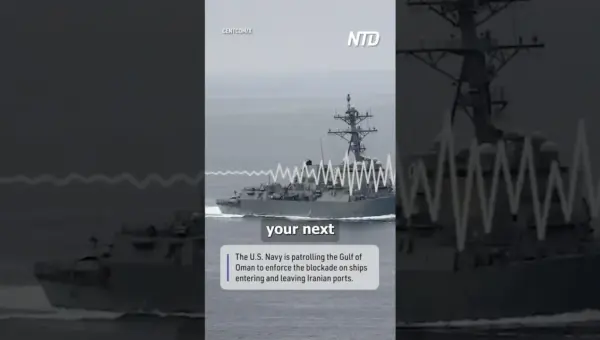
Navy Tightens Grip: US Enforces Strict Blockade on Iran
The US Navy has formally declared a blockade on Iranian ports, warning all vessels to turn back or face boarding and seizure. This significant move aims to exert economic and political pressure on Iran, with explicit threats of force for non-compliance.
Trump’s Jesus Meme Sparks Outrage Among Religious Supporters
Donald Trump's sharing of a meme depicting him as Jesus Christ has ignited backlash from religious supporters, who also cite his feud with Pope Francis. This has led some to feel "duped," questioning his motives and fitness for leadership.
FBI Docs Contradict Melania’s Epstein Introduction Claims
Newly surfaced FBI documents challenge Melania Trump's recent claims about not being introduced to Donald Trump by Jeffrey Epstein. Witness testimony suggests Epstein facilitated the introduction, contradicting Melania's public statements and raising questions about her associations and those of figures like Paulo Zampoli.