Ukraine at a Crossroads: Hague on War’s Fourth Year
Four years into Russia's full-scale invasion, Ukraine faces a critical juncture with the West's support being paramount. Former Conservative leader William Hague argues that a lack of decisive action has led to a 'defeat' for the West, while acknowledging Russia's resilience and the need for evolving sanctions. The challenge remains in maintaining public urgency and translating political will into sustained support.

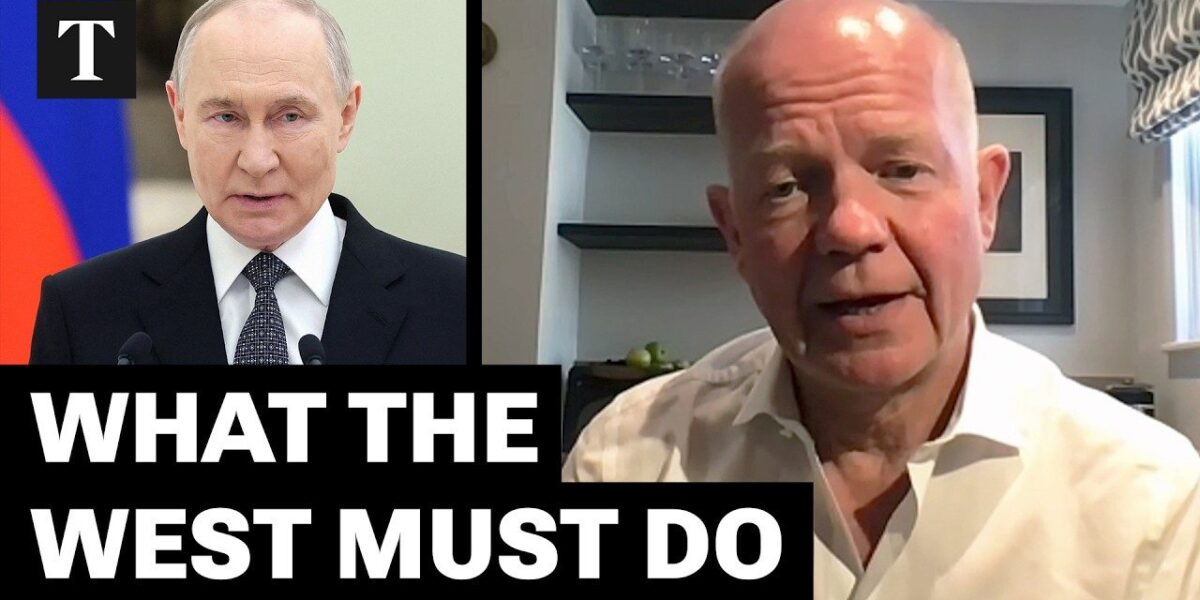
Four Years On: Ukraine’s Precarious Position and the West’s Role
Four years after Russia’s full-scale invasion, Ukraine stands at a critical juncture, its fate increasingly dependent on sustained Western support, according to former Conservative leader William Hague. Speaking on Times Radio, Hague reflected on the conflict’s anniversary, characterizing the current situation as a “stalemate” that has evolved into a “defeat” for the West due to insufficient and delayed support for Ukraine, particularly from the United States in recent years.
A Stalemate Defined by Missed Opportunities
The anniversary of the full-scale invasion, launched by Vladimir Putin, has prompted reflection on how different the geopolitical landscape could have been. “This could have all gone very well for Russia and they could have rolled through and this could have a very different Europe we’re looking at in 2026,” noted Hague, referencing an observation by Danny Finkelstein. Conversely, he added, “the world could have got its act together, supported Ukraine sufficiently even before 2022 and Putin would have been put back in his place.”
Hague leans more towards viewing the past four years as a “defeat” for the collective West. He argued that with a combined economic power dwarfing Russia’s – the G7 alone having a GDP many times larger – a more concerted and robust effort could have ensured Ukraine’s victory by now. “If we’d really exerted ourselves sufficiently across the West, the Ukrainians could have been successful in fighting off Russia,” he stated, highlighting the significant reduction in US support under President Trump as a key factor.
The Economic Front: Russia’s Resilience and Western Leverage
While acknowledging Russia’s significant human cost, with an estimated 35,000 soldiers lost monthly, Hague pointed to the nation’s historical “high pain threshold.” The economic narrative, however, offers a more nuanced perspective. While some analysts suggest Russia’s economy is geared towards indefinite “limping along” and has seen improved trade balances with increased exports and reduced imports, particularly with countries like China and India, Hague sees pressure points.
He emphasized Russia’s reliance on oil and gas revenues, noting that actions taken against its “shadow fleet” of oil tankers have already impacted these earnings. Sanctions imposed by the US on Indian companies trading Russian oil, for instance, are beginning to bite. “They’ve been losing some of that because of the actions taken so far against the shadow fleet,” Hague observed. “It really does affect that if they lose a lot more of their oil revenue and it’s the main leverage we have over them apart from giving military aid to Ukraine.” He urged against “defeatism” regarding economic pressure, asserting that “it is possible to shift the balance more in favor of Ukraine.”
Maintaining Urgency in an Attention Economy
The challenge of sustaining public and political attention on the conflict was also addressed. Kzia Dad, a panelist on the program, acknowledged a listener’s sentiment: “Stop talking about Ukraine. We’ve all moved on.” Dad described the current era as an “attention economy that is more attuned to four minutes.” She warned of the danger that Ukraine might cease to feel urgent in the minds of people, a scenario that plays directly into Putin’s strategy: “That’s his only path towards victory here is this idea that the West will just give up shrug it shoulders and go we’ve done our best.”
This sentiment is particularly concerning for those living in Ukraine or in neighboring European countries under threat. “It doesn’t feel like you know the world has moved on for people living in Ukraine or any of the border European countries that are faced with the threat of what Putin might do next if he’s successful in Ukraine,” Dad stated.
The Gap Between Rhetoric and Reality
A significant concern raised was the gap between Western rhetoric and actual commitment, particularly regarding defense spending. While former Defense Secretary Ben Wallace was noted for his strong advocacy on what more the UK government could do, including greater sanctions and harder penalties for third countries benefiting from Russian gas, the lack of a concrete defense investment plan was highlighted.
The question of public willingness to bear the costs of increased defense spending – potentially requiring higher taxes or cuts to welfare – remains a significant hurdle. “We constantly talk as if we’re just about a wartime economy, but we’re not,” one panelist observed. The willingness to accept a future reality of spending at least 3% of GDP on defense has not yet been solidified with the public, despite ongoing government efforts to make the case.
“We’re also fed an idea that we can only handle one kind of global crisis at a time and you’ve got to pick the country and at the moment Ukraine’s not it.”
This reflects a broader tendency to focus on one crisis at a time, often leaving Ukraine sidelined in the global narrative. The necessity of making the argument for increased defense spending “repeatedly over time” was stressed, with the understanding that “it’s not like they could just press a button somewhere and suddenly the public are convinced.” Acceptance will only come if “the argument is made clearly to us and we’ve not quite got there yet,” the panel concluded.
Sanctions: An Evolving Battlefield
The recent announcement of a fresh sanctions package by the UK government, described as the “biggest ever,” was met with a pertinent question from a listener: “How at this point, four years on, do we still have 300 different sanctions that we haven’t already deployed?” Hague offered a clear explanation for the need for ongoing sanctions updates.
“When you put sanctions on a country they find workarounds,” he explained. “They will then set up new business entities start trading through a different route start selling something else… new people will get involved.” Therefore, sanctions must be continuously updated to remain effective. “If you sit with your original set of sanctions even if they were quite severe here you’ll find after a couple of years they’re completely useless because the the the country concerned has found a way around them all.” The latest sanctions, he clarified, are not a sign of prior oversight but rather a response to new entities and businesses that have emerged over time to circumvent existing measures.
The Path Forward: Sustained Commitment and Strategic Action
As the conflict enters its fifth year, the imperative for the West to shift the balance in Ukraine’s favor remains urgent. Hague stressed that “there’s still a lot more we can do” and that the West “should be doing over the coming weeks and months because that I don’t see a peace agreement anytime soon.” The focus must move beyond platitudes and towards concrete actions, particularly in leveraging economic pressure and ensuring consistent, robust military aid. The challenge lies in maintaining the urgency of the crisis in the public consciousness and translating political will into sustained, tangible support, acknowledging that the cost of inaction or insufficient action could be far greater than the cost of decisive engagement.
Source: Four Years On: Ukraine Are Tilting On Defeat, But The West Can Shift The Balance | William Hague (YouTube)

Related Articles

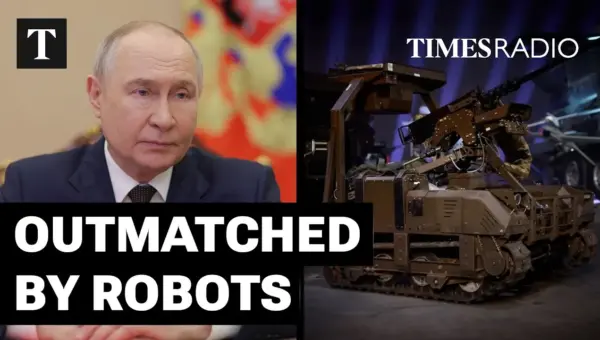
Ukraine War Robots Make Russian Tech Obsolete, Expert Says
Ukraine has achieved a historic military victory using ground robotic systems, marking a potential turning point in warfare. Defense tech expert Igor Novikov described the event as groundbreaking, highlighting the rapid evolution of conflict and Ukraine's role in pioneering its future. The conversation also touched upon concerns regarding UK defense spending and the global implications of proliferating autonomous weapon systems.
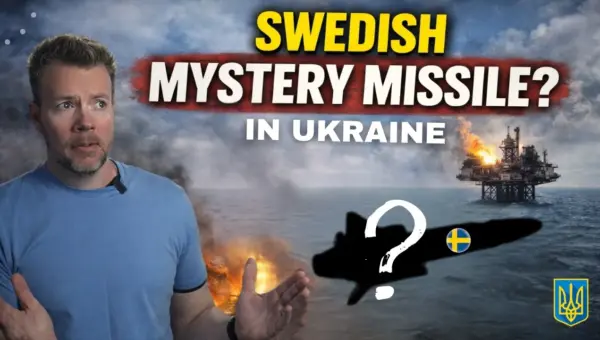
Sweden’s RBS-15 Missile Strikes Black Sea Targets
Ukraine has reportedly deployed the Swedish-made RBS-15 anti-ship missile, striking a Russian-occupied oil platform in the Black Sea. The missile's distinctive launch signature confirmed its origin, marking a significant escalation in Western arms transfers. The RBS-15's advanced capabilities, including long-range land-attack options, enhance Ukraine's ability to threaten Russian assets.

Ukraine Strikes Russia’s Oil Assets
Retired U.S. Army officer General Ben Hodges believes Ukraine's strikes on Russian oil and gas infrastructure are a key to victory. He urges continued attacks to cripple Russia's war funding, while dismissing Russian threats and questioning U.S. policy.