Pope Leo I 14th Rebuffs Trump’s Overtures, Prioritizes Migrants in Powerful Vatican Stance
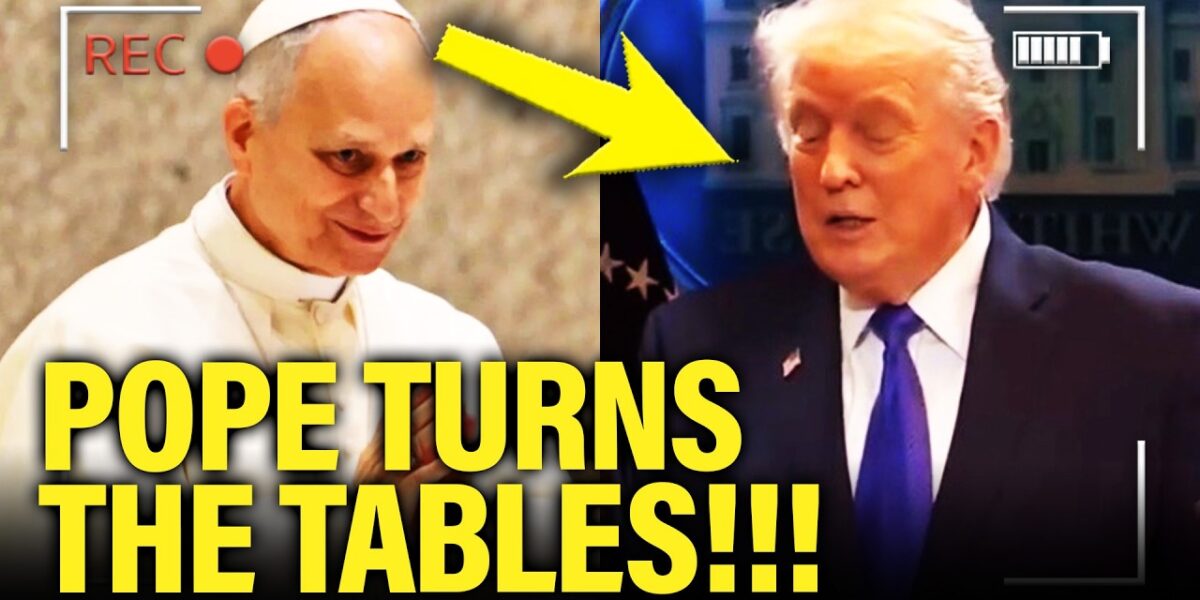
Pope Leo I 14th has decisively rejected overtures from the Trump administration, including an invitation to the "Board of Peace" and America's 250th day celebration. Instead, the Pontiff will spend July 4th on Lampedusa with migrants, sending a powerful message of solidarity amidst growing tensions over immigration and religious freedom. This defiance underscores a deepening rift between the Vatican and the Trump regime, rooted in fundamental disagreements over human dignity and international diplomacy.

Pope Leo I 14th Rebuffs Trump’s Overtures, Prioritizes Migrants in Powerful Vatican Stance
In a series of unprecedented and highly symbolic moves, Pope Leo I 14th has emphatically rejected direct overtures from the Trump administration, signaling a profound and widening chasm between the Holy See and the American political leadership. The Pontiff has not only declined invitations to participate in a Trump-backed “Board of Peace” and America’s upcoming 250th day celebration but has chosen to spend the significant July 4th holiday in solidarity with migrants on the remote Mediterranean island of Lampedusa. These actions, coupled with the Vatican’s staunch defense of religious freedoms against alleged infringements by the Trump regime, underscore a deepening ideological and moral confrontation.
The Vatican’s firm stance, extensively reported by journalist Christopher Hail, highlights a papacy determined to assert its moral authority on global issues such as migration, peace, and human rights, often in direct opposition to the policies advocated by the Trump administration. The unfolding narrative reveals a Pontiff actively rallying the Catholic Church’s global leadership to counter what he perceives as a “despicable regime” and its “colonialist operations.”
A Double Rejection: Vatican Rebuffs Trump’s Diplomatic Efforts
The first significant rebuff came with Pope Leo I 14th’s formal rejection of any involvement from himself or the Vatican in what the Trump administration has termed a “Board of Peace.” The Pontiff’s spokesperson explicitly labeled the initiative a “colonialist operation” and a “pay-to-play” scheme, stating unequivocally, “No thank you. I don’t want to be anywhere near that.” This statement alone carries immense weight, as the Vatican has historically played a crucial, albeit often discreet, role in international diplomacy and peacebuilding efforts. To dismiss an initiative outright with such strong language suggests a fundamental disagreement with its underlying principles or perceived intentions.
The Vatican’s diplomatic apparatus, honed over centuries, typically navigates international relations with nuanced statements and careful engagement. The directness of Pope Leo I 14th’s rejection implies a deep-seated concern that the “Board of Peace” might not align with the Holy See’s vision of genuine, equitable peace, or that it could undermine existing multilateral structures like the United Nations. The accusation of it being a “colonialist operation” further suggests a critique of perceived power imbalances and a lack of authentic local agency in the proposed peace-building process, echoing historical concerns about Western interventionism in other sovereign territories.
The second, equally impactful rejection pertains to America’s 250th day celebration. In May, Senator JD Vance traveled to the Vatican to personally extend a formal invitation to Pope Leo I 14th to attend the July 4th event. The transcript reveals that the Pontiff rejected the invitation “to JD Vance’s face,” with the Vatican later confirming that he simply “put the invitation… aside and just said, ‘I’m not going to be doing that.'” This public and personal dismissal of a high-profile invitation from a major global power is highly unusual for a head of state and religious leader, signaling a deliberate and calculated act of defiance.
Such a direct rejection, especially when delivered face-to-face, is a powerful diplomatic signal. It transcends mere scheduling conflicts; it communicates a clear unwillingness to lend moral or symbolic legitimacy to an event associated with the Trump administration. The 250th day celebration would undoubtedly be a significant national event, and the absence of the spiritual leader of over a billion Catholics worldwide would be conspicuous, particularly if it’s a conscious choice to avoid association with the inviting regime.
A July 4th of Solidarity: Pope Leo I 14th Embraces Lampedusa Migrants
The significance of Pope Leo I 14th’s rejections is magnified by his chosen alternative for July 4th: a visit to the island of Lampedusa. This remote Italian island, situated in the heart of the Mediterranean, has become a poignant symbol and “ground zero” for Europe’s ongoing migration crisis. For decades, it has served as the first point of arrival for tens of thousands of migrants and refugees undertaking perilous journeys across the sea from North Africa, often fleeing conflict, persecution, and poverty.
By choosing to spend this day “with migrants and individuals there,” Pope Leo I 14th is sending a “powerful message” that transcends national borders and political celebrations. It is a profound act of solidarity, embodying the core Catholic social teaching of prioritizing the marginalized and vulnerable. His declaration that “we are one world and we are one people” directly challenges nationalistic narratives and policies that often seek to isolate or demonize migrant populations.
The optics of this decision are undeniable. While the Trump administration seeks to celebrate a national milestone, Pope Leo I 14th will be at the front lines of a global humanitarian crisis, drawing international attention to the plight of those often forgotten or rejected by political systems. This move aligns with the papacy’s consistent advocacy for humane and just immigration policies, emphasizing the dignity of every human person regardless of their origin or legal status. It serves as a stark contrast to the Trump administration’s often restrictive and controversial immigration enforcement measures.
Furthermore, the Vatican has confirmed that Pope Leo I 14th has “no plans to show up at all in the United States in 2026,” despite a previous appearance in Chicago (albeit not physically attending, but via a representation at a baseball stadium). This prolonged absence from a nation with a significant Catholic population further underscores the depth of the current tensions. It suggests a deliberate decision to withhold the moral and spiritual presence of the papacy from a political environment perceived as hostile to fundamental Catholic values.
The Domestic Front: Vatican Confronts Trump Regime on Religious Freedom
The Vatican’s global diplomatic maneuvers are mirrored by an active defense of religious freedom within the United States, particularly concerning the treatment of migrants in detention. The transcript reveals that Pope Leo I 14th has been actively “rallying the cardinals and the bishops and the clergy in general to fight back against Trump and his regime.” This internal mobilization highlights a broader concern within the Catholic Church regarding the administration’s policies, especially those impinging on religious practices and pastoral care.
A specific flashpoint arose over attempts by the Trump administration to ban Ash Wednesday services and other religious rites at detention centers. The Broadview detention center in the Chicago area, for example, reportedly prohibited Catholic priests and other religious clergy from visiting detainees. This led to a lawsuit filed in federal court in Chicago, arguing that the government was infringing upon the constitutional rights of detained migrants to receive religious visits and support.
A federal judge intervened, citing the “free exercise clause” and “free speech clause” of the Constitution, and issued an emergency order to allow Ash Wednesday ceremonies to proceed outside the Broadview facility. Initially, there were concerns that the Trump regime might defy the court order, which would have escalated into a “historic confrontation between the American government and the Catholic Church.” Fortunately, the court orders were ultimately followed.
Chicago Cardinal Koopich, a key ally of Pope Leo I 14th, played a central role in this domestic struggle. He celebrated Mass and led a procession to the Broadview Detention Center, demonstrating the Church’s unwavering commitment to pastoral care for migrants, even in the face of governmental resistance. Father Leandro Fauca, pastor of Our Lady of Mount Carmel in Melrose Park, Illinois, described the event as a powerful show of support for families affected by immigration raids.
This incident is not isolated. Cardinal Timothy Dolan, a figure often perceived as more aligned with conservative viewpoints, also condemned the Trump-Vance administration for conducting immigration raids near churches, labeling it “harassment” and a “profound violation of religious liberty.” Dolan recounted instances of ICE showing up at Sunday mass in New York and his subsequent intervention, alongside Franklin Graham, to defend the right to worship without government impediment.
Significantly, Senator JD Vance privately apologized to Cardinal Dolan for falsely claiming that Catholic bishops oppose immigration enforcement because they profit from migrant resettlement programs. Dolan stated that Vance admitted his statement was “out of line and not true” and “scurrilous.” This retraction, though private, underscores the administration’s willingness to engage in potentially damaging rhetoric against religious institutions and the subsequent need for correction.
The “free exercise clause” of the First Amendment is a cornerstone of American religious liberty, protecting individuals’ right to practice their religion freely. Government actions that impede access to religious services or pastoral care for detainees raise serious constitutional questions. The Church’s forceful response in these instances demonstrates its commitment to upholding these fundamental rights, viewing the spiritual and emotional well-being of migrants as an essential aspect of their human dignity.
A Broader Ideological Clash: Multilateralism vs. Force Diplomacy
Beyond specific policy disagreements, Pope Leo I 14th’s actions and statements reveal a fundamental ideological divergence from the Trump administration. His Ash Wednesday homily warned that the world is “ablaze not just with war but with the collapse of law, ecology, and the sacred,” calling for Lent to be a time not just for penance but for rebuilding, urging the faithful to be “open to moving and changing.” This reflects a papacy deeply concerned with the erosion of global norms, environmental degradation, and a spiritual crisis.
In a powerful speech, Pope Leo I 14th articulated his concerns about the “weakness of multilateralism” at the international level. He lamented that “a diplomacy that promotes dialogue and seeks consensus among all parties is being replaced by a diplomacy based on force by either individuals or groups of allies. War is back in vogue and a zeal for war is spreading.” This critique directly challenges a foreign policy approach that prioritizes unilateral action or alliances of convenience over broad international cooperation and established legal frameworks.
The Pontiff specifically highlighted the undermining of the “principle established after the Second World War which prohibited nations from using force to violate the borders of others.” He argued that “peace is no longer sought as a gift and a desirable good in itself or in the pursuit of the establishment of the ordered universe willed by God with a more perfect form of justice among men and women.” This statement encapsulates the Vatican’s long-standing commitment to a rules-based international order, disarmament, and a holistic understanding of peace that extends beyond the mere absence of conflict to encompass justice, human development, and ecological stewardship.
The Vatican’s diplomatic tradition, rooted in Catholic Social Teaching, consistently champions dialogue, reconciliation, and the common good. Its engagement on the world stage is often aimed at fostering conditions for integral human development, which includes economic justice, environmental protection, and respect for human rights. The Pope’s characterization of the “Board of Peace” as “colonialist” and “pay-to-play” aligns with this broader critique, suggesting it lacks genuine concern for the self-determination and well-being of affected populations, prioritizing instead the interests of powerful actors.
The concept of “force diplomacy” is anathema to the Vatican’s approach to international relations. The Holy See, lacking military power, relies entirely on moral authority and the power of persuasion. Its advocacy for multilateralism is not merely a preference but a theological conviction that human fraternity and solidarity are essential for global peace and justice. The Pope’s lament over the “zeal for war” is a direct challenge to the normalization of conflict and the erosion of diplomatic solutions.
Political Undercurrents: Attempts to Undermine the Papacy
Adding another layer of complexity to these tensions are revelations concerning alleged efforts by figures associated with the Trump administration to undermine the papacy itself. The transcript mentions that Steve Bannon, a former chief strategist for Donald Trump, was reportedly “working with Jeffrey Epstein in order to try to take down Pope Francis” (who is referred to as Pope Leo I 14th in the transcript). Furthermore, Bannon was also allegedly attempting to discredit “Cardinal Prevost” before he became Pope Leo I 14th, as evidenced by his appearances on shows like Piers Morgan.
These allegations, if true, reveal a calculated strategy by certain political actors to destabilize the leadership of the Catholic Church when its moral authority clashes with their political agenda. Steve Bannon, a prominent figure in the conservative movement, has been known for his strong nationalist views and his opposition to what he perceives as the “globalist” tendencies of the modern papacy, particularly its stances on immigration, climate change, and economic justice.
Bannon’s past comments, such as those made about “Cardinal Prevost” being “one of the most progressive” and “closest to Francis ideologically,” indicate a clear ideological battleground within conservative circles regarding the direction of the Catholic Church. His expressed preference for “Cardinal Sarah from Africa” suggests a desire for a more traditionally conservative papacy, which he believes would better serve the moment in the church.
The idea of a political operative actively working to “take down” a Pope is extraordinary and speaks to the perceived threat that the Vatican’s moral voice poses to certain political narratives. It underscores the deep ideological divisions that exist, not just between the Vatican and the Trump administration, but also within broader political and religious landscapes, where the Church’s teachings are increasingly seen through a partisan lens.
Reactions and Broader Implications
The Trump administration’s response to Pope Leo I 14th’s rejection of the “Board of Peace” was swift and critical. Caroline Levitt, a spokesperson for the White House, accused the Pontiff of being a “partisan, political and controversial individual” for his decision. She expressed deep disappointment, stating that “peace should not be partisan or political or controversial,” and defended the “Board of Peace” as a “legitimate organization” overseeing the reconstruction of territories plagued by violence, specifically mentioning Gaza.
Levitt’s comments reveal a fundamental disconnect. From the administration’s perspective, the “Board of Peace” is a neutral, humanitarian endeavor, and the Pope’s refusal to join is seen as an unwarranted politicization. From the Vatican’s perspective, however, any peace initiative must be evaluated against principles of justice, equity, and genuine multilateralism. Labeling it “colonialist” suggests a profound moral judgment, not merely a political one.
The escalating tensions between Pope Leo I 14th and the Trump administration carry significant implications, both domestically and internationally. For the United States, it highlights a growing divide between a substantial portion of its Catholic population and a political leadership that, at times, appears to be at odds with the core teachings and pastoral concerns of their spiritual head. This could have ramifications for Catholic voters, traditionally a diverse demographic, and their political alignments.
Globally, the Vatican’s strong stance reinforces its role as an independent moral voice on the international stage. In an era of rising nationalism, geopolitical realignments, and humanitarian crises, Pope Leo I 14th is positioning the Holy See as a consistent advocate for human dignity, solidarity, and a rules-based international order. His willingness to directly challenge powerful political figures, even at the cost of diplomatic friction, underscores a commitment to prophetic witness over political expediency.
The Pope’s actions serve as a potent reminder that religious institutions, particularly those with global reach, can and do play a critical role in shaping public discourse and challenging state power. They highlight the ongoing tension between secular political power and spiritual authority, especially when moral concerns intersect with policy decisions on issues like migration, peace, and human rights.
Conclusion: A Papacy of Principled Defiance
Pope Leo I 14th’s decisive rejection of Trump administration overtures and his symbolic choice to spend July 4th with migrants on Lampedusa mark a significant moment in the relationship between the Vatican and a prominent American political faction. These actions are not merely diplomatic snubs; they are deeply principled statements rooted in the core tenets of Catholic social teaching and a profound concern for human dignity, justice, and the future of global peace.
By labeling the “Board of Peace” as “colonialist,” defending religious freedom in detention centers, and lamenting the rise of “force diplomacy,” Pope Leo I 14th is actively asserting the Church’s moral authority against what he perceives as a regressive and harmful political agenda. His papacy, as evidenced by these events, is one of principled defiance, committed to advocating for the marginalized and upholding a vision of a world united by solidarity, dialogue, and a shared humanity, even when it means confronting powerful regimes head-on.
Source: FURIOUS Pope FREEZES OUT Trump in FRONT OF WORLD!! (YouTube)

Related Articles

Trump Backs Hilton for CA Governor Amidst Chaotic Race
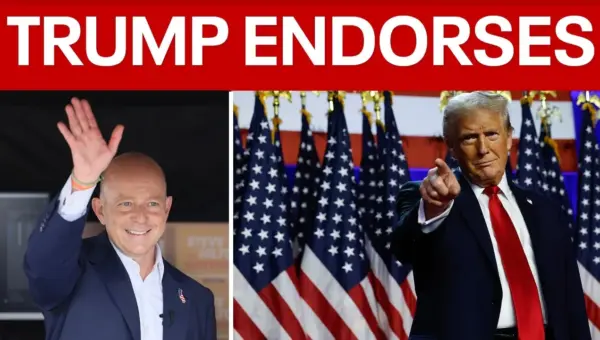
The California governor's race is in turmoil as Eric Swalwell withdraws, leaving Democrats scrambling. Meanwhile, Republican Steve Hilton secures a major endorsement from former President Trump. Billionaire Tom Steyer gains traction with the CTA's backing, while Katie Porter faces name recognition hurdles.
Senator Tillis Criticizes Trump’s War Advice, Cites Cabinet Lapses
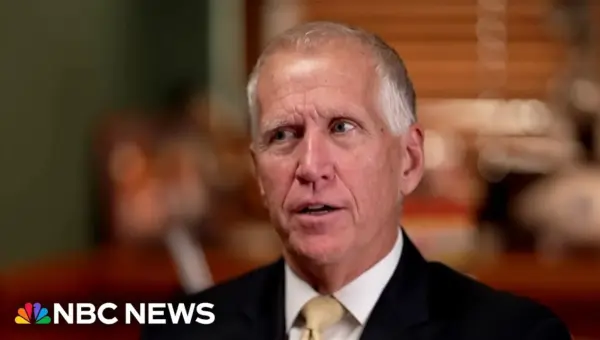
Retiring Senator Thom Tillis has voiced concerns about the White House's lack of clear objectives regarding U.S. military operations in Iran. In a recent interview, Tillis also offered his opinions on who is giving President Trump bad advice, including Stephen Miller and Pete Hegseth, while noting his own departure from re-election pressures allows for more candid commentary.
DOJ’s Jan. 6 Move Sparks Outrage: ‘Reads Like The Onion’
The Department of Justice is facing backlash for reportedly seeking to erase convictions of Oath Keepers and Proud Boys leaders involved in the January 6th Capitol attack. Critics decry the move as undermining justice and acting as political theater. Simultaneously, the DOJ's continued investigation into Fed Chair Jerome Powell, despite judicial warnings, fuels concerns about the legal system being used for political aims.