Supreme Court Delivers ‘Fatal Blow’ to Tariff Regime as Economic Indicators Flash Red
A recent Supreme Court ruling has dealt a significant blow to a cornerstone of former President Trump's trade policy, striking down sweeping tariffs and potentially triggering billions in refunds. This judicial setback coincides with a series of alarming economic indicators, including persistent inflation, a stalled job market, and troubling signals from financial markets, suggesting a U.S. economy under considerable and growing strain.

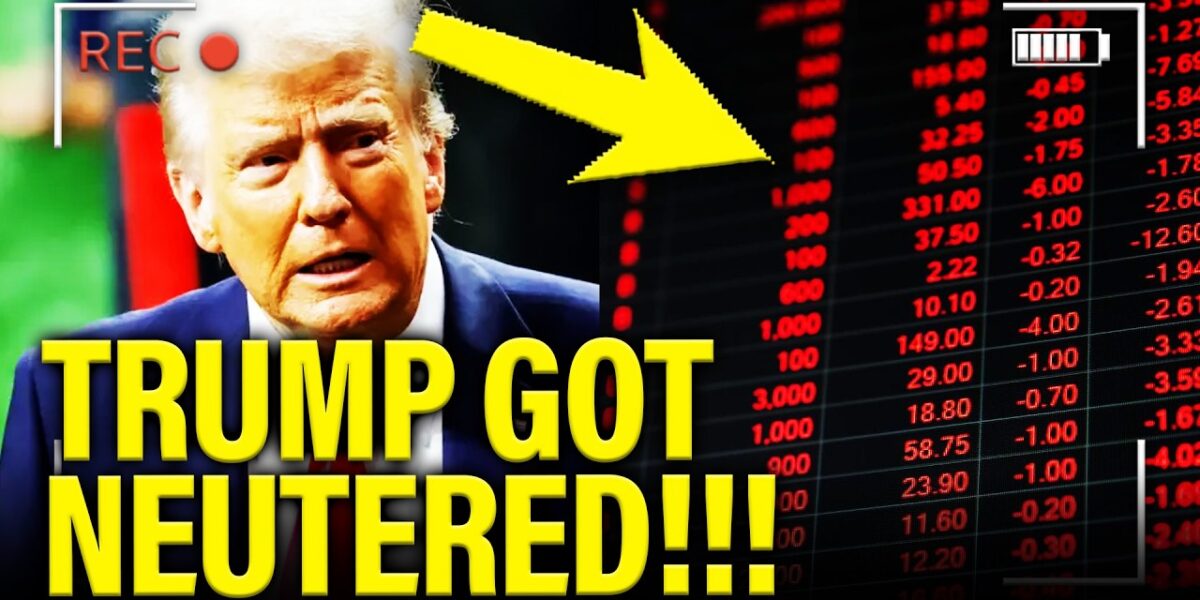
Supreme Court Delivers ‘Fatal Blow’ to Tariff Regime as Economic Indicators Flash Red
Washington D.C. – In a week marked by significant economic headwinds and a landmark judicial decision, the U.S. Supreme Court has delivered what many analysts are calling a “fatal blow” to a cornerstone of former President Donald Trump’s trade policy. The ruling, which struck down sweeping tariffs imposed under the International Emergency Economic Powers Act (IEEPA), has not only invalidated a key revenue stream but also opened the door to potentially billions in refunds, further complicating an already precarious economic landscape. This judicial setback, coupled with a series of troubling data releases, paints a picture of an economy under considerable strain, with the ripple effects likely to be felt by American consumers and the federal budget alike.
The decision reverberated through Washington, particularly given the former president’s well-documented affinity for tariffs, which he famously described as his “favorite word.” However, the Supreme Court’s majority opinion made it clear that even a president’s “hand-selected” judiciary would not grant unlimited power when constitutional boundaries are at stake. This ruling, coming amidst a broader “monumentally bad week” for the economic outlook, underscores a period of profound uncertainty and challenges the very foundations of recent trade and fiscal strategies.
The Tariff Tangle: A Supreme Court Rebuke
At the heart of the Supreme Court’s decision was the application of the International Emergency Economic Powers Act (IEEPA), a statute designed to grant presidents swift authority to respond to foreign threats, primarily through targeted measures like asset freezes and sanctions against specific entities or individuals. Its original intent was never to facilitate a wholesale reimagining of the global trade architecture through broad, indefinite tariffs.
Trump’s administration, however, invoked IEEPA to slap sweeping tariffs on a vast array of imports from countries including Canada, China, and Mexico, declaring a national emergency to justify these measures. The Supreme Court, in its majority opinion, rejected this expansive interpretation. Citing the “major questions doctrine,” the Court asserted that actions with “enormous economic and political consequence” – such as fundamentally altering the nation’s tariff schedule – require explicit congressional authorization. IEEPA, the Court concluded, simply does not provide such broad authority to the executive branch without clear legislative guidance.
This ruling effectively struck down the tariffs imposed under this particular statute, though it notably left intact those levied under other provisions, such as Section 232, which addresses national security concerns. This distinction is crucial; while not a complete “wipeout,” the decision represents a significant curtailment of presidential power in trade policy.
The Irony of the Bench and the Path Forward
Adding a layer of political intrigue to the legal outcome is the fact that many of the justices who formed the majority were appointed during the very administration that initiated these tariff policies. This outcome highlights the judiciary’s role as a check on executive power, even when the executive branch attempts to “stack” the courts in its favor for specific policy outcomes.
Despite the setback, the administration has signaled its intention to press forward with its tariff agenda, albeit through a more “arduous and slower” route. The plan involves utilizing more specific, country-by-country provisions within IEEPA, working through a cumbersome mechanism to impose temporary tariffs on individual nations. This approach, likened to “sneaking back in through the kitchen” after being “kicked out of the casino through the front door,” underscores a commitment to circumventing congressional approval, even if it means a more protracted and less efficient process.
The Looming Financial Reckoning: Billions in Refunds?
Perhaps the most immediate and financially significant implication of the Supreme Court’s decision is the “white elephant in the room”: the potential for massive tariff refunds. If the tariffs were imposed beyond statutory authority, they are deemed void, rendering the collected duties theoretically vulnerable to repayment. Analysts are now floating refund exposures in the range of $100 billion to $175 billion.
While such refunds would not occur overnight and are likely to be heavily contested in lower courts, the “direction of travel is pretty clear.” This development is politically brutal for the former president, as the entire tariff regime was initially pitched as a revenue engine to offset the “hemorrhaging” caused by significant corporate and upper-class tax cuts. The promise was that tariffs would fund the government, allowing the wealthy to receive tax breaks, with even the speculative possibility of a “tariff dividend” for Americans.
Now, not only is this revenue pipeline under threat, but the administration may actually have to pay back a substantial portion of the collected funds. This would blow an even larger hole in the federal deficit, exacerbating fiscal challenges. The ultimate “screw job,” as described, falls on the American people. Multiple independent studies have confirmed that the costs of these tariffs were overwhelmingly passed directly to consumers through higher prices. Yet, if companies receive refunds, it is shareholders, not consumers, who will benefit. This means Americans paid higher prices, suffered from inflation, and now face a larger deficit, while the intended beneficiaries of the tariff revenue – the government – and the original payers – consumers – are left holding the bag.
Beyond the immediate financial impact, the tariff regime has also been credited with shredding trade alliances, forcing a global reordering of supply chains, and contributing to an inflationary environment that has made life harder for working families. Critics argue that had the administration “literally done nothing,” the economy might have been in a far better state by “every measurable economic standard.”
Five Red Flags: Unpacking the Week’s Economic Data
The Supreme Court’s tariff ruling was but one piece of a broader economic puzzle that presented a series of concerning indicators. Five major data releases further illuminated the “cracks” beginning to appear across various sectors of the economy.
1. Persistent Inflation and the Shrinking Trade Surplus: The PCE Picture
The Personal Consumption Expenditure (PCE) price index, the Federal Reserve’s preferred measure of inflation, delivered unwelcome news in its December release. Unlike the more commonly cited Consumer Price Index (CPI), PCE offers a broader look at inflation, covering approximately 65% services (housing, healthcare, transportation, financial services) and 35% goods.
The data revealed that inflation continues to “creep” upwards. Simultaneously, the nation’s trade balance worsened significantly. December exports were down $5 billion from November, while imports surged by $12 billion. The goods deficit expanded to $99 billion, and the services surplus shrank. The average goods and services deficit for the three-month period ending in December rose to $50 billion. These figures contradict the stated goal of reducing trade imbalances through tariffs and instead suggest a struggling economy burdened by persistent inflationary pressures and a deteriorating trade position.
Critically, analysis suggests that inflation under the former president’s policies has risen above where it stood when he took office. The tariff war and subsequent supply chain chaos are implicated in this resurgence. Had the previous trajectory been allowed to play out, with inflation slowly but imperfectly trending towards the Fed’s 2% target, interest rate cuts might have been more feasible, offering “breathing room” to working families grappling with the costs of groceries and rent. Instead, the current environment is characterized by inflationary policies, blame-shifting, and the prospect of “doubling down” on the very strategies that contributed to the problem.
2. A Stalled Job Market: Weakest Growth in Two Decades
The jobs report for the week ending February 14th painted a stark picture of a labor market losing momentum. Initial jobless claims came in at 26,000, which, while down from the prior week, was only after the previous week’s figure was revised upwards to 229,000. The four-week moving average settled at around 219,000. More concerning is the figure for insured unemployment – individuals still collecting benefits – which remains stubbornly high at 1.88 million.
The broader context reveals a job market that has “completely stalled.” The economy is struggling to consistently stay below 200,000 initial claims while simultaneously failing to add more than 50,000 net new jobs in a given month. Furthermore, massive revisions to prior reports revealed that 2025 was the slowest year for job creation since 2003, marking a two-decade low in labor market strength.
A significant driver of this weakness, according to economists, is the administration’s mass deportation policies. The removal of a substantial portion of the labor force, particularly in critical sectors like agriculture, construction, food service, and logistics, leads not to a boom but to “disruption,” “supply chain problems,” and “higher costs.” This creates a “chilling effect” on the entire economy as businesses face uncertainty regarding hiring and retention.
Regarding manufacturing, the “great promise” of its return through tariffs is largely unfounded. Experts argue that tariffs alone do not bring back manufacturing jobs. Instead, sustained government investment in cutting-edge industries, tax incentives tied to domestic production, workforce development, and comprehensive multi-year strategies – exemplified by initiatives like the CHIPS Act or the Inflation Reduction Act – are the true catalysts. Policies that “gutted those programs” and “declared war on clean energy” are seen as counterproductive to genuine manufacturing revival, leaving the U.S. with a 2003-era job market and a tariff strategy historically proven ineffective in isolation.
3. Misleading GDP Growth: The “Sick Care” and “On Sale” Economy
The advanced estimate from the Bureau of Economic Analysis showed that real GDP grew at an annual rate of 1.4% in the fourth quarter of 2025 (October through December), a significant deceleration from the 4.4% recorded in the third quarter. However, as the analysis points out, GDP figures can be “deeply misleading” depending on their underlying drivers.
A closer look at the Q4 data reveals that while goods were down, services were up. The leading driver within services was healthcare. This surge in healthcare spending is attributed to Americans “rushing to use their health services before their premium subsidies ran out” due to policy uncertainty and threats to the Affordable Care Act (ACA) and Medicaid. Coupled with an aging population, this translates into what is termed “sick care GDP” – a positive accounting number that in reality signals widespread health concerns and coverage anxieties, rather than genuine economic growth.
Another contributor was an increase in international travel to the United States. This bump, however, is largely a “one-time artifact of currency depreciation,” as the dollar has declined by roughly 10% since the administration took office, making the U.S. “cheaper for foreign visitors.” Yet, full-year projections for 2025 and beyond indicate an expected decline in total inbound travel, suggesting that factors like “chaos at the border, the political climate, or just general unpredictability” are deterring visitors. The travel bump, therefore, is seen as a short-term anomaly, still less than what it would have been had underlying policies remained stable.
Further dragging down GDP was a decrease in federal spending, partly attributed to a partial government shutdown – an “outsized event” that skewed the numbers. However, the underlying federal spending contraction is deemed “real and ongoing.”
Finally, a significant but complex contributor was capital expenditures on “information processing equipment,” specifically private investment pouring into AI infrastructure and data centers. While these “dollars are real,” their benefit to the average American worker is questionable. Data centers are “highly automated, low-employment facilities” that consume massive amounts of electricity, potentially raising utility bills, and, if successful, “threaten to automate away jobs that working people actually have right now.” This suggests that GDP is being “propped up with spending that could ultimately cost us more as consumers and fewer jobs as workers.”
4. Stress Signals from the Financial Plumbing: The Repo Market
Delving into the “plumbing of the financial system” reveals unsettling signs from the repo market, particularly the Federal Reserve’s Standing Repo Facility (SRF). The SRF acts as the Fed’s emergency funding backstop for banks and financial dealers, allowing them to borrow cash overnight against collateral when private funding markets become tight.
On a random Tuesday in February, the SRF was tapped for $30 billion. This “nonzero usage” on a non-quarter-end or year-end date is highly significant. It indicates either that short-term funding rates in private repo markets have risen to or above the SRF rate, meaning money is becoming “expensive to borrow overnight,” or that some firms are facing “balance sheet or liquidity constraints” severe enough to prefer borrowing from the Fed over private counterparties. “Neither of these is a good sign of healthy plumbing in the financial system.”
This trend is corroborated by the Secured Overnight Financing Rate (SOFR), the market-set overnight rate, which has repeatedly “blown out above the Fed’s target range.” This signifies that the market is “pricing in risk,” forcing the Fed to intervene by releasing liquidity to stabilize rates. While the system technically “works,” the repeated need for intervention points to “stress somewhere in the system that we can’t fully see,” potentially originating in the “vast, largely unregulated world of private credit markets.”
This situation ushers in an era of “fiscal dominance,” where the Fed’s influence extends beyond mere interest rate adjustments, requiring direct cash interventions to prop up the financial system. This reality clashes with the stated philosophy of potential Fed appointees like Kevin Worsh, who advocate for “lower rates and a smaller balance sheet.” The prospect of $100-$175 billion in tariff refunds further exacerbates the federal deficit, necessitating the sale of more Treasuries. If private demand for this debt softens, the Fed may be compelled to expand its balance sheet, directly contradicting a “smaller balance sheet” mantra and deepening the embrace of fiscal dominance.
5. Global Confidence Wanes: The Alarming TIC Data
Treasury International Capital (TIC) data, which tracks the flow of money in and out of the United States, offers a window into global confidence in the American financial system. While overall December TIC data showed total inflows to the U.S. were up by $44 billion, the “devil’s in the details.”
A deeper dive reveals a troubling shift: private international investors trimmed $20 billion from their Treasury holdings in December alone, and a staggering $74 billion year-over-year. Conversely, these same private sources poured $376 billion net into U.S. equities over the same period. A similar pattern emerged on the official side: foreign central banks trimmed $21 billion from U.S. Treasuries in December, with a net outflow of $34 billion year-over-year, while adding $34 billion to equities.
This means that the “money that’s flowing into the United States, both private and official, is going into equities and away from U.S. Treasuries.” This is interpreted as a “sell American” narrative, specifically targeting American government debt rather than American companies. This trend carries enormous implications, as the U.S. relies on selling Treasury bonds to fund its deficits. If foreign buyers consistently reduce their exposure to U.S. debt, the nation must find new buyers or face the prospect of higher yields to attract investment. Higher yields translate directly into higher borrowing costs, further ballooning the interest payments on the national debt, which is already the “fastest-growing line item in the federal budget.” With deficits projected to expand even more due to tariff revenue shortfalls and tax cuts, a well-functioning Treasury market is critical, yet the “trend lines are not going in the right direction.”
Conclusion: A Squandered Inheritance
The confluence of the Supreme Court’s tariff ruling and the cascade of negative economic data paints a grim picture for the American economy. From inflationary pressures and a stalled job market to misleading GDP figures and unsettling signals from financial markets, the underlying vulnerabilities are becoming increasingly apparent.
The prevailing sentiment among critics is that many of these economic woes could have been mitigated, or even avoided, had a different approach been taken. The analogy of “Donald’s inheritance” is invoked – a vast potential squandered through mismanagement and impulsive decisions. Just as his companies faced bankruptcies that ultimately impacted creditors and employees, the current economic trajectory suggests that the “American economy is the modern version of Donald’s inheritance.” The costs of these policies, from increased inflation and national debt to weakened trade relationships and a disrupted labor force, are ultimately borne by “us, the American people.” The week’s events serve as a sobering reminder of the intricate connections between policy, law, and the everyday economic realities of millions.
Source: Trump LOSES CONTROL as FATAL BLOW Threatens ENTIRE TERM (YouTube)

Related Articles

Supreme Court’s Legitimacy Tested: A Look Inside
The Supreme Court is increasingly seen as the "last branch standing" to resolve national disputes, a role that strains its legitimacy. Author Sarah Isker's new book, 'Last Branch Standing,' examines the court's internal dynamics and its complex relationship with public opinion and other branches of government.


Global Oil Crisis Fuels US Economic Divide
A massive influx of oil tankers to the Gulf of Mexico signals a global supply crisis, not American victory. While some celebrate, the reality points to soaring prices and economic hardship for average Americans, benefiting only big oil companies and traders.


Trump’s Trade Wars Fueled Inflation, Fed Report Claims
A new Federal Reserve report links Donald Trump's trade wars to increased inflation since January 2025. Economists claim prices would have fallen to pre-pandemic levels without these tariffs. This finding highlights the significant consumer cost of protectionist trade policies.