US Blocks Strait of Hormuz, Oil Prices Surge Amid Iran Tensions
Tensions between the U.S. and Iran escalated as the U.S. began blocking ships in the Strait of Hormuz, causing oil prices to surge. The move followed the breakdown of talks in Pakistan, where key disagreements over Iran's nuclear program persisted. Meanwhile, the Pope and President Trump exchanged public criticisms, and the Artemis II astronauts successfully returned to Earth after a historic lunar mission.


US Shuts Down Strait of Hormuz, Oil Prices Spike
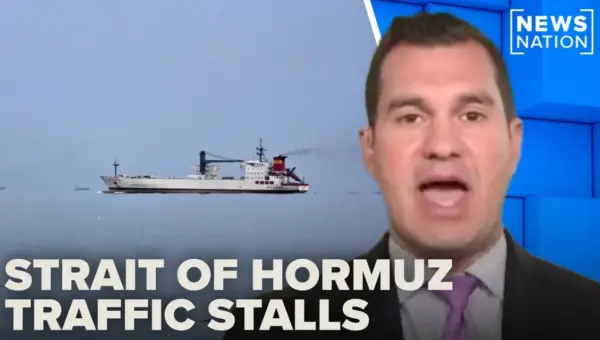
The United States began blocking all ships leaving Iranian ports from passing through the Strait of Hormuz early Monday morning. President Donald Trump announced the move on his social media platform, stating that ships paying tolls to Iran would not receive safe passage. Global oil prices jumped Sunday night following the announcement, reflecting concerns over potential disruptions to energy supplies.
The decision comes after U.S. and Iranian officials concluded 21 hours of talks in Pakistan over the weekend without reaching an agreement. Vice President J.D. Vance, who led the U.S. delegation, and Iranian officials both reported significant differences between the two nations. A key point of contention remains the U.S. demand that Iran cease its pursuit of nuclear weapons, a claim Iran denies, stating its nuclear program is for civilian purposes.
Failed Talks, Escalating Tensions
Negotiations in Pakistan were unexpectedly lengthy, evolving from brief discussions intended to set up future talks into a marathon 21-hour session. A U.S. official described the talks as tough, though they ended with a friendly exchange of proposals. The U.S. side reportedly felt that Iran did not fully grasp the core U.S. objective: preventing Iran from obtaining a nuclear weapon.
While a ceasefire remains in effect for another week, the future of further negotiations is unclear. A U.S. official told NBC News that Vice President Vance probed Iran for vulnerabilities during the talks, suggesting President Trump intends to test Iran’s resolve.
Blockade Details and Iranian Response
The blockade, set to begin at 10:00 AM Eastern time, specifically targets ships traveling to and from Iranian ports and coastal areas. Ships not heading to these locations will still be permitted to pass through the strait. President Trump cited Iran’s practice of charging ships tolls as a reason for the U.S. action.
Iran has responded forcefully to the U.S. move. A spokesperson for Iran’s armed forces stated that if Iran’s ports are threatened, “no port in the Persian Gulf and Sea of Oman will remain safe.” The potential for naval mines in the Strait of Hormuz adds another layer of concern for shipping, with President Trump indicating the U.S. would begin destroying any mines found.
Economic Impact and Midterm Elections
The surge in oil prices is a significant concern for the U.S. economy, especially with the upcoming midterm elections. President Trump expressed little confidence that gas prices would decrease before the elections, suggesting they might remain the same or slightly increase. Gas prices have already risen significantly, impacting consumers nationwide.
Joel Rubin, former Deputy Assistant Secretary of State, explained that a blockade is detrimental to global commerce. He noted that President Trump’s action is an attempt to increase pressure on Iran and remove one of Iran’s leverage points in negotiations. The implementation of the blockade is complex and is expected to impact global prices further.
The Nuclear Question and Future Talks
Rubin expressed surprise that the talks did not result in an agreement on a framework or terms for future discussions, particularly regarding the nuclear issue. He believes Iran’s refusal to abandon its nuclear program, even for peaceful purposes, only invites international scrutiny and potential military action.
With the current ceasefire set to expire soon, there is anticipation of further attempts to extend it and establish parameters for negotiation. Small talks between Israel and Lebanon are scheduled for the following day, which could provide further insight into regional dynamics. However, if core issues remain unresolved, the possibility of renewed military action looms.
Market Reactions and Consumer Sentiment
Caleb Silver, Editor-in-Chief of Investopedia, reported that oil prices had already risen 7% overnight, with West Texas Intermediate reaching $104 per barrel. He warned that if the blockade continues, consumers can expect higher prices not only for oil but also for gasoline, jet fuel, and fertilizer.
Silver noted a typical one-to-two-week delay in seeing the impact of oil price fluctuations at the pump, but stressed that current market uncertainty is causing more immediate price adjustments. He also highlighted that the March inflation report showed a high rate, and consumer sentiment is at its lowest point, worse than during the pandemic or the Great Financial Crisis, due to uncertainty about future prices.
Wall Street and Economic Outlook
Despite consumer fears, Wall Street is looking at a potentially strong earnings season for the last quarter, with notable profit growth in tech and oil companies. However, higher oil prices are expected to impact corporate earnings and may lead to warnings about future costs.
Silver described the current economic situation as unusual, with healthy corporate profits contrasting with terrified consumers. He explained that while companies are doing well, the prospect of rising prices may lead consumers to spend less, potentially slowing the economy.
Pope Francis and President Trump Exchange Barbs
In a separate development, President Trump publicly criticized Pope Leo, calling him weak on crime and terrible for foreign policy. These comments came as the Pope began a ten-day tour of Africa.
President Trump’s lengthy social media post suggested he believed the Pope’s recent criticisms of war and idolatry were directed at him. Pope Leo, when asked about the comments, stated he has no fear and is proud of the church’s mission, emphasizing that they are not politicians. The Pope continued to call for peace and dialogue during his visit to Algeria, condemning ongoing wars and their generational impact.
Artemis II Crew Returns to Earth
The astronauts of the Artemis II mission have safely returned to Earth after a ten-day journey around the moon, marking the furthest humans have ever traveled into space. The crew, including Commander Reid Wiseman, pilot Victor Glover, and mission specialists Christina Koch and Jeremy Hansen, splashed down in the Pacific Ocean.
During a post-mission ceremony, the astronauts shared their awe and gratitude for the experience. The mission successfully captured new images of the far side of the moon. Future Artemis missions aim to orbit the Earth and eventually land astronauts back on the lunar surface, signaling a new era in space exploration.
Severe Weather Across the US
Meanwhile, severe weather is forecast across much of the United States for the coming days. The Great Lakes region and parts of the Midwest are at risk of strong storms, heavy rain, and potential flooding, with concerns about damaging hail, strong winds, and isolated tornadoes.
As the storm system moves east, the threat of tornadoes is expected to expand. Heavy rainfall is predicted from Dallas to Detroit, increasing flood risks, especially in areas with melting snow. Temperatures are expected to be well above average across much of the country, raising concerns about wildfire risk in dry conditions.
Source: This Morning’s Top Headlines – April 13 | Morning News NOW (YouTube)

Related Articles
U.S. Tightens Grip on Hormuz Strait
Tensions escalate in the Strait of Hormuz as the U.S. threatens to blockade Iranian ports, causing oil prices to surge. Following failed peace talks, Iran vows retaliation against any perceived violations, setting the stage for a significant geopolitical standoff.


Hungary Elects New Leader, Ending Orbán’s Long Rule
Hungary has elected Peter Magyar as its new leader, ending Viktor Orbán's 16-year rule. The shift is seen as a win for the EU and a potential setback for the "MAGA" movement. Meanwhile, former US President Trump's proposal for a blockade on Iran faces international skepticism.

Clinton Slams Trump’s ‘Unhinged’ Social Media Posts
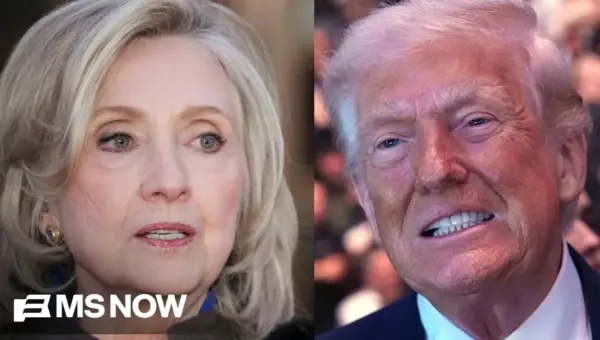
Hillary Clinton has strongly criticized Donald Trump's recent social media posts, labeling them "unhinged" and "disgraceful." She emphasized the need for accountability for leaders' words and actions, drawing parallels to international relations and the Iran nuclear program. Clinton also voiced concerns about Prime Minister Benjamin Netanyahu's leadership and its impact on Israel's long-term security.