Iran Conflict Shifts Global Alliances, Reshapes World Order
A new analysis of the Iran conflict reveals significant geopolitical shifts, with the U.S. focusing on strategic goals like crippling Iran's missile program rather than regime change. The report highlights Saudi Arabia's role, questions media narratives, and details economic and alliance gains for the U.S. It also explores internal U.S. political divisions and the immigration debate.

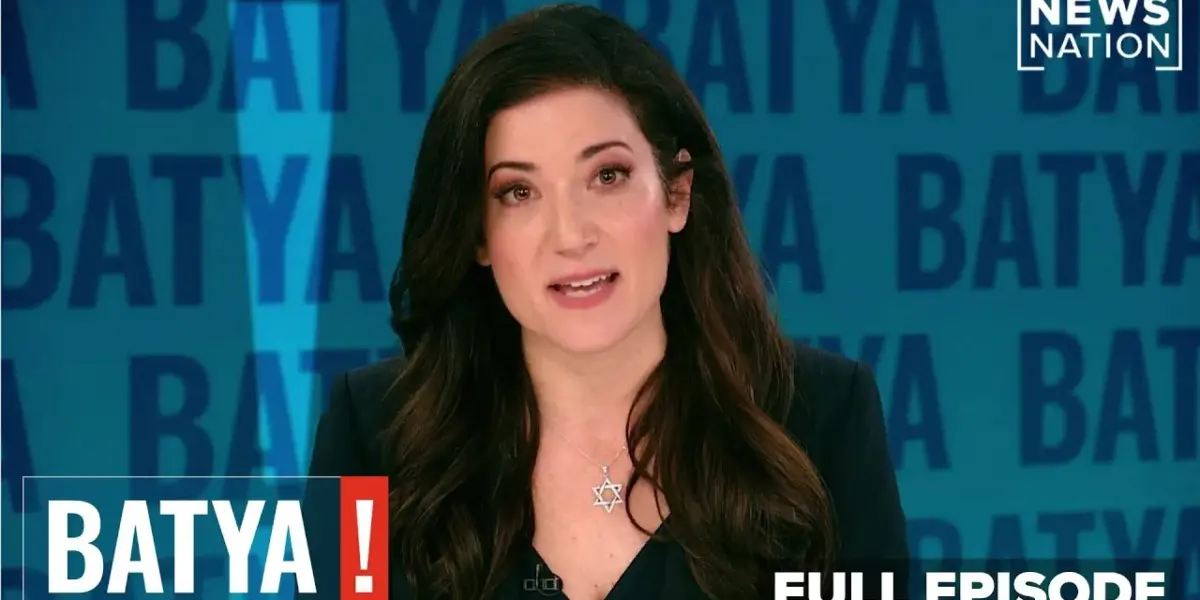
Iran Conflict Reshapes Alliances, Redraws World Order
The recent conflict involving Iran has led to significant shifts in global alliances and is reshaping the international order. While some media reports have focused on the idea that Israel dragged the U.S. into the war, a closer look reveals a more complex picture. U.S. intelligence officials advised President Trump in February that while some objectives, like killing Iran’s top leader and crippling its missile program, were possible, others, like regime change, were not.
U.S. Strategy and Shifting Goals
The U.S. under President Trump appears to have focused on achievable goals: preventing Iran from obtaining nuclear weapons and limiting its missile capabilities. This strategy has reportedly been successful. The New York Times reported that Israeli Prime Minister Netanyahu pushed for regime change in Iran, seeking the removal of Ayatollah Khamenei and a popular uprising. However, U.S. intelligence deemed regime change unrealistic.
Secretary of State Marco Rubio reportedly advised the President to pursue the missile program goal, stating, “If our goal is regime change or an uprising, we shouldn’t do it. But if the goal is to destroy Iran’s missile program, that’s a goal we can achieve. I think we need to do it.” This suggests a U.S. strategy centered on defense and regional stability rather than direct intervention for internal Iranian change.
Saudi Arabia’s Role and Media Narratives
The transcript highlights Saudi Arabia’s significant role, with Crown Prince Mohammed bin Salman (MBS) urging President Trump to strike Iran and continue the action until completed. The analysis questions why media outlets like The New York Times have not focused on Saudi Arabia’s influence in the same way they have scrutinized Israel’s. This points to a potential media bias, with the phrase “No Jews, no news” being used to describe this perceived imbalance.
The Economist is also criticized for suggesting that President Trump is losing the conflict, a view dismissed as “nonsense” in the analysis. The argument is that regardless of the war’s ultimate outcome, Iran’s ballistic and nuclear capabilities have been severely weakened, and China and Russia have been exposed as less influential players. This outcome, the analysis posits, ensures a future free from a nuclear-armed Iran.
Economic and Geopolitical Wins
The conflict has reportedly yielded several strategic benefits for the U.S. China is now compelled to buy oil at market rates, giving the U.S. leverage in trade negotiations. The petrodollar system, a cornerstone of global finance, has been re-established. Saudi Arabia and Qatar have moved closer to the U.S. and Israel, strengthening regional ties through initiatives like the Abraham Accords.
Furthermore, the analysis suggests that traditional NATO allies have been revealed as “freeloading traitors” who do not contribute equally to collective security. The U.S. is reasserting itself as the world’s sole superpower, driven by its energy independence. This narrative contrasts sharply with media portrayals that focus on perceived U.S. losses or Israeli manipulation.
Glenn Beck’s Perspective on Global Reorganization
Radio host Glenn Beck, interviewed on the show, echoed the sentiment that President Trump is actively reorganizing the world. Beck recalled a conversation with Trump early in his presidency where Trump confirmed he was dismantling the post-1945 Bretton Woods system and remaking global alliances. Beck believes this vision extends beyond the immediate conflict, aiming for a fundamental restructuring of international relations.
Beck emphasized that while a stable Middle East is necessary for a stable America, the U.S. role should be limited to its national interests, not acting as a global problem-solver. He stressed that regime change in Iran is not a viable U.S. objective, but crippling its missile program is. The Abraham Accords and efforts to unite Middle Eastern allies like Egypt and Saudi Arabia with Israel are seen as crucial steps in this broader strategy.
Internal U.S. Political Divisions and Israel Aid
The transcript also touches upon divisions within the Democratic Party regarding the Iran conflict and aid to Israel. While some Democrats, like Congressman Hakeem Jeffries, criticized a short ceasefire, others, like CNN host Erin Burnett, questioned the President’s actions regardless of his choices. This highlights a perceived inconsistency in the opposition’s stance.
A significant point of contention is the growing negative view of Israel among Democrats, with Pew polling showing an increase from 69% in 2025 to 80% holding a negative view. This shift is influencing political positions, with figures like Alexandria Ocasio-Cortez opposing all military aid to Israel. However, other Democrats, like Ruben Gallego, are carving out a more centrist lane, supporting defensive aid to Israel while rejecting radical stances like abolishing ICE.
The Democratic National Committee’s (DNC) decision to vote down a resolution criticizing AIPAC, the pro-Israel lobby, is seen as an attempt by the party to moderate its stance and appeal to a broader base. The analysis suggests that while the progressive wing is vocal, the majority of the electorate remains in the center. Concerns are raised about instances where criticism of Israel veers into anti-Semitism, exemplified by comments made by a candidate in Michigan.
Immigration Debate and Economic Realities
The discussion pivots to immigration, using the case of Liam Ramos, a migrant child whose family was ordered deported. The analysis criticizes the liberal media for portraying the family as victims of Trump administration cruelty, while ignoring that their asylum case was found to be fraudulent. Liam’s mother admitted they were economic migrants, not refugees fleeing persecution.
This situation is used to highlight a perceived double standard: compassion for illegal immigrants versus the concerns of working-class Americans competing for jobs and resources. The economic impact of illegal immigration is debated, with one side arguing that undocumented immigrants either drive down wages or are subsidized by taxpayers. The other side counters that undocumented immigrants are less likely to commit crimes than native-born citizens and that corporations, not immigrants, are the primary drivers of wage stagnation.
The debate also touches on the system that allows undocumented immigrants to pay taxes and obtain loans, questioning the necessity and implementation of such measures. The concept of birthright citizenship is also raised as a factor influencing immigration decisions.
Global Impact and Future Scenarios
The conflict and its aftermath are presented as a pivotal moment. The U.S. is seen as reasserting its global leadership, driven by energy dominance and a strategic recalibration of alliances. The weakening of Iran’s nuclear and missile programs, coupled with the exposure of China and Russia’s limitations, suggests a new geopolitical equilibrium is forming.
The analysis points to a potential fracturing of traditional alliances, with European allies criticized for their lack of contribution. Meanwhile, Middle Eastern powers like Saudi Arabia are aligning more closely with the U.S. and Israel. The future may see a more multipolar world, but one where U.S. influence, particularly through energy and economic power, remains paramount. The internal political debates within the U.S. and the shifting alliances in the Middle East suggest a period of significant international flux.
Source: The Iran ‘smoking gun’; America’s victories this week | Batya! Full Show 4/11 (YouTube)

Related Articles


U.S. Tightens Grip on Hormuz Strait
Tensions escalate in the Strait of Hormuz as the U.S. threatens to blockade Iranian ports, causing oil prices to surge. Following failed peace talks, Iran vows retaliation against any perceived violations, setting the stage for a significant geopolitical standoff.

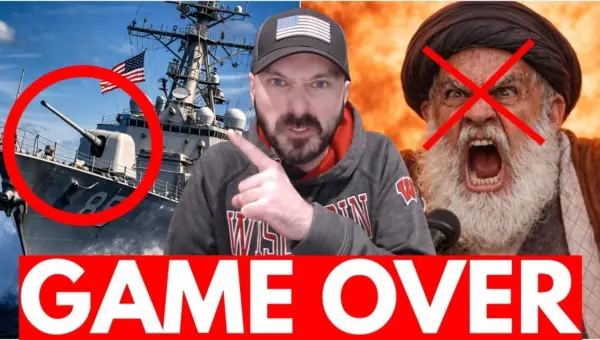
US Blockades Hormuz: War Looms as Iran Threatens to Fire
The U.S. military has imposed a total blockade on the Strait of Hormuz, leading to a dangerous standoff with Iran. This move could see U.S. forces boarding Chinese ships, escalating tensions significantly. Iran has threatened retaliation, raising fears of a wider regional conflict.
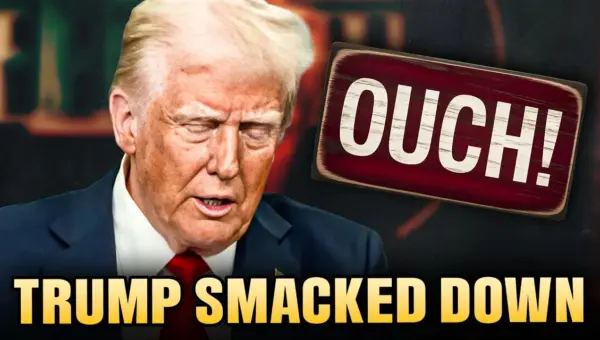
General Warns of War Crime Trials for U.S. Military
Retired U.S. Army Brigadier General Steve Anderson warns that U.S. military members could face Nuremberg-style trials for war crimes. He criticizes former President Trump's handling of international conflicts, particularly in Iran, calling it a major geopolitical blunder. Anderson urges strategic international action for accountability after the current administration.