Hungary Elects New Leader, Ending Orban’s 16-Year Reign
Hungary has elected opposition leader Peter Magyar as its new Prime Minister, ending Viktor Orban's 16-year rule in a landslide victory. Magyar's win signals a significant shift for the nation and its European relations, promising a move away from Orban's policies and a focus on restoring democratic institutions and combating corruption. Despite the change in leadership, Orban's influence through established networks may persist.

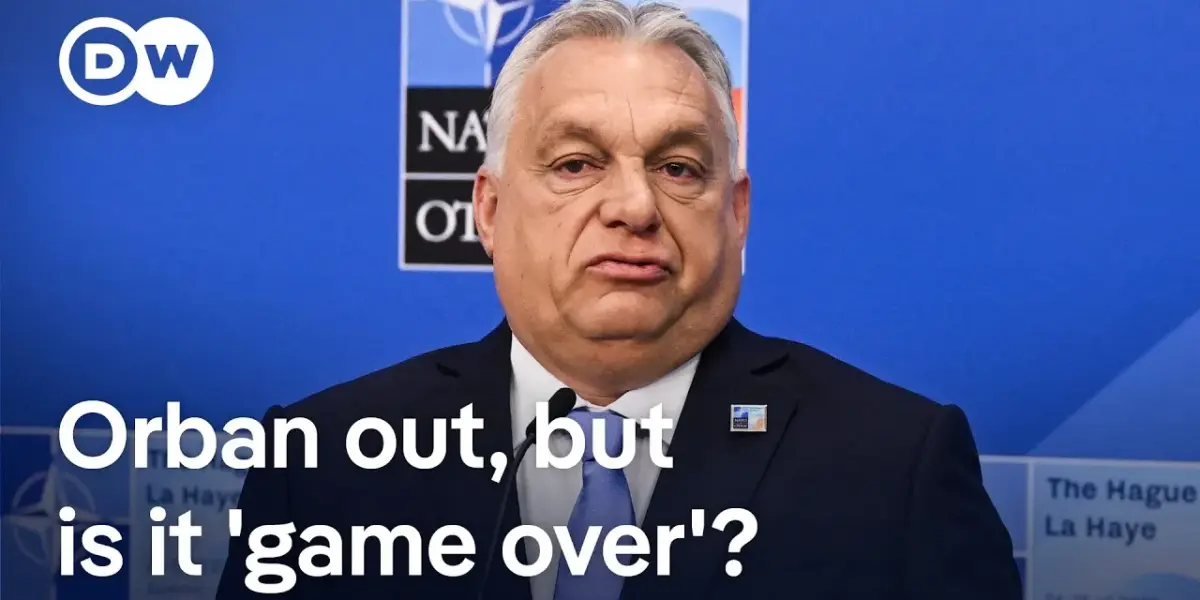
Hungary Elects New Leader, Ending Orban’s 16-Year Reign
In a historic shift, Hungary has elected Peter Magyar as its new Prime Minister, ending Viktor Orban’s 16-year grip on power. The opposition leader secured a landslide victory in a national election marked by record voter turnout. The results signal a significant change for Hungary and raise questions about its future relationship with Europe, the United States, and Ukraine.
A Landslide Victory Against All Odds
Polls had predicted a strong showing for Peter Magyar, but the scale of his victory surprised many. Professor Kim Lane Scheppele, an expert on Hungarian politics from Princeton University, explained that while polls indicated a win, the country’s electoral system could have produced a different outcome. However, Magyar managed to navigate and win within the very system Orban had established to maintain his own power.
“The amazing thing here is that Peter Magyar actually hit all the spots in the Orban rig system that allowed him to get the kind of victory that Orban used to get,” Scheppele noted. She added, “After the last election, Orban said he had a victory that could be seen from the moon. This time I think we have a victory that can be seen from Mars.”
Shifting Tides: Orban’s Own Voters Move Away
A key factor in Magyar’s success was the surprising shift of support from Orban’s traditional voter base. Historically, the opposition won in cities while Orban dominated the countryside. This election saw a dramatic change, with rural districts that had consistently voted for Orban switching their allegiance to Magyar. Election maps turned overwhelmingly blue, Magyar’s party color, across the nation, including in areas long considered Orban’s stronghold.
Magyar’s Strategy: Personal Connection in a Controlled Media Landscape
Peter Magyar’s rise is remarkable partly because he emerged from within Orban’s own political circle, positioning himself in the center-right where most Hungarian voters are. In a country where Orban controlled most media outlets, Magyar adopted a grassroots strategy. For two years, he traveled from village to village, meeting voters face-to-face. This personal outreach allowed him to build connections and bypass Orban’s media dominance, ultimately leading to his decisive win.
Orban’s Legacy: A Rigged System
Viktor Orban first came to power in 2010 amidst a national financial crisis, presented as the only responsible choice. However, Scheppele argues that subsequent elections were manipulated. Orban tilted the electoral system to favor rural votes, making it crucial for any opposition to win over these areas. Magyar’s success in doing just that was key to overcoming the system Orban had built.
The victory’s magnitude is amplified by Hungary’s electoral math. A simple majority of votes, like Magyar’s 54%, can translate to a much larger share of parliamentary seats due to the system’s design. “He had to kind of hit that point. So he got the benefit that Orban used to get, and that’s why we’re seeing this kind of huge victory,” Scheppele explained.
The Challenges Ahead: Navigating Orban’s Structures
Magyar inherits a system heavily influenced by Orban, not just in election rules but in its institutions. Two immediate obstacles are the President, who signs laws and remains loyal to Orban, and the Constitutional Court, which Orban has packed with his appointees. Both can block Magyar’s new legislation.
To overcome this, Magyar will likely need to use his parliamentary majority to amend the constitution and potentially reform the roles of the presidency and the court. While changing laws is straightforward, removing current officeholders presents a greater challenge. However, Orban himself followed a similar path to consolidate power, providing a model for Magyar to potentially emulate.
A New Era: Restoring Democracy and Fighting Corruption
In his victory speech, Magyar declared, “Together, we replaced the Orban regime. Together, we liberated Hungary. Together, we took back our homeland.” He has framed his movement as a systemic change, using language reminiscent of the 1989-1990 transition away from communism. This suggests a commitment to significant constitutional reforms aimed at restoring democracy.
Magyar, who was largely unknown until two years ago, has built his platform on anti-corruption efforts. He has spoken out against the Orban government’s alleged corruption and self-enrichment. A significant early step he plans is to join the European Public Prosecutor’s Office. This move signals a strong intent to tackle corruption, particularly concerning the misuse of EU funds, which has been a major issue under Orban’s rule.
Foreign Policy Shifts: EU, Ukraine, and Russia
Magyar’s victory is expected to bring Hungary closer to the European Union. He is likely to remove Orban’s frequent vetoes on EU matters, including support for Ukraine. While Orban had cultivated a relationship with Russia, Magyar has indicated a desire to break these ties and reorient Hungary towards the West. This includes seeking EU financial aid to reduce dependence on Russian energy and potentially exploring alternative energy sources.
The relationship with Ukraine may see improvements, though complexities remain, particularly regarding the rights of the ethnic Hungarian minority in Ukraine. Magyar might not be an enthusiastic supporter of Ukraine but is expected to stop blocking EU aid and accession efforts. His administration will also need to address Hungary’s past closeness with China, including technology deals and battery factory investments.
Orban’s Continued Influence: The Far-Right Network
Despite his electoral defeat, Viktor Orban is not expected to disappear from the political scene. He has built a network of organizations, funded independently of the state budget, that supports far-right movements across Europe. This network, including the think tank and training center known as Mathias Corvinus Collegium (MCC), will likely continue to operate and exert influence.
Orban may also seek to wield power through the European Parliament, where his party leads a significant faction. This platform could allow him to influence EU policy and potentially plan a return to domestic politics. As Scheppele noted, Orban, at 62, remains a formidable political figure with significant fight left in him.
Looking Ahead
Peter Magyar faces the immense task of dismantling the structures Orban put in place while rebuilding Hungary’s democratic institutions and economy. His immediate focus will likely be on tackling corruption and re-establishing strong ties with the EU. The coming months will reveal how effectively he can navigate the complex legal and political landscape left behind by Orban and whether he can truly usher in the systemic change he has promised.
Source: Hungary After Orban: What's Next? | DW News (YouTube)

Related Articles
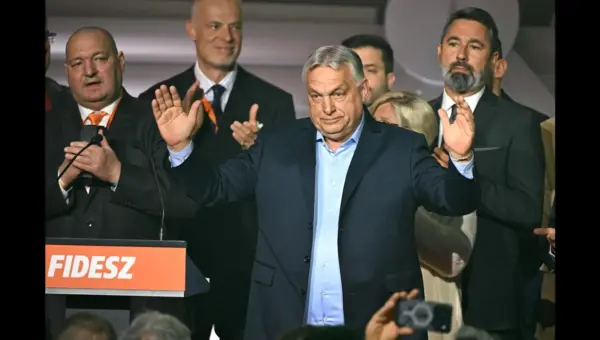
Orbán Ousted: Hungary Votes for Change After 16 Years
Hungary has elected a new leader, with Prime Minister Viktor Orbán conceding defeat after 16 years in power. Opposition leader Péter Magyar appears set for a landslide win, signaling a potential shift in Hungary's political direction and its relationship with Europe.


Gas Prices Soar as War Looms; Trump Attends UFC
Americans are struggling as inflation rises and gas prices surge past $100 a barrel. With many resorting to debt for groceries, the economic outlook is grim. Meanwhile, political figures are drawing attention for their public activities amidst the crisis.

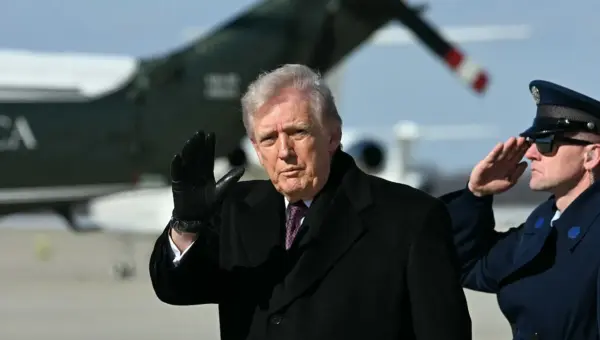
Trump Returns to D.C.: A Political Homecoming?
Former President Donald Trump made a notable return to the Washington D.C. area, landing at Joint Base Andrews. This visit, his first since leaving office, sparks speculation about his future political involvement and continued influence.