Pentagon’s Press Ban Crumbles Under First Amendment Challenge
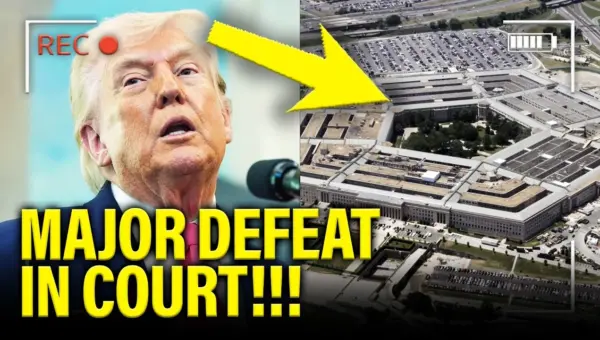
A federal judge has ruled against new Pentagon policies that restricted defense reporters' access, deeming them a violation of the First Amendment. The decision upholds the press's right to gather information, even during wartime, and pushes back against government attempts to control the narrative.


Pentagon’s Press Ban Crumbles Under First Amendment Challenge
A federal judge has struck down new Pentagon policies that severely limited access for defense reporters. The ruling is a major victory for the press and a setback for efforts to control information during wartime. The case highlights a growing tension between government secrecy and the public’s right to know.
The Trump Administration’s Restrictions
Under the Trump administration, then-Secretary of Defense Pete Hegesith implemented strict rules for reporters covering the Pentagon. These policies aimed to limit journalists’ movement within the building and required them to submit their stories for approval. Hegesith argued these measures were necessary for national security, claiming reporters had too much access.
The intention, critics argued, was not just to limit access but to effectively ban independent reporting from the Pentagon. Instead of seasoned journalists, the administration seemed to favor far-right influencers like Mike Lindell and Laura Loomer. This shift raised concerns about the kind of information reaching the public.
Legal Battle and First Amendment Rights
Members of the press challenged these policies, arguing they violated the First Amendment. While acknowledging that national security can sometimes limit press freedom, they asserted that the First Amendment, as the first amendment to the Constitution, holds a primary place. Banning reporters from a federal building without very specific, limited exceptions like classified information, they argued, was unconstitutional.
In March, a Washington D.C. judge, Judge Friedman, ruled in favor of the press. The judge stated that the Pentagon’s system of requiring story approval effectively banned reporters. The policies created a situation where journalists would have to pledge loyalty to the Secretary of Defense, a condition that independent reporters could not accept.
The court cannot conclude this opinion without noticing once again what this case is really about. The attempt by the Secretary of Defense to dictate the information received by the American people to control the message that the public hears and sees, only what the Secretary and the Trump administration want them to hear and see. The Constitution demands better. The American public demands better, too.
Pentagon’s Attempt to Circumvent the Ruling
Despite the judge’s clear order, the Pentagon quickly introduced a new set of policies. These new rules still involved escorts and chaperones for reporters, creating new hurdles. The department seemed to be trying to achieve the same restrictive outcome with slightly different language, essentially daring the press to sue again.
However, the reporters filed a motion for compliance, arguing that the new measures were simply a way to get around the judge’s previous order. They pointed out that the department was using slightly different wording to achieve the same unconstitutional result: limiting what the public can learn.
The Judge’s Firm Stance
Judge Friedman was not swayed. He recognized the tactic for what it was: an attempt to control the narrative. The judge emphasized that the core issue was the Secretary of Defense trying to dictate what information the American people receive. He noted receiving numerous letters from citizens explaining the importance of a free press for an informed democracy.
The judge stated that the government has no right to block free discussion, especially during wartime. He called the curtailment of First Amendment rights dangerous and a mark of autocracy, not democracy. The Pentagon’s new interim policy, he found, used different language but aimed for the same unconstitutional outcome.
Why This Matters
This case is crucial because it defends the role of a free press in a democracy. During wartime, the public needs reliable information more than ever. When the government tries to control the flow of information, it can hide mistakes, mislead the public, and undermine democratic principles.
The Pentagon’s actions and the subsequent legal challenge highlight the vulnerability of press access. The attempt to replace experienced defense reporters with influencers suggests a desire to shape public opinion with biased viewpoints rather than factual reporting. A well-informed public is essential for holding leaders accountable, especially when decisions involve war and national security.
Implications and Future Outlook
This ruling serves as a warning to any administration that attempts to restrict press access for political gain. It reinforces the idea that the First Amendment protects the right to gather and report news, even from within government buildings like the Pentagon.
The Pentagon may try to appeal the decision or implement further, more subtle restrictions. However, Judge Friedman’s strong stance and the public support for a free press suggest that such attempts will face continued legal and public scrutiny. The future will likely see ongoing efforts to balance national security concerns with the fundamental right to a free and independent press.
Historical Context
Throughout history, authoritarian regimes have often targeted the press first. By controlling information, they can suppress dissent and maintain power. In the United States, the First Amendment has been a cornerstone of protecting this freedom. Landmark court cases have consistently affirmed the press’s right to report on government actions, even when those actions are controversial or sensitive.
The military-industrial complex, a term coined by President Eisenhower, also plays a role. It refers to the powerful relationship between a nation’s military, its arms industry, and political leaders. This complex can sometimes benefit from secrecy, making the role of investigative reporters even more vital in ensuring transparency and accountability.
Conclusion
The victory for the press in the Pentagon access case is a significant affirmation of democratic values. It shows that even powerful government institutions can be held accountable when they overstep their bounds. The fight for transparency and the public’s right to know continues, and this ruling is a vital step in that ongoing struggle.
Source: Trump STUNNED as MAJOR RULING on WAR MADE!!!! (YouTube)

Related Articles


Journalist Warns: Truth Under Threat in America
Journalist Jim Acosta warns that America faces a dangerous time for truth-telling, where power can crush verifiable facts. He highlights escalating pressures on the press, from revoked credentials to death threats, and links these issues to media consolidation and the rise of self-censorship. Acosta stresses the vital role of a free and independent press in safeguarding democracy.

Judge Cites First Amendment in Pentagon Press Access Ruling
A federal judge has again ruled that the Pentagon violated the First Amendment by restricting press access. The judge criticized the Pentagon's attempts to evade his previous order, emphasizing the vital role of a free press in a democracy. This decision underscores the ongoing tension between government transparency and control over information.


Trump Threatens Media Over Ceasefire Report
Donald Trump has escalated his conflict with CNN, threatening investigations after the network reported on Iran's claims regarding a ceasefire agreement. This action raises serious concerns about press freedom and potential government overreach.