America on the Brink: Measles Resurgence Threatens Decades of Public Health Triumph
The United States faces a critical public health crisis as measles, a disease declared eliminated 25 years ago, stages a dramatic comeback due to declining vaccination rates and pervasive misinformation. With nearly 1,000 cases confirmed this year and children disproportionately affected, experts warn the nation is at severe risk of losing its elimination status. A return to consistent, science-led public health practices and widespread vaccination is urgently needed to protect communities and prevent further preventable suffering.


America on the Brink: Measles Resurgence Threatens Decades of Public Health Triumph
The United States, a nation that proudly declared measles eliminated a quarter-century ago, now teeters on the precipice of a profound public health reversal. A highly contagious, vaccine-preventable disease, measles is staging a dramatic comeback, fueled by declining vaccination rates and a pervasive wave of misinformation. Experts warn that if current trends persist, the country stands to lose its coveted elimination status, ushering in an era of preventable suffering and straining an already burdened healthcare system.
Dr. Ida Brown and Dr. Sonia Sloan, prominent voices in healthcare advocacy and self-described "black and brown women disruptors in healthcare and beyond," have sounded the alarm, highlighting the escalating crisis. "The numbers have now exploded," Dr. Sloan lamented, referring to the surge in measles cases that has put the nation’s 25-year achievement at severe risk. This alarming trajectory is not merely a statistical anomaly; it represents a tangible threat to the health and safety of communities, particularly the most vulnerable among us: our children.
The Alarming Resurgence of a Vanquished Foe
For two decades, the United States maintained a critical benchmark: no sustained person-to-person transmission of measles for 12 consecutive months. This achievement, culminating in the official elimination declaration in 2000, was a testament to robust public health infrastructure and high vaccination coverage. However, that hard-won victory is now jeopardized. January of last year saw outbreaks resurface, and new cases continue to be reported across multiple states, threatening to reverse this monumental public health success.
The Centers for Disease Control and Prevention (CDC) data reveals a grim picture. As of this year, the United States has already confirmed 996 cases of measles. While this number might seem modest in isolation, its context is chilling: the entire year prior, 2025, recorded 2,280 cases. At the current pace, the nation is on track to significantly exceed last year’s total, signaling an accelerating crisis that demands immediate attention.
The problem is not evenly distributed but concentrated in alarming hotspots. South Carolina, for instance, has reported over 950 cases alone, with the vast majority of those infected being unvaccinated individuals. Illinois recently confirmed its first case, with potential exposure linked to a church service, while Texas Hill Country has seen cases clustered within families. These localized outbreaks underscore the fragility of community protection when vaccination rates falter.
Perhaps most heartbreaking is the demographic breakdown of those affected. The majority of cases are striking children: 436 cases in children aged 5 to 11, 253 cases in children aged 0 to 4, and 179 cases in kids aged 12 to 17. As Dr. Sloan poignantly observed, "The majority of these cases are children… that’s the very population that these vaccines were designed to protect." This preventable suffering among the youngest members of society is a stark indicator of a systemic failure to uphold public health principles.
A Retreat from Eradication: How the U.S. Lost Ground
The journey to measles elimination in the U.S. was a monumental triumph of modern medicine and public health. Before the advent of the measles vaccine in the 1960s, measles was a ubiquitous childhood disease, infecting nearly all children by age 15. The disease caused hundreds of deaths annually, thousands of hospitalizations, and left many with lifelong disabilities. The introduction of the highly effective Measles, Mumps, and Rubella (MMR) vaccine, and subsequent widespread vaccination campaigns, dramatically reduced case numbers.
The "elimination" status achieved in 2000 did not mean zero cases, but rather the absence of sustained person-to-person transmission for over 12 months. This meant that while imported cases from other countries could still occur, the virus was no longer endemically circulating within the U.S. population. This success was a beacon of what consistent, evidence-based public health efforts could achieve. It demonstrated the power of collective action, where individual vaccination decisions contributed to a protective shield for the entire community.
However, this benchmark, once a source of national pride, is now gravely imperiled. Infectious disease experts, like Dr. Aaron Glatt, Chief of Infectious Disease at Mount Sinai South Nassau, describe the potential loss of elimination status as "a very sad commentary at this time in history that current public attitudes towards health." His words echo a widespread concern among the scientific community: a preventable disease is returning due to a shift in public perception and adherence to established health practices.
The Critical Role of Herd Immunity
The bedrock of measles elimination is herd immunity, a concept central to public health. Public health experts are unequivocal: for robust protection against sustained spread, at least 95% of a community must be vaccinated. At this critical threshold, even individuals who cannot be vaccinated—such as infants too young to receive the vaccine, pregnant women, or those with compromised immune systems—remain indirectly protected. Researchers at Johns Hopkins describe 95% coverage as providing "robust herd immunity."
The danger zone begins when vaccination rates dip below 90%. Below this level, the risk of outbreaks rises dramatically, creating a fertile ground for highly contagious viruses like measles to spread unchecked. In essence, elimination is not an automatic or permanent state; it is a dynamic equilibrium maintained through consistent, high vaccination coverage. When that coverage slips, measles finds a window of opportunity, and returns with a vengeance.
The stark reality is that the United States is currently nowhere near the necessary 95% threshold for widespread herd immunity against measles. This collective vulnerability means that the virus, once introduced, can rapidly find susceptible hosts, turning isolated cases into widespread outbreaks, threatening the most vulnerable individuals who rely on the immunity of their community for protection.
Measles: A Super Spreader with Devastating Consequences
Measles is far from a "seasonal sniffle." It is one of the most contagious viruses known to humankind, possessing an R0 (basic reproduction number) significantly higher than many other well-known infectious diseases. An infected person in a population with no immunity can infect an astonishing 12 to 18 others. This makes measles a "super spreader," far more contagious than chickenpox and even more so than COVID-19. The virus’s insidious nature allows it to linger in the air of a room for up to two hours after an infected person has left, meaning individuals can contract the disease simply by walking into a space previously occupied by someone with measles, long after they are gone.
The consequences of measles extend far beyond a characteristic rash and fever. The disease carries a significant risk of severe complications, which can be life-threatening or lead to long-term disability. These include:
- Pneumonia: A common and serious complication, particularly in young children.
- Encephalitis: Swelling of the brain, which can lead to seizures, hearing loss, intellectual disability, or even death.
- Hospitalizations: Severe cases often require intensive medical care, placing a considerable burden on healthcare systems and exposing patients to additional risks within hospital settings.
- Long-term Disability: Complications can result in permanent damage, affecting quality of life for years.
- Death: While rare in developed countries with access to good medical care, measles can still be fatal, especially in vulnerable populations.
These are not abstract risks; they are real threats to the lives and well-being of individuals, particularly children, who are disproportionately affected by the current surge. The re-emergence of measles means a return to these preventable complications, posing an ethical and societal challenge that should have been relegated to the history books.
The Architects of Reversal: Anti-Vaccine Narratives and Political Undermining
The resurgence of measles is not an accident; it is the direct consequence of a confluence of factors, primarily the erosion of trust in science and public health institutions. Dr. Sloan unequivocally states that "the recipe for disaster was very imminent and we saw it on the horizon." She points to the influence of "anti-vaxer of RFK Jr. leading the narrative" and a "non-research-based political dismantling of healthcare" as key drivers.
The rise of vaccine skepticism, often amplified by social media and political figures, has diluted critical public health messaging. When leaders send mixed signals, vaccination rates inevitably fall, creating fertile ground for outbreaks. The transcript specifically calls out "HHS’s secretary’s negligence under the Trump administration" as contributing to the problem, suggesting a broader pattern of undermining public health infrastructure and expertise.
The shifting stance of public figures further complicates matters. Dr. Oz, for instance, is noted for his current call to "get vaccinated," contrasting sharply with previous statements that downplayed the danger of certain illnesses. This inconsistency, as Dr. Sloan highlights, comes "a little bit too late," after significant damage to public trust and vaccination rates has already occurred. Such mixed signals from influential voices sow confusion and distrust, making it harder for communities to rally around evidence-based health practices.
While the transcript mentions skepticism around mRNA vaccines in the context of COVID-19, it’s crucial to note that the MMR vaccine is a traditional, live-attenuated vaccine, with decades of proven safety and efficacy. However, the broader anti-vaccine sentiment tends to conflate all vaccines, leading to a general decline in vaccination adherence across the board.
The "public health messaging that’s diluted by vaccine skepticism at the highest levels" has created an environment where settled science is questioned, and evidence-based recommendations are politicized. This erosion of public trust is perhaps the most dangerous long-term consequence, making it challenging to address not only measles but also future public health crises.
A Call to Action: Reclaiming Public Health through Science
The solution, according to healthcare disruptors Dr. Brown and Dr. Sloan, is clear and unwavering: a return to science, evidence, and consistent public health leadership. "Public health only works when it’s consistent," Dr. Sloan emphasized. "It’s not ideology. It’s not politics… it’s public health and our public health needs to be led by scientists. It has to be grounded in evidence and it should be guided by data. Period."
The MMR vaccine is highly effective, with two doses providing about 97% protection against measles. This is not a matter of personal opinion or political affiliation; it is a scientific fact. To reverse the current outbreak and prevent future ones, communities must return to the smart vaccination practices that led to elimination in the first place.
The experts stress the importance of understanding who is at risk and how to protect them. The most vulnerable populations include:
- Unvaccinated children, who are the primary victims of the current resurgence.
- Pregnant women, for whom measles can pose serious risks to both mother and fetus.
- Adults whose immunity may have waned over time, particularly those who received only one dose or were vaccinated many years ago.
- Individuals with weakened immune systems, who cannot be vaccinated or may not mount a strong immune response.
Individual and Community Action Plan
To combat the measles resurgence, Dr. Brown and Dr. Sloan outline a clear, actionable plan for individuals and communities:
- Check Immunization Records: Verify your vaccination status and that of your family members. If unsure, consult your clinician or get an antibody test. A quick and inexpensive antibody test or booster can provide peace of mind.
- Ensure Children Receive MMR Doses: Adhere to the recommended vaccination schedule for children, which includes two doses of the MMR vaccine. This schedule exists for a reason and has proven its effectiveness.
- Adults with Incomplete Histories: If you’re an adult with an incomplete vaccination history, consider getting a booster. There is no downside to being protected.
- Monitor Symptoms if Exposed: If you suspect exposure to measles, monitor for symptoms for 21 days. Crucially, always contact a healthcare provider before showing up to an office or clinic to prevent further spread in healthcare settings.
- Educate and Verify: Beyond personal action, become an informed advocate. Do not simply repost memes; ensure that information shared is from accurate, evidence-based, and scientific sources. Challenge misinformation with facts.
"Measles was eliminated. Eliminated. And we have tools today, right now, to keep it that way," Dr. Sloan emphasized, highlighting the profound frustration of battling a problem that was already solved. The energy and resources currently being diverted to fight measles could otherwise be directed towards groundbreaking research in areas like colon cancer cures, gene therapy for breast cancer, or developing vaccines for future pandemics. Instead, society is forced to re-fight a battle it already won.
When vaccination rates fall below 90%, viruses "see this window" and "seize their chance," exploiting the gaps in community protection. This proactive approach, staying informed, and taking decisive action, is essential to prevent another preventable outbreak from becoming the defining story of the year.
Conclusion: A Collective Responsibility
The re-emergence of measles in the United States is a sobering reminder that public health achievements are not permanent fixtures but require constant vigilance and collective commitment. The current crisis is a direct consequence of eroded public trust, fueled by misinformation and inconsistent leadership, threatening to unravel decades of progress.
As Dr. Brown and Dr. Sloan passionately argue, this is not about politics or personal "personal history aside," but about "survival." It’s about protecting the most vulnerable, upholding scientific principles, and ensuring that preventable diseases remain a relic of the past. The call to action is clear: check your shots, check your loved ones, and fight for science to work for us once again. Only through a renewed commitment to vaccination and evidence-based public health can America reclaim its triumph over measles and protect its future.
Source: Trump Move BACKFIRES as DISEASE SPREADS QUICK (YouTube)

Related Articles
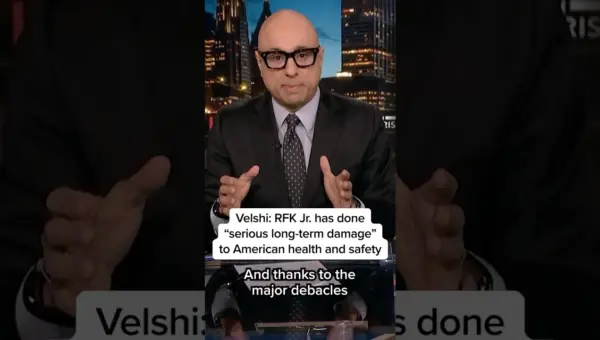
RFK Jr. Accused of Causing Health Damage Amid Vaccine Data Questions
MSNBC's Ali Velshi has accused Robert F. Kennedy Jr. of causing significant long-term harm to American health and safety, linking his influence to rising measles outbreaks. This criticism emerges as new reports question the CDC's timely release of data on COVID-19 vaccine benefits, potentially impacting public trust.

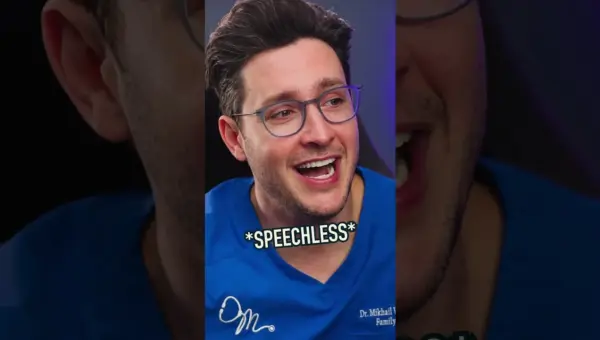
Vaccine Hesitancy: A Doctor’s Warning on Health Risks
A doctor warns that jokes about science and vaccines can have dangerous real-world health consequences. The rise of misinformation is linked to outbreaks of preventable diseases like measles and the rejection of essential newborn care.

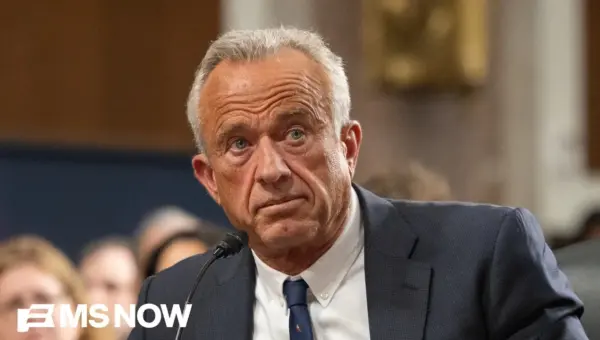
Judge Blocks RFK Jr.’s Vaccine Schedule Overhaul
A federal judge has temporarily blocked Health Secretary Robert F. Kennedy Jr.'s proposed changes to the childhood vaccine schedule. The ruling stems from a lawsuit challenging Kennedy's appointment of anti-vaccine members to a key advisory committee. Experts warn of a gap between policy marketing and substance, as measles outbreaks rise.