Will.i.am’s Trinity Tricycle Faces Skepticism
Musician Will.i.am has unveiled the Trinity, an AI-powered electric tricycle, marking his latest tech venture. Despite ambitious features, the project faces significant funding challenges, raising doubts about its mass production potential.

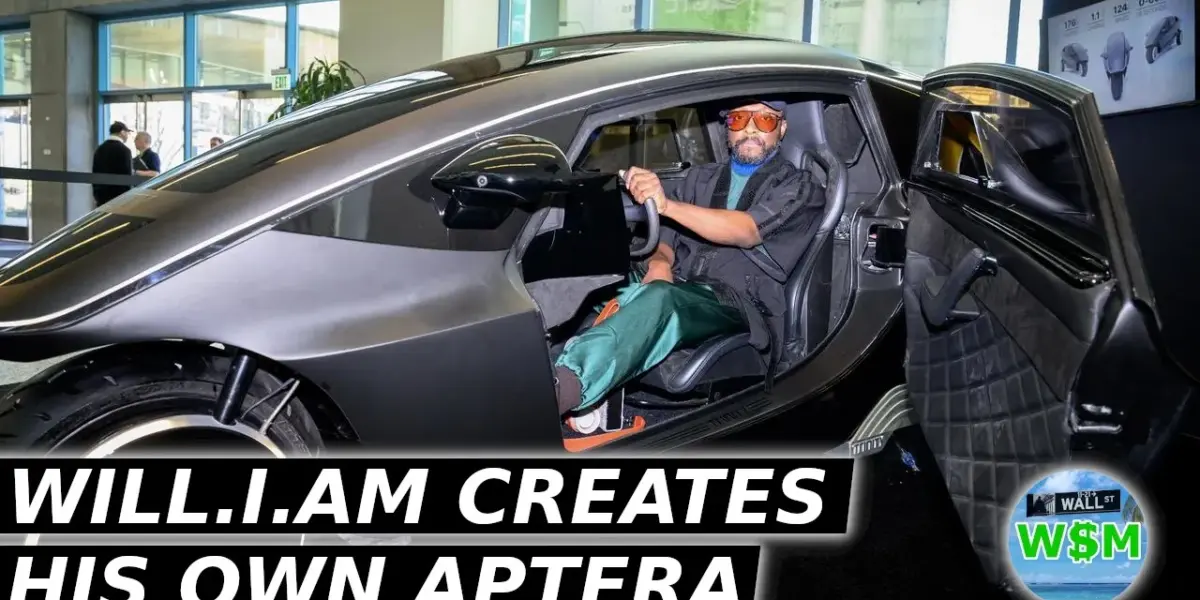
Will.i.am Ventures into Micromobility with AI-Powered Tricycle
Musician and tech enthusiast Will.i.am has unveiled the Trinity, an electric tricycle featuring artificial intelligence. This move marks the artist’s latest foray into the technology sector, a space he has explored for over a decade with mixed results. The Trinity aims to blend personal transportation with advanced AI capabilities, promising a futuristic riding experience.
A History of Tech Endeavors
William Adams, known globally as Will.i.am, rose to fame as a key member of The Black Eyed Peas. Beyond his music career, he has consistently shown an interest in technology and futurism. This passion led him to various tech-related projects, including involvement in robotics competitions for young students. In 2011, Intel appointed him as its Director of Creative Innovation, a role that primarily served as a celebrity endorsement.
Adams later founded IM Plus, a tech startup that developed consumer electronics. The company, with offices in multiple countries, launched several products that ultimately failed to gain market traction. Among these were the Photo Social iPhone case in 2012, which aimed to enhance a phone’s camera but was criticized for its high price and bulky design. It sold poorly and was discontinued less than a year after its release.
The Pulse smartwatch, introduced in 2014, also met a similar fate. Priced at $400, it was intended to replace a cell phone but received harsh reviews for its discomfort and tendency to overheat. Like the Photo Social, it was a commercial failure and was discontinued within a year.
The Trinity Tricycle: AI Meets Micromobility
The Trinity tricycle represents Will.i.am’s most recent technological ambition. Announced in January 2026, the vehicle is described as a “singular micromobility EV built from the agent up.” A promotional video highlights its core feature: an Nvidia GPU. This graphics processing unit is designed to run open-source AI models locally, analyzing data from the tricycle’s cameras.
An AI chatbot is integrated, capable of interacting with the rider through the vehicle’s speakers. Will.i.am refers to the GPU as the tricycle’s “AI brain.” The system is presented as a “dynamic interactive agentic hyperdia experience,” aiming to assist riders not just with navigation but also with tasks like managing emails and calendars.
At the Nvidia GTC conference in March 2026, Will.i.am presented the Trinity. He emphasized its potential for “agentic micromobility,” suggesting it could redefine personal transport by integrating AI assistance directly into the vehicle. The system utilizes voice commands and a touchscreen display for interaction, with the Nvidia GPU capable of running models like Meta’s Llama.
Funding Challenges and Future Prospects
Despite the innovative concept, the Trinity faces significant hurdles. Will.i.am stated that the prototype was self-funded. However, scaling production requires substantial capital. He plans to launch a Kickstarter campaign to raise funds for a manufacturing facility in Boyle Heights, California.
Building a factory capable of mass-producing vehicles typically costs hundreds of millions of dollars. Given Will.i.am’s history of commercial tech failures and the ambitious nature of the Trinity, raising such a vast sum through crowdfunding appears unlikely. Experts suggest that without substantial venture capital, which has been elusive for his past ventures, the Trinity may not reach mass production.
Market Impact and Investor Outlook
Will.i.am’s consistent pursuit of technological innovation, despite numerous setbacks, highlights a persistent belief in the potential of AI and futurism. His involvement in the micromobility sector, particularly with an AI focus, taps into a growing market trend. However, investors often consider a company’s track record when making funding decisions.
The Trinity’s reliance on local AI processing via an Nvidia GPU is a notable technical feature. This approach aims to enhance privacy and reduce latency compared to cloud-based AI. For the micromobility market, which is increasingly seeking smarter, more integrated solutions, the Trinity offers a glimpse into potential future developments. Yet, the practical challenges of manufacturing, cost, and market acceptance remain significant obstacles.
For potential investors, Will.i.am’s ventures present a high-risk, high-reward scenario. While his celebrity status can generate initial interest, sustained success hinges on product viability and market demand. The Trinity’s future will likely depend on its ability to overcome funding challenges and prove its value proposition in a competitive landscape.
Source: Will.i.Am Creates An Electric Tricycle (YouTube)

Related Articles


AI Backlash Grows as Public Distrust Mounts
A growing public backlash against artificial intelligence is becoming increasingly evident, fueled by fears of job displacement and the perceived dehumanizing nature of AI. Recent incidents, protests, and negative public opinion polls indicate a significant turning point in societal attitudes towards AI.


Older Americans Work Longer Amid AI Threat
More Americans are working into their 80s, a trend driven by a mix of financial need and personal choice. This phenomenon occurs as artificial intelligence threatens to reshape the job market, potentially creating challenges for younger workers and displacing older ones.


AI Agents Surge: Why Future Tech Matters More Than Fame
Fame is less important than contributing to future-shaping fields like AI, especially in the development of autonomous AI agents. Expertise in these areas attracts significant attention, even from influential figures, highlighting the value of substantive work over popularity.