Trump Orders Iran Strait of Hormuz Blockade
President Trump has ordered an immediate U.S. Navy blockade of the Strait of Hormuz following failed negotiations with Iran. The move aims to halt all maritime traffic, but experts warn of significant risks, including potential confrontations with other nations and economic repercussions. The situation remains volatile as both sides may have used a recent ceasefire to resupply and prepare for further conflict.

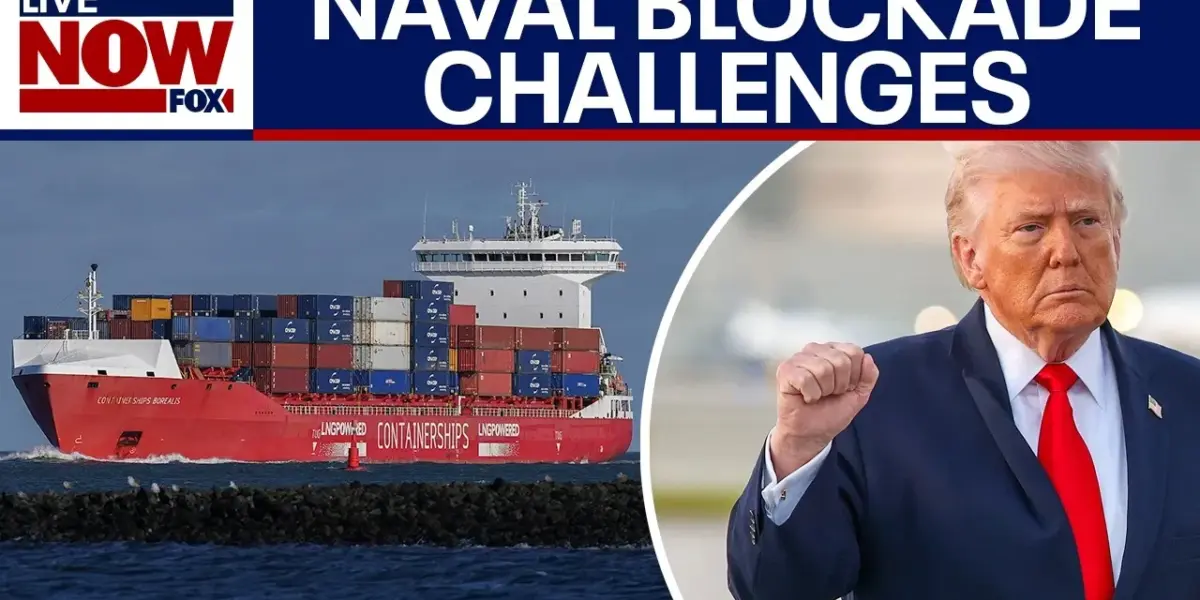
Trump Orders Naval Blockade of Iran’s Hormuz Strait
President Trump announced plans Sunday morning for the U.S. Navy to immediately blockade the Strait of Hormuz. This move follows the failure of recent negotiations between the United States and Iran. The president stated on social media that while many points were agreed upon, the crucial nuclear issue remained unresolved. In response, he declared a complete blockade, aiming to stop all ships entering or leaving the vital waterway.
“All In, All Out” Policy
The president described the new policy as “all in and all out.” He suggested that other countries might assist the U.S. in enforcing the blockade. The goal is to prevent Iran from profiting by selling oil. “We’re not going to let Iran make money on selling oil to people that they like, or people that they don’t like,” Trump stated. The policy means “it’s going to be all or none.”
Military Expert Weighs In on Blockade Feasibility
Retired Lieutenant Colonel Daniel Davis, a military expert and research fellow at Defense Priorities, discussed the practicalities of such a blockade. He noted that due to the narrowness of the Strait of Hormuz, physically blocking ships would be relatively straightforward for the U.S. Navy. “It won’t take much and most of our ships are probably… in the Gulf of Oman or just far out of that,” Davis explained. He added that keeping ships from leaving is the easier part.
Complexities and Risks of Enforcement
However, Davis highlighted the significant challenges in enforcing a blockade. The main difficulty lies in the rules of engagement. “What are the rules of engagement? If something tries to force a blockade, are you going to sink it? Are you going to blow it up? Are you going to try and board it?” he questioned. He pointed out the potential for severe international incidents if ships from countries like China or Russia are intercepted or attacked. “This could get pretty messy pretty quick,” Davis warned, especially if China views an attack on its flagged vessels as an attack on its territory.
Iran’s Stance and Ceasefire Concerns
Iran has previously stated that any attempt to stop movement through the Strait of Hormuz would be considered a breach of the existing ceasefire. Davis suggested that firing on or boarding a vessel attempting to break the blockade could be interpreted by Iran as a violation, though he stressed this is a political decision for Iran to make. The president also indicated a willingness to pursue ships that had already paid fees to transit the strait, a move that could prove more difficult and potentially lead to confrontations on the open sea, particularly with Chinese vessels.
Economic and Strategic Ramifications
The blockade also carries significant economic consequences. Davis explained that lifting sanctions on Iranian oil was partly aimed at keeping global oil prices down by increasing supply. A complete blockade could reverse this effect, driving prices back up. “It’s not all that we can just impose pain on the Iranian side,” he stated, referring to the potential for rising global oil costs.
Increased Risk to U.S. Assets?
Concerns were raised about whether placing ships to enforce a blockade would increase the risk to U.S. assets in the region. Davis argued that the risk would not necessarily be higher than the current situation, as U.S. assets are already vulnerable. However, he acknowledged the significant risk of retaliation from Iran. “If the Iranian side wants to, they clearly have the capacity that if you start interdicting ships… they can definitely start just torching all kinds of ships in this the Persian Gulf,” he said, describing the area as “like fish in a barrel.”
No Impact on Ground Operations
The blockade is not expected to influence potential ground operations, such as a seizure of territory like Car Island. Davis stated that such an operation would remain a high-risk endeavor regardless of the blockade’s existence. The military’s ability to attack forces on the ground would not be significantly altered.
Military Readiness During the Ceasefire
Both the U.S. and Iranian militaries likely used the recent two-week ceasefire as a period for resupply and refitting. Davis noted significant U.S. airlifts of ammunition, weapons, and missiles to replenish stocks depleted by extensive operations, which involved firing on over 13,000 targets. He surmised that Iran was likely doing the same, potentially moving assets within their underground missile facilities.
Potential for Escalation and International Involvement
The situation remains tense, with the possibility of Iranian retaliation against Gulf Arab states if they are perceived to suffer from the oil blockade. Davis suggested that Iran would likely respond in kind if the U.S. were to target Iranian energy or civilian infrastructure. He also addressed the potential involvement of other allies, noting that while European nations were hesitant to patrol the Strait due to high risks, a blockade mission might be more palatable. “I suspect that might be better because then they can sit off at a distance,” he said, though he doubted any country would be eager to participate given the potential for prolonged conflict and rising oil prices.
Rules of Engagement with China
The rules of engagement for intercepting Chinese vessels remain unclear, as no specific rules have been published. Davis pointed out that the U.S. is not at war with China, complicating any potential interdiction. He also highlighted growing intelligence reports suggesting China is increasing military aid to Iran, including dual-use technology and potentially physical hardware like drones and air defense systems. A blockade that cuts off oil to China could prompt Beijing to ramp up its support for Iran, turning the conflict into a larger confrontation.
What to Watch Next
The immediate focus will be on whether any action is taken to break the ceasefire before its two-week term concludes. Davis noted that Israel’s continued strikes into Lebanon, a key prerequisite for Iran’s agreement to the ceasefire, could be a trigger. However, he believes Iran may prioritize using the time to resupply rather than break the terms themselves. The critical question remains what the United States will do if a ship attempts to run the blockade. The next 24-48 hours will be crucial in determining if the blockade goes into immediate effect, who might challenge it, and whether diplomacy can avert further escalation.
Source: Trump’s naval blockade against Iran will ‘begin destroying the mines’ (YouTube)

Related Articles
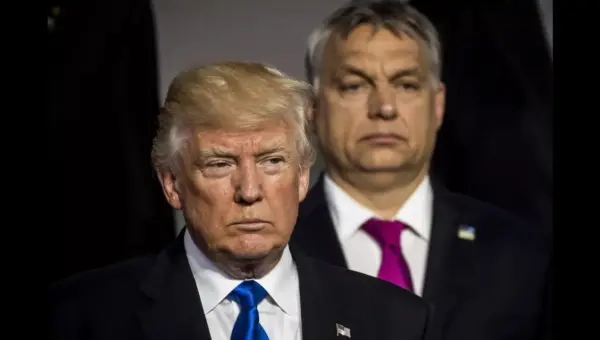
Orban’s Defeat Deals Blow to Trump’s Global Standing
Viktor Orban's significant election loss in Hungary is seen as a major blow to Donald Trump and JD Vance's global influence. The outcome challenges the momentum of the far-right and offers hope for democratic movements worldwide, with potential lessons for the U.S. Democrats.
US Navy Blockades Strait of Hormuz, Targets Iranian Tolls
The U.S. Navy has initiated a blockade of the Strait of Hormuz, targeting vessels paying Iranian transit tolls. This move aims to cut off Iranian revenue and follows failed diplomatic talks. The action carries significant geopolitical risks, particularly concerning potential Chinese involvement.

Iran Threatens US Navy Amid Escalating Tensions
Iran is threatening to bomb U.S. naval ships near the Strait of Hormuz amid a significant U.S. military buildup. Diplomatic talks have stalled on key issues like nuclear enrichment and regional security, increasing the likelihood of renewed conflict.