Supreme Court’s Looming Decision: A ‘Calamity’ for Voting Rights and American Democracy
A looming Supreme Court decision in the Cala v. Milligan case threatens to dismantle Section 2 of the Voting Rights Act, potentially leading to the redrawing of dozens of Black-held congressional districts. Legal experts warn this could be a “calamity for voting rights” and a significant blow to minority representation, necessitating a proactive, innovative approach to defending American democracy.

Introduction: A Pivotal Moment for American Democracy
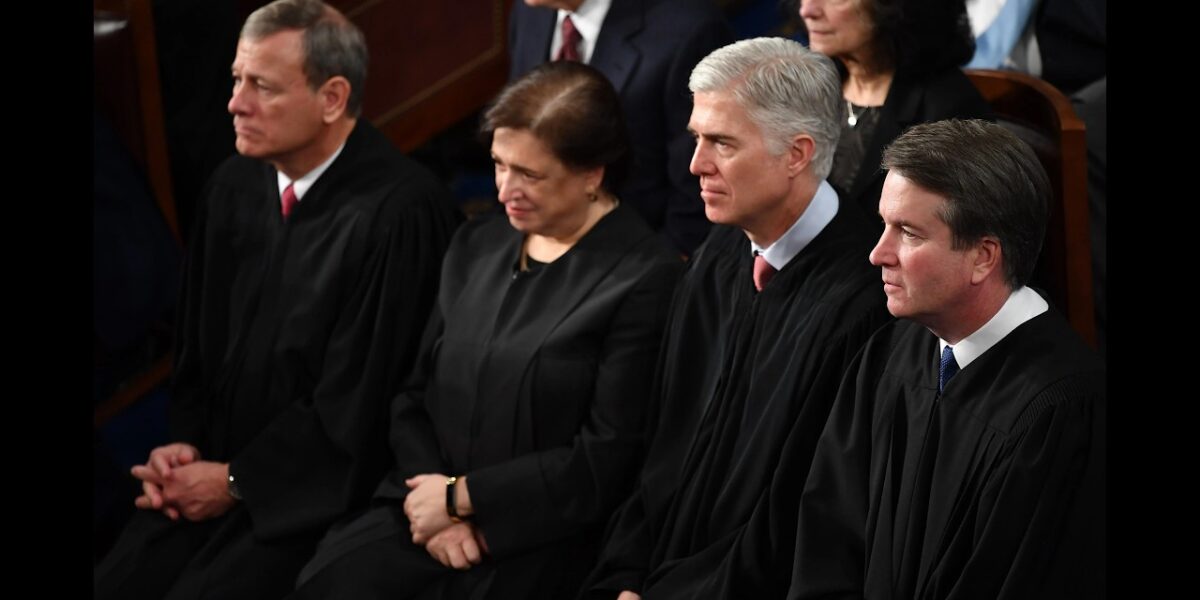
The United States Supreme Court stands on the precipice of a decision that legal experts warn could fundamentally reshape the landscape of American democracy, particularly for minority voters. At the heart of this impending ruling is the case known as Cala v. Milligan, which directly challenges Section 2 of the landmark Voting Rights Act of 1965 (VRA). As the nation awaits the verdict, prominent voting rights attorney Mark Elias has issued a stark warning, describing the potential outcome as a “calamity for voting rights” and “terrible for democracy.” His insights underscore not only the immediate threat to minority representation but also a broader call for a paradigm shift in how advocates approach the defense and expansion of democratic principles.
The stakes could not be higher. A ruling against Section 2 could enable widespread discriminatory redistricting, potentially leading to the redrawing of dozens of congressional districts currently held by Black Democrats. This would not only diminish the political power of minority communities but also fulfill a long-held ambition of partisan gerrymandering, making it increasingly difficult for one of the nation’s major political parties to secure electoral victories. The implications extend far beyond the ballot box, touching upon the very essence of equal opportunity and fair representation in a diverse society.
The Genesis of a Legal Battle: From Alabama to Louisiana
Redistricting After the 2020 Census: A Contested Landscape
The saga leading to the Cala case began in the wake of the 2020 decennial census, a constitutionally mandated process that triggers the redrawing of electoral maps across the country. Following the census, states like Alabama and Louisiana, both with significant Black populations, drew new congressional maps that ignited immediate legal challenges. These maps, critics argued, diluted the voting power of minority communities by creating only one “Black opportunity district” – a district where minority voters have the opportunity to elect their preferred candidates – despite demographic data supporting the creation of more.
In both states, lawsuits were filed by civil rights organizations and legal firms, including Mark Elias’s, asserting that these maps violated Section 2 of the Voting Rights Act. Section 2 prohibits any voting qualification or prerequisite to voting, or standard, practice, or procedure that results in a denial or abridgement of the right of any citizen of the United States to vote on account of race or color. This includes practices that dilute minority voting strength, even if not intentionally discriminatory.
The Milligan Precedent: A Surprising Affirmation of Section 2
The legal challenge in Alabama, known as Allen v. Milligan, became a pivotal moment. Plaintiffs argued that Alabama’s map unlawfully diluted Black voting power by packing a large share of Black voters into one district while dispersing the rest across others, preventing them from forming a majority in a second district. To the surprise of many observers, given the Supreme Court’s conservative majority and its previous rulings that had weakened the VRA, the Court upheld a lower court’s decision. In June 2023, the Supreme Court affirmed that Alabama’s map likely violated Section 2 and ordered the state to redraw its congressional districts to include a second Black opportunity district.
The Milligan decision was widely celebrated by voting rights advocates as a crucial, albeit unexpected, victory for the VRA. It seemingly reaffirmed the enduring power and constitutional validity of Section 2, providing a glimmer of hope that the Court would continue to protect minority voting rights, especially in the context of redistricting.
The Cala Challenge: A Reversal of Fortune in Louisiana
Inspired by the success in Alabama, a similar lawsuit was brought in Louisiana. There, too, a federal court ruled that the state’s congressional map violated Section 2 and ordered the creation of a second Black opportunity district. In compliance with the court’s order, the Louisiana state legislature drew a new map that included two such districts. However, this compliance was met with a new legal challenge.
A group of white voters, describing themselves as “non-black voters,” filed a lawsuit challenging the new legislative map. Their argument was that the creation of a second Black opportunity district constituted a “racial gerrymander” that discriminated against white voters. As Mark Elias noted, the premise of this challenge – that ensuring fair representation for one group constitutes discrimination against another – is “offensive.” Yet, this case, Cala v. Milligan (named for the original defendants, though the plaintiffs are now the white voters challenging the map), proceeded through the courts and ultimately landed before the US Supreme Court, setting the stage for the current crisis.
Section 2 of the Voting Rights Act: The Cornerstone Under Threat
The Supreme Court’s Alarming Maneuver
The trajectory of the Cala case at the Supreme Court has raised profound alarms among voting rights advocates. When the Court first heard arguments in the spring of last year, observations from the courtroom indicated a troubling inclination among some justices. There was a palpable concern that the Court might not just rule against the specific map Louisiana drew, but might do so in a manner that would either significantly undermine or outright overturn Section 2 of the Voting Rights Act.
Further exacerbating these concerns, the Court did not issue a decision after the initial arguments. Instead, it took the unusual step of setting the case for reargument in the current term. More ominously, the Court explicitly asked the parties to brief the question of whether Section 2 is still in force and whether it remains constitutional. This proactive move by the Supreme Court, initiating a broader challenge to Section 2’s legality when the original case was narrowly focused on a specific map, is seen by Elias and others as a “very strong likelihood” that the Court intends to rule unfavorably.
“The Supreme Court was asked a question about whether or not the white voters who challenged this map could bring a racial gerrymandering claim, and they converted it at their initiative,” Elias explained. “They requested the case be briefed and argued about Section 2 of the Voting Rights Act, which is not the same thing as racial gerrymandering. It’s actually quite separate.” This judicial activism in broadening the scope of the case, coupled with the voting patterns of the conservative majority, suggests a predetermined path toward weakening or eliminating this critical provision.
Historical Context: The Enduring Importance of the Voting Rights Act
To understand the gravity of the threat to Section 2, it is essential to appreciate the historical significance of the Voting Rights Act of 1965. Passed at the height of the Civil Rights Movement, the VRA was designed to overcome legal barriers at the state and local levels that prevented African Americans from exercising their right to vote guaranteed by the 15th Amendment. It is widely considered one of the most effective pieces of civil rights legislation ever enacted in the United States.
The VRA initially contained several key provisions, including Section 5, which required certain jurisdictions with a history of discrimination to “pre-clear” any changes to their voting laws with the Department of Justice or a federal court. This pre-clearance mechanism was instrumental in preventing discriminatory practices before they could take effect. However, in 2013, the Supreme Court’s decision in Shelby County v. Holder effectively gutted Section 5, ruling that the coverage formula used to identify jurisdictions subject to pre-clearance was unconstitutional. This decision removed a critical safeguard against voting discrimination, leading to a surge in restrictive voting laws across the country.
Following Shelby County, Section 2 became the primary federal tool for challenging discriminatory voting practices. Unlike Section 5, Section 2 applies nationwide and allows individuals or the government to sue states or localities for voting practices that result in a denial or abridgement of the right to vote on account of race or color. It prohibits practices that have a discriminatory “effect,” even if no discriminatory intent can be proven. This “results” test is crucial for combating subtle forms of voter suppression and vote dilution, such as gerrymandering that fragments minority communities or concentrates them inefficiently.
The potential overturning or severe weakening of Section 2 would thus remove the last major, effective provision of the VRA, unraveling decades of progress in securing equal voting opportunities for minority citizens. It would leave communities of color significantly more vulnerable to electoral manipulation and disenfranchisement.
The Catastrophic Implications for Democracy and Representation
Congressional Seats at Risk: A Calamity for Minority Voters
The most immediate and tangible consequence of a negative ruling in Cala would be the potential loss of minority representation in the U.S. Congress. Mark Elias estimates that if Section 2 is struck down or sidelined, anywhere from 12 to 30 congressional seats currently held by Black members of Congress – all of whom are Democrats – could be subject to redraw by Republican-controlled state legislatures. The New York Times estimated 12, while Fair Fight suggested it could be closer to 30.
This would represent a devastating blow to the political power of Black communities and other minority groups. These districts are often the result of hard-fought legal battles under Section 2, designed to ensure that minority voters have a fair chance to elect candidates of their choice. Eliminating these districts would not only reduce the number of minority voices in Congress but also significantly shift the balance of power, potentially entrenching Republican control in states where demographics might otherwise lead to more competitive outcomes.
Such a scenario would exacerbate existing partisan imbalances and further entrench a system where electoral maps are drawn to favor one party, regardless of the overall popular vote. Elias explicitly linked this outcome to “Donald Trump’s wishes of gerrymandering seats at such a level that it would be very difficult for Democrats to win,” highlighting the partisan motivations behind these challenges to voting rights.
The Erosion of Equal Opportunity and Fair Maps
Beyond the immediate impact on congressional seats, a weakened Section 2 would have far-reaching effects on the integrity of elections and the principle of equal opportunity. Without Section 2, states would have significantly more leeway to draw maps that dilute minority voting strength through techniques like “cracking” (spreading minority voters across many districts to prevent them from forming a majority) and “packing” (concentrating minority voters into a few districts to minimize their influence elsewhere).
This erosion of federal oversight would not only affect redistricting but could also embolden states to enact other restrictive voting laws, such as voter ID requirements, limitations on early voting, or purges of voter rolls, with less fear of legal challenge. While some of these practices could still be challenged under the 14th and 15th Amendments, proving discriminatory intent – a higher legal bar than proving discriminatory effect – is notoriously difficult.
Ultimately, the weakening of Section 2 would signal a retreat from the nation’s commitment to ensuring all citizens have an equal opportunity to participate in the democratic process. It would make American elections less representative, less inclusive, and more susceptible to partisan manipulation, threatening the very foundations of a robust and equitable democracy.
Timing and Tactical Maneuvers: The 2026 Election and Beyond
The Shifting Deadlines and Legislative Power
The timing of the Supreme Court’s decision in Cala carries significant implications, particularly for the 2026 election cycle. The ability of states to redraw maps in response to a ruling depends heavily on their individual electoral calendars, including candidate filing deadlines and primary election dates. For instance, states like Texas have very early filing deadlines (e.g., November for a December cutoff), making it functionally too late for changes to impact their 2026 elections if the ruling comes too late in the spring.
However, other states have later filing deadlines and primary elections extending into the summer, providing a longer runway for legislative action. Crucially, state legislatures possess the power to change these deadlines. As Elias highlighted, “the legislature can change the law… They control the calendar.” This means that even if a ruling comes late, states determined to implement new maps could potentially adjust their electoral schedules to accommodate the changes.
The conventional wisdom suggests that if the ruling extends into late spring, particularly by June or early July when the Court typically issues its most significant decisions, it would likely be too late for changes to impact the 2026 primaries, due to backend deadlines for the general election. However, the political will of state legislatures could override conventional timelines, especially in a highly charged political environment.
Anticipatory Gerrymandering: A Pre-Emptive Strike?
A particularly concerning scenario raised by Elias is the prospect of “anticipatory gerrymandering.” He warned that some Republican-controlled states in the South might not wait for the official Supreme Court ruling. Instead, they could “start to redraw their maps assuming that Cala is overturned, and then just basically say, ‘Look, Mark Elias, if you want to sue us, sue us, but we’re going to act as if the Voting Rights Act has already been overturned.’”
This strategy would represent a brazen challenge to the rule of law and voting rights advocates. It would force civil rights groups into immediate, costly, and resource-intensive litigation across multiple states, further straining their capacity to defend democratic principles. Such pre-emptive action would demonstrate a willingness to push legal boundaries and test the resolve of those fighting to protect minority representation, creating a chaotic and uncertain electoral environment for the upcoming cycles.
Beyond Despair: A Call to Action and Innovation
The Imperative to Fight: New Tools and Legal Theories
Despite the grim outlook for the Cala decision, Mark Elias’s message is not one of despair but of renewed resolve. He urged advocates and citizens alike not to become “naysayers,” “cynics,” or “people who lose hope.” Instead, the focus must shift to identifying and deploying “new tools and new legal theories” to continue the fight for voting rights.
Elias himself is at the forefront of this battle, with his law firm involved in over 80 cases across the country, largely centered on voting rights. This ongoing litigation highlights the relentless effort required to counter attacks on democratic processes, even as the legal landscape grows increasingly challenging.
Congressional Recourse: Unleashing Federal Power
One of the most potent avenues for protecting voting rights, regardless of the Supreme Court’s ruling, lies with Congress. The U.S. Constitution grants Congress significant authority over federal elections. Article I, Section 4, known as the Elections Clause, empowers Congress to “make or alter” state regulations concerning the “Times, Places and Manner of holding Elections for Senators and Representatives.” Furthermore, the 14th and 15th Amendments grant Congress the power to enforce their provisions through “appropriate legislation.”
Elias emphasized the broad scope of congressional power, stating, “Congress has a lot of options.” These options are not limited to merely codifying existing protections but extend to enacting sweeping reforms that could fundamentally restructure the electoral system. Potential legislative actions include:
- Enacting a nationwide map: Congress could, theoretically, draw a single federal map for all congressional districts, overriding state-level redistricting.
- Implementing proportional representation: A system where political parties gain seats in proportion to the number of votes cast for them, potentially leading to more diverse representation.
- Banning partisan gerrymandering: Federal legislation could establish clear, objective criteria to prevent districts from being drawn to unfairly favor one political party.
- Establishing a nationwide pre-clearance requirement: Expanding on the original Section 5 of the VRA, Congress could mandate federal review for voting changes in all jurisdictions, not just those with a history of discrimination.
- Introducing nationwide voter registration provisions: Standardizing and simplifying voter registration processes across the country to expand access to the ballot.
These measures, while ambitious, represent the kind of proactive and comprehensive approach Elias advocates for, moving beyond merely restoring past protections to building a stronger, more resilient democratic framework.
A Vision for the Future: Beyond Restoration, Towards Reinvention
Perhaps the most compelling aspect of Elias’s argument is his call to transcend a nostalgic view of the past. He challenges Democrats and progressives to move beyond simply trying to “restore things back to the pre-Trump era” or “recapture old” norms. “Going back to where we were in the Biden, Merrick Garland era is not what I aspire to. Frankly, going back to where we were in the Barack Obama era is not where I aspire to. Donald Trump has destroyed that world,” Elias asserted.
Instead, he urges a strategic embrace of the full scope of governmental power, learning from how adversaries have utilized constitutional tools. This does not mean replicating authoritarian tactics but rather adopting a proactive, assertive stance within democratic bounds. He pointedly critiqued the Department of Justice under the Biden administration, noting that it brought only five voting cases in two years, a stark contrast to the 25 cases Elias’s firm is defending against brought by the Trump DOJ.
Elias advocates for a future where a Democratic president would use the Department of Justice “proactively” and “with an affirmative position.” This proactive approach extends to legislative innovation, drawing inspiration from successful, novel efforts like the California redistricting process, which adopted new models for fair map drawing.
“We need to be open to moving forward with a positive vision of what we want things to be rather than a nostalgic view of recapturing old,” Elias concluded. This forward-looking perspective emphasizes the need for continuous adaptation, strategic thinking, and a willingness to utilize all available tools to strengthen voting rights protections beyond what existed previously.
Conclusion: The Crossroads of American Democracy
The impending Supreme Court decision in Cala v. Milligan represents a critical juncture for American democracy. The potential dismantling of Section 2 of the Voting Rights Act threatens to unleash a wave of discriminatory redistricting, diminish minority representation, and further entrench partisan imbalances. The warnings from legal experts like Mark Elias are not merely predictions of doom but urgent calls to action.
Regardless of the Court’s ruling, the fight for fair representation and equal access to the ballot will continue. It demands vigilance from citizens, strategic litigation from legal advocates, and bold legislative action from Congress. The challenge is not just to preserve what remains of the Voting Rights Act, but to reimagine and rebuild a more robust, inclusive, and equitable democratic system for the future. As the nation watches the Supreme Court, the message is clear: the defense of democracy requires not only resilience in the face of adversity but also the courage to innovate and push forward with a transformative vision.
Source: 🚨 MUST-SEE warning from US Supreme Court (YouTube)

Related Articles

AG’s Shocking Defense: Trump’s DOJ is a ‘Good Thing’!
Acting Attorney General Todd Blanch's comments suggest the Department of Justice should openly serve the president's political agenda. This radical departure from tradition raises alarms about the politicization of justice and its impact on democracy.


Trump’s Grip Weakens as Allies Falter, Democracy’s Future Hinges
Donald Trump's approval ratings are plummeting, even among his core supporters, signaling a potential collapse of the MAGA movement. Global events, like Hungary's shift to democracy, and domestic economic woes are fueling discontent and opening doors for broader political coalitions.
Supreme Court’s Legitimacy Tested: A Look Inside
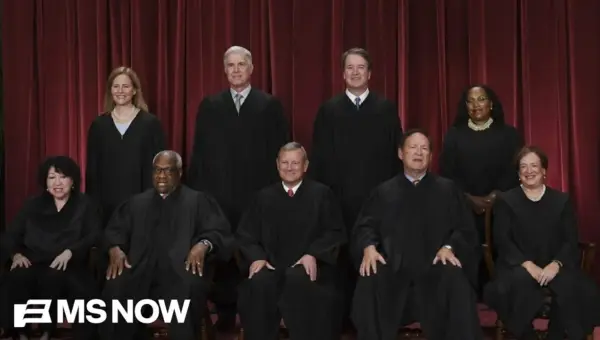
The Supreme Court is increasingly seen as the "last branch standing" to resolve national disputes, a role that strains its legitimacy. Author Sarah Isker's new book, 'Last Branch Standing,' examines the court's internal dynamics and its complex relationship with public opinion and other branches of government.