Vance Fails to Secure Iran Deal Amid Deep Divisions
Vice President J.D. Vance has concluded intensive peace talks with Iran, reporting no agreement due to significant disagreements on nuclear capabilities, the Strait of Hormuz, and Lebanon. Experts were unsurprised by the failure, citing deep divisions between the two sides. The US appears poised for military action to ensure passage through the Strait of Hormuz.

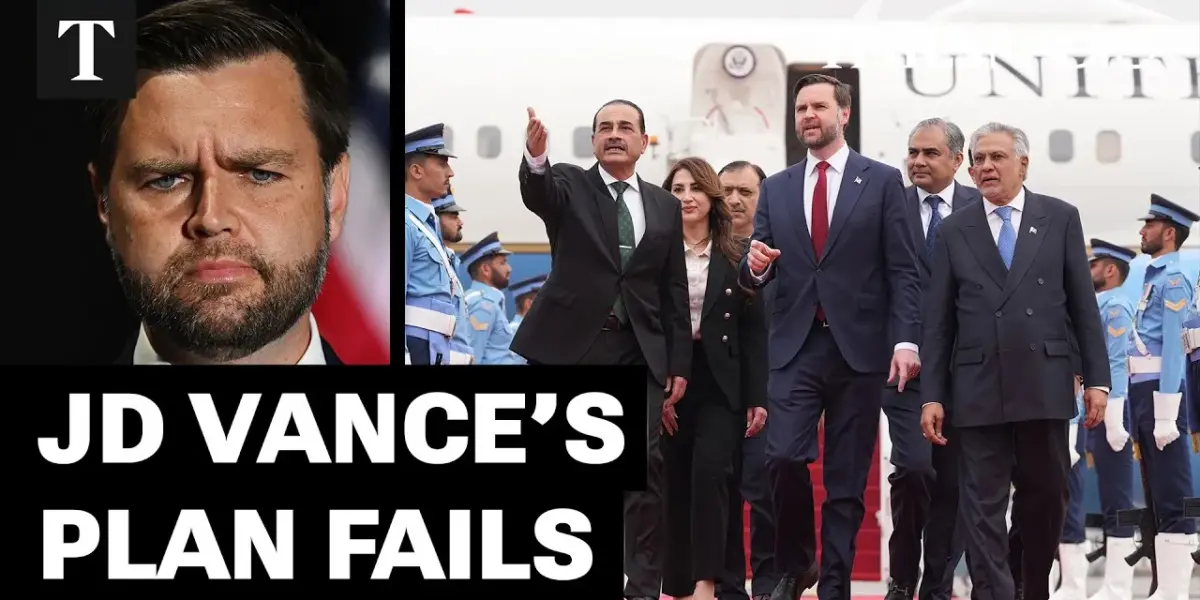
Iran Peace Talks Collapse as US Envoy Cites Unbridgeable Gaps
Vice President J.D. Vance has concluded 21 hours of intense negotiations with Iran, reporting no agreement was reached. The talks, aimed at ending a six-week conflict involving Iran and US-Israeli forces, broke down with Vance stating the United States had clearly defined its non-negotiable positions, which Iran ultimately rejected. “We have made very clear what our red lines are, what things we’re willing to accommodate them on, and what things we’re not willing to accommodate them on,” Vance said following the talks. He added that the failure to reach a deal is more detrimental to Iran than to the United States.
Expert Sees No Surprise in Failed Diplomacy
Mark Cancian, a former US Marine Colonel and senior adviser at the Center for Strategic and International Studies, was not surprised by the outcome. He explained that the two sides were too far apart from the start of the discussions. “There’s just not enough common ground for a settlement to emerge,” Cancian stated, noting this has been the situation for weeks since the conflict began.
Key Disagreements Hamper Progress
Cancian identified three primary issues that prevented an agreement. The most significant was Iran’s nuclear program. Other major sticking points included the security of the Strait of Hormuz, vital for global shipping, and the situation in Lebanon. These complex issues created a formidable barrier to any meaningful progress during the negotiations.
Broader Geopolitical Context and US Reputation
The failed talks occur amidst broader international concerns. Reports suggest Israeli forces have breached ceasefires in Gaza, and there are whispers of the US losing its standing as a trustworthy global player. Europeans, in particular, are reportedly upset, feeling they were not consulted and are now being drawn into the conflict. Cancian acknowledged these European sentiments but emphasized that US policy toward Iran, including preventing it from obtaining nuclear weapons and imposing sanctions, has been a consistent, bipartisan approach under both Republican and Democratic administrations.
The Long Road to Peace Negotiations
The process of peace negotiations is often lengthy and difficult, as historical examples show. Cancian drew a parallel to the Korean War, where armistice talks took over a year before a ceasefire was reached, and a final peace agreement was never achieved. He cautioned against expecting quick resolutions, noting that even assembling and conducting talks at breakneck speed, as seen in the recent Iran negotiations, can undermine their potential success. The lack of follow-on sessions suggests a significant gap remains, and the US may be preparing for military action.
US Prepares for Potential Military Action
Cancian indicated that the United States appears to be preparing to enforce passage through the Strait of Hormuz militarily. US destroyers recently transited the strait without incident, though they were not escorting other vessels. Central Command has also begun mine-clearing operations. If Iran interferes, Cancian believes the US is prepared to launch a significant combat operation to ensure the strait remains open. If Iran allows the mine clearing to proceed without interference, the US may attempt to unilaterally restore the flow of traffic.
Concerns Over Diplomatic Experience
The article also touches on concerns regarding the experience of US negotiators. While acknowledging that individuals like Steve Bannon and Jared Kushner may have the President’s confidence, they lack extensive diplomatic experience. This perceived lack of seasoned diplomats in key negotiation roles has been noted in various foreign policy challenges, including Ukraine and Gaza, and now in Iran. Cancian suggested that while these individuals may be trusted by the president, their lack of diplomatic background may contribute to unsuccessful outcomes.
China’s Role and Sino-US Relations
Meanwhile, China is reportedly sending arms shipments to Iran. This development could impact upcoming Sino-US relations as President Trump prepares to meet with Xi Jinping. Both nations appear to be exercising caution to prevent the Iran conflict from spilling over into other critical areas, particularly economic matters. Cancian suggested that while the US might take measures against China, a direct confrontation over these arms shipments is unlikely. He also pointed out that both Russia and China have been embarrassed by their inability to prevent US actions against their client states, suggesting China’s support for Iran may be a gesture of solidarity.
Looking Ahead
With diplomatic channels seemingly closed, the focus now shifts to potential US military actions in the Strait of Hormuz and the broader implications for regional stability. The international community will be watching closely to see how Iran responds to US military preparations and whether China’s support for Tehran escalates tensions further. The effectiveness of US foreign policy in the absence of experienced diplomats also remains a significant question for future negotiations.
Source: JD Vance Unable To Find ‘Common Ground’ In Failed Iran Talks | Mark Cancian (YouTube)

Related Articles

Trump Escalates Iran Conflict, Threatens Blockade
Former President Donald Trump has escalated tensions with Iran by threatening to blockade the Strait of Hormuz following failed negotiations led by Senator JD Vance. This move is marked by significant contradictions and raises concerns about global economic stability and the risk of wider conflict.

Trump Blocks Iran’s Oil, Bombers Ready for War
Negotiations between the US and Iran have collapsed, leading President Trump to announce a blockade of the Strait of Hormuz. The US Navy is preparing for potential strikes, with bombers loaded and on high alert.

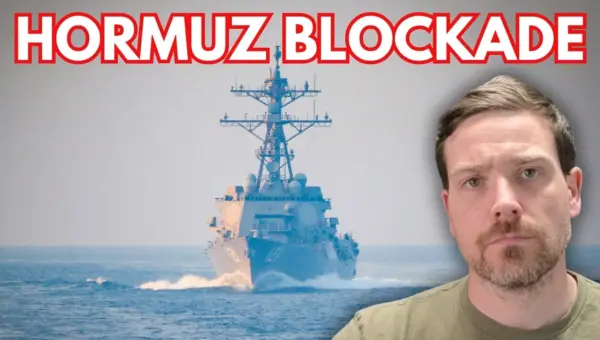
US Naval Blockade Looms as Iran Talks Collapse
Failed U.S.-Iran talks have led to the potential for a U.S. naval blockade of the Strait of Hormuz. Both sides entered negotiations with leverage, resulting in a stalemate. Key sticking points include the Strait's control, enriched uranium, and frozen Iranian assets. The U.S. may need to recalibrate its strategy beyond military pressure.