Cuba Rejects U.S. Demands on Prisoners, Elections
Cuban President Miguel Díaz-Canel rejected U.S. demands for releasing political prisoners and holding multi-party elections, calling them internal matters not subject to negotiation. He attributed the suffering of the Cuban people to the U.S. blockade, not to internal policies or his leadership.

Cuba Defends Stance Amid U.S. Pressure on Rights
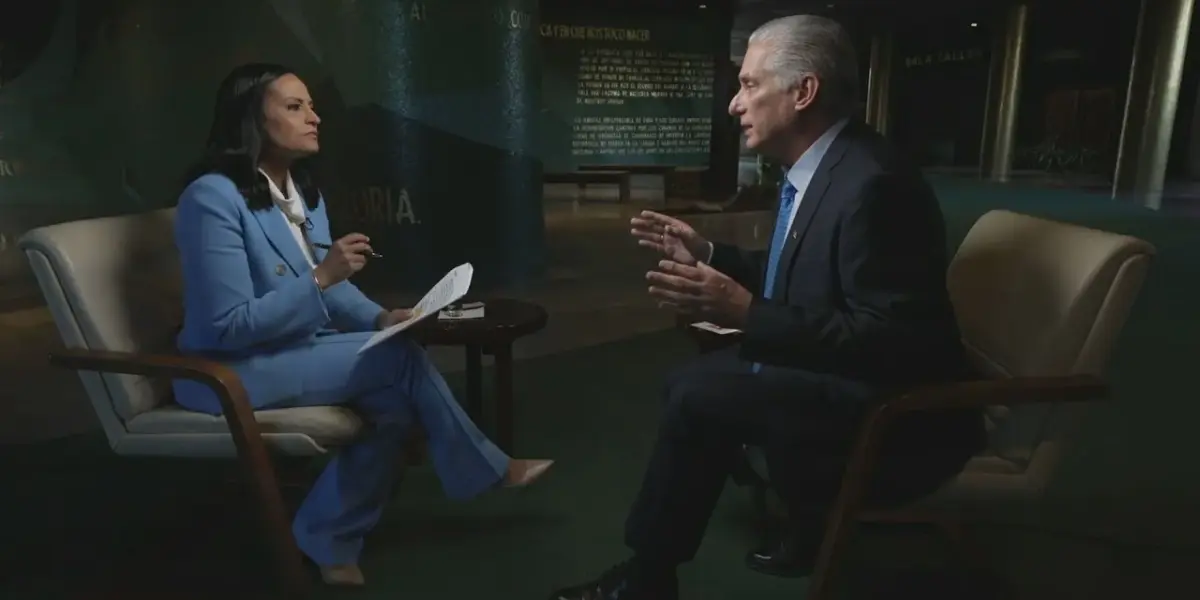
Cuban President Miguel Díaz-Canel has firmly rejected demands from the United States to release political prisoners and hold multi-party elections. In a recent interview, Díaz-Canel stated that Cuba’s political system and constitutional order are not up for negotiation with the U.S. He asserted that these internal matters are determined by the Cuban people, not by foreign powers.
The interview comes at a time of heightened tensions between the two nations. The U.S. has increased pressure on Cuba, including tightening economic sanctions and including Cuba on a list of countries that sponsor terrorism. Díaz-Canel argued that these U.S. actions are the primary cause of suffering for the Cuban people, leading to shortages of food, medicine, and energy.
Díaz-Canel Addresses U.S. Threats and Cuban Defense
President Díaz-Canel also addressed concerns about potential U.S. military action against Cuba. He stated that leaders in Cuba are committed to their revolution and are willing to defend it, even at the cost of their lives. “Dying for the homeland needs to live,” he quoted, referencing the Cuban national anthem.
He emphasized that Cuba maintains a strictly defensive military doctrine. “We are preparing ourselves for defense, but what is the concept of our preparation for defense? We have a doctrine which is entirely defensive. It is not aggressive. It doesn’t pose a threat,” Díaz-Canel explained. He believes that preparing for defense is the best way to avoid war and preserve peace.
Blame Game: U.S. Blockade vs. Internal Issues
When questioned about the suffering of the Cuban people, including power outages and low food supplies, Díaz-Canel pointed directly at the U.S. embargo, or blockade. He described it as an intensified policy that restricts Cuba’s ability to import essential goods and maintain its infrastructure.
However, the interviewer pressed on, suggesting that internal Cuban policies and economic decline over the past decade, which has led many Cubans to leave the island, also contribute to the hardship. Díaz-Canel acknowledged that Cuba conducts self-critical assessments to improve its system. Yet, he maintained that the core issue is external pressure, not the political system itself.
“The Cuban people are suffering, and this can be seen in two areas: in the national aspect and also at the family level… But what is the main cause for that suffering? Has it been the mistakes that I myself have made or… is that suffering the result of the policy of intensified blockade that the United States have maintained?”
Political Prisoners: A Matter of Sovereignty
The U.S. has specifically demanded the release of political prisoners, citing cases like that of Cuban rapper Maykel Osorbo, imprisoned since 2021 for protest songs. Díaz-Canel dismissed this narrative, calling it slander and a deliberate attempt to vilify the Cuban Revolution.
He argued that individuals who express dissent in Cuba are not necessarily imprisoned. “There are people in Cuba who are not in favor of the revolution… and they manifest themselves on a daily basis against the revolution and they’re not in prison,” he stated. He insisted that the portrayal of Cuba as a place where anyone speaking against the revolution is jailed is a false construction.
Elections and Leadership: An Internal Affair
Regarding the U.S. call for multi-party elections, Díaz-Canel was equally firm. He stated that Cuba’s political system and constitutional order are not subject to negotiation. He also rejected the idea that he would step down based on U.S. demands, emphasizing that leadership in Cuba is determined by the Cuban people, not by the U.S. government.
“We have a free sovereign state, a free state. We have self-determination and independence, and we are not subjected to the designs of the United States,” he declared. He explained that Cuban leaders are elected at the grassroots level and then by the National Assembly, a process he described as based on people’s participation.
Dialogue with the U.S. Remains Complex
Despite the firm stance on core issues, Díaz-Canel indicated that dialogue with the U.S. is possible, though difficult. He mentioned engaging in talks with U.S. representatives, including Secretary of State Marco Rubio. However, he expressed distrust due to past U.S. actions, where negotiations were sometimes accompanied by aggressive measures against other countries.
He believes that forces within the U.S. actively work to undermine any potential for dialogue. Cuba, he stated, has always stood by its commitments, while the U.S. has not always fulfilled its part of any agreements.
Looking Ahead: Continued Stalemate Expected
The recent statements from President Díaz-Canel suggest that a significant shift in Cuba’s relationship with the United States is unlikely in the near future. Cuba’s commitment to its political system and its rejection of external interference on issues like political prisoners and elections indicate a continued standoff. The U.S. is expected to maintain its pressure, while Cuba will likely continue to defend its sovereignty and blame the U.S. blockade for its economic struggles. Future developments will depend on whether either side finds a path to compromise or if the current tensions persist.
Source: Cuban leader does not commit to releasing political prisoners amid U.S. demands (YouTube)

Related Articles
Castro Denies Communism, Defends Cuba’s Future
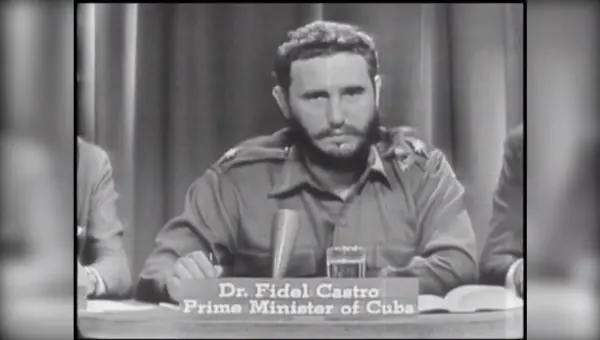
In a 1959 'Meet the Press' appearance, Cuban Prime Minister Fidel Castro denied being a communist, instead advocating for 'humanism' and social justice. He addressed concerns about his government's direction, affirmed his commitment to democracy, and promised free elections, while pushing back against accusations of communist influence and defending Cuba's role in Latin America.
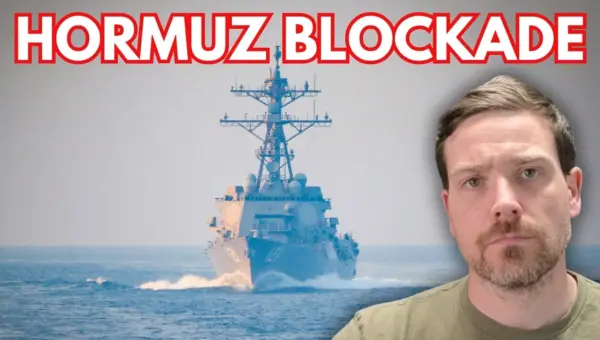
US Naval Blockade Looms as Iran Talks Collapse
Failed U.S.-Iran talks have led to the potential for a U.S. naval blockade of the Strait of Hormuz. Both sides entered negotiations with leverage, resulting in a stalemate. Key sticking points include the Strait's control, enriched uranium, and frozen Iranian assets. The U.S. may need to recalibrate its strategy beyond military pressure.
Rep. Jayapal Slams US Oil Blockade on Cuba as ‘Outrageous’
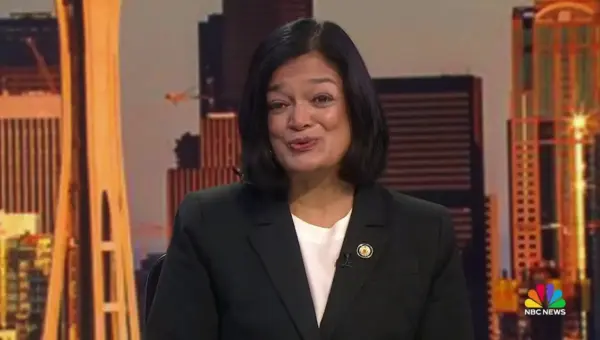
Congresswoman Pramila Jayapal has strongly criticized the U.S. oil blockade on Cuba as 'outrageous' and a humanitarian crisis, advocating for direct negotiations over sanctions. She also called for accountability regarding allegations against Congressman Eric Swalwell and expressed support for a robust Democratic primary in 2028.