Middle East Conflict Risks ‘Easily Spiral Out Of Control’
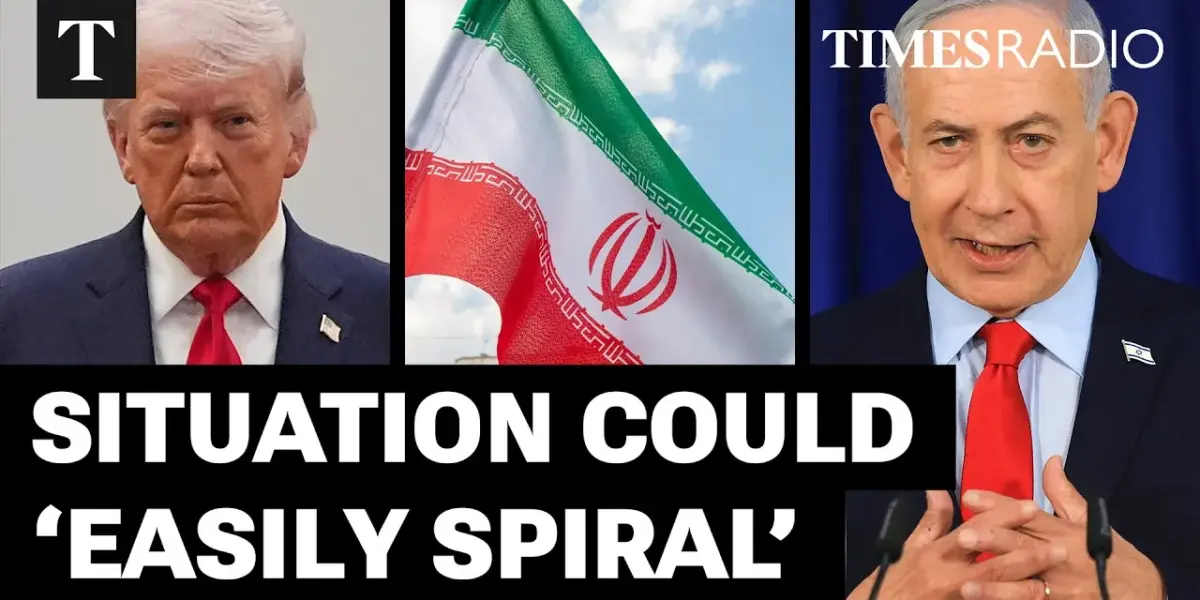
Diplomatic efforts between the U.S. and Iran have stalled amid deep mistrust, raising concerns that the Middle East conflict could "easily spiral out of control." Talks in Islamabad ended without progress, while the Strait of Hormuz remains a critical flashpoint. Experts warn of potential escalation, including naval blockades or a return to full hostilities.

US-Iran Talks Falter Amid Deep Mistrust
Recent diplomatic efforts to de-escalate tensions between the United States and Iran have stalled, with both sides blaming each other for uncompromising stances. Talks held in Islamabad concluded without a breakthrough, highlighting the deep-seated mistrust that has plagued relations for decades.
Vice President JD Vance, representing the U.S., described his offer to Iran as “final and best.” However, Iran’s foreign ministry spokesman characterized the negotiations as taking place in an atmosphere of “mistrust, suspicion and doubt,” following weeks of what they termed an “imposed war.” The spokesman added that reaching an agreement in a single session was not expected, but stressed that “diplomacy never ends.”
Strait of Hormuz Remains a Flashpoint
Despite U.S. President Donald Trump’s statements about clearing the Strait of Hormuz, a vital shipping lane, maritime traffic has seen only a marginal increase. Former Royal Navy commander Tom Sharp noted that vessel traffic remains at only 6-7% of pre-conflict levels, indicating Iran still holds significant sway over the strategic waterway.
“The risk metric, the insurance metric that will persuade merchant vessels to go through there has clearly not crossed that threshold,” Sharp explained. This lack of free passage continues to impact global trade and underscores Iran’s leverage.
Expert Warns of Escalation Risks
Ali Vaez, Director of the Iran Project at Crisis Group, expressed concern that the conflict could “easily spiral out of control” if a new cycle of escalation begins. He believes both the U.S. and Israel feel they have degraded Iran’s military capabilities, while Iran, by surviving recent hostilities, feels it has the upper hand.
“The problem is that if we enter into another cycle of escalation, we’ve reached a stage that it can now easily spiral out of control,” Vaez stated. He pointed out that Iran is confident in its ability to “externalize the pain of this conflict to the rest of the world and to the United States and Israel.”
Future Scenarios: Blockade or Hostilities?
Vaez outlined several potential paths forward, none of which appear immediately promising for de-escalation. One possibility is a return to negotiations after a current ceasefire period, but both sides may seek to strengthen their positions before resuming talks.
Another scenario involves a U.S. naval blockade to prevent Iran from exporting oil, a move Vaez warns could provoke Iranian retaliation. Iran might target U.S. vessels or encourage Houthi forces to close the Strait of Mandab, disrupting oil flow to Asia. A third, and perhaps most worrying, option is a full return to hostilities between Iran, Israel, and the United States.
Lebanon’s Role and Historic Talks
The situation in Lebanon, particularly the role of Hezbollah, is identified as a key factor in the conflict’s fragility. Vaez suggested that Iran might feel compelled to act if Israel continues to bombard Lebanon, potentially drawing the U.S. back into direct conflict to defend Israel.
Despite the broader tensions, historic talks between Israeli and Lebanese officials are scheduled to take place in Washington. These discussions, aimed at addressing the situation along their shared border, represent a rare direct engagement between the two nations, which have been in a state of conflict for decades.
Challenges in Lebanon Negotiations
Political analyst Ari Kova highlighted the complexity of the upcoming U.S.-brokered talks between Israel and Lebanon. The core issue revolves around Hezbollah, an armed group deeply integrated into Lebanon’s political and military structure.
Israel views Hezbollah as an Iranian proxy with significant military capabilities posing an immediate threat. However, the Lebanese government is seen as either unwilling or unable to disarm the group, partly due to internal sympathizers within its own ranks. Kova noted the potential for Hezbollah to destabilize the Lebanese government if it moves towards a deal with Israel, making any agreement incredibly difficult to achieve.
US-Israel Relationship Under Scrutiny
The article also touched upon the broader implications for the U.S.-Israel relationship. It suggests that while Prime Minister Netanyahu may have seen recent actions as leveraging decades of investment in the relationship, the U.S. may feel it has “spent that credit.”
The long-term impact on the U.S.-Israel relationship will depend heavily on how the current conflict resolves. A successful resolution, such as the reopening of the Strait of Hormuz and a weakened Iran, could shape one narrative, while a protracted crisis and international oil emergency could severely strain ties.
Source: Escalation in the Middle East Could ‘Easily Spiral Out Of Control’ | Ali Vaez (YouTube)

Related Articles


Iran’s Strait of Hormuz Blockade Shifts Global Oil Power
Iran's control over the Strait of Hormuz, a vital global oil route, is shifting economic power dynamics. As former President Trump declared a U.S. naval blockade, experts highlight Iran's effective use of this physical choke point, challenging U.S. financial leverage and potentially forcing negotiations under duress.

US Tightens Grip, Eyes Regime Change in Iran
John Bolton argues that the recent ceasefire with Iran was a mistake and advocates for a renewed military strategy. His proposal includes reopening the Strait of Hormuz and maintaining a blockade on Iranian oil to pressure the regime, with the ultimate goal of regime change.

Canada Charts New Course, Challenges US Economic Ties
Canada is actively strengthening its economy and forging new global partnerships, signaling a potential shift in its relationship with the United States. This move challenges US economic ties and highlights Canada's unified approach to national development. The US may face consequences from reduced resource exports and increased costs for key materials.