US Navy Clears Strait of Hormuz Mines Amid Tensions
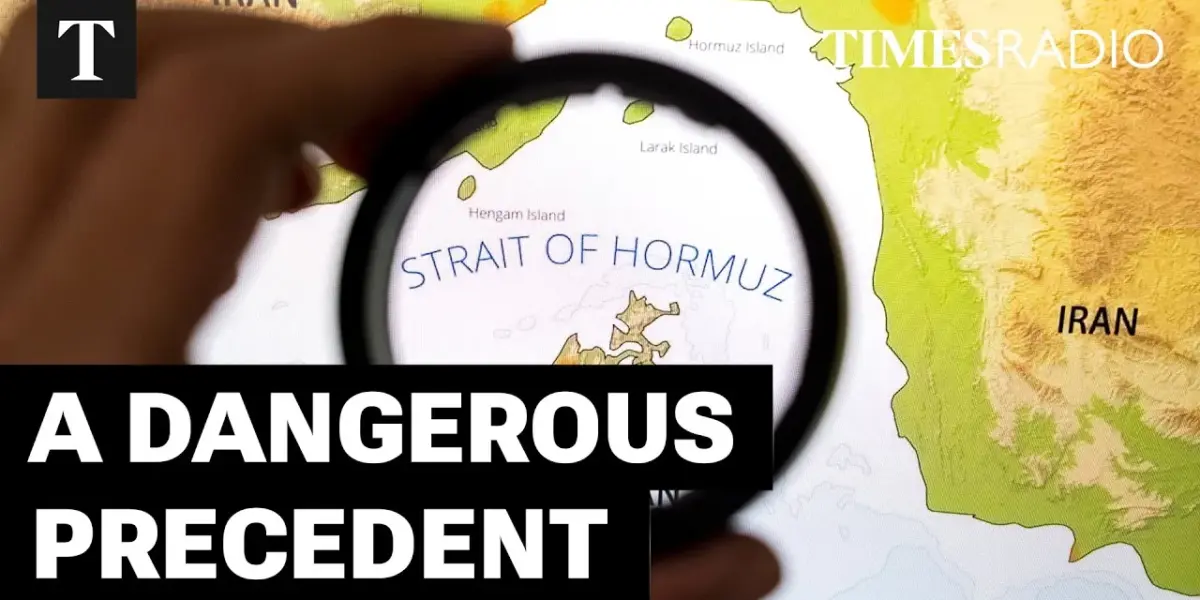
The U.S. Navy has begun clearing sea mines in the Strait of Hormuz, a crucial global shipping lane, as commercial traffic remains critically low. Experts warn that Iran potentially controlling the strait could set a dangerous precedent for global trade, leading to a "free-for-all" in vital waterways worldwide.

US Navy Clears Strait of Hormuz Mines Amid Tensions
The United States Navy has begun clearing potential sea mines in the Strait of Hormuz, a vital global shipping route, according to statements from U.S. Central Command. This operation aims to ensure the free flow of commerce through the critical waterway, which has seen reduced traffic due to security concerns.
Naval Operation in Critical Waterway
Two U.S. missile destroyers, the USS The Sullivans and the USS Delbert D. Black, recently conducted a patrol in the Strait of Hormuz. Former Royal Navy commander Tom Sharpe explained that these ships performed a “freedom of navigation patrol,” entering the strait and then exiting. Sharpe noted that the Arleigh Burke-class destroyers, while capable, are not ideal for mine-clearing due to their deep draft and noise. Their deployment suggests U.S. intelligence is confident that either the location of any mines is known or that few, if any, mines are present. This action is seen as a precursor to broader demining operations.
Iran Denies, Traffic Remains Low
Iran has denied that any mine-clearing operations are taking place. However, U.S. officials state that the vessels were easily trackable on maritime traffic systems, indicating the operation was meant to be visible. Sharpe commented that Iran’s denial is incorrect, as the ships’ movements were clear.
Despite the U.S. Navy’s actions, commercial traffic through the Strait of Hormuz remains critically low. Sharpe indicated that only about 6-7% of pre-war levels of vessels are currently transiting the strait. The risk and insurance metrics required to persuade merchant vessels to use the route have not yet been met. The presence of two U.S. warships is unlikely to significantly alter this situation, as it does not signal to commercial shipping that the strait is now safe.
Preparing for Mine Clearance
U.S. Central Command’s talk of “preparing the conditions” for mine clearance involves shaping operations. These actions demonstrate the Navy’s capability to operate in the area and confirm that key routes are clear. Sharpe believes this suggests confidence that there are not many mines present. The next step involves deploying autonomous mine-hunting equipment to guarantee the straits are clear, moving beyond assumptions to percentage-based guarantees.
Iran’s Mining Capabilities
Iran possesses significant capabilities for laying mines. Sharpe described sophisticated methods where Iran could lay mine patterns and then use fast attack craft to steer enemy vessels into them. This tactic has been practiced for decades, involving harassment and the threat of attack. Iran also has a large number of free-floating, indiscriminate mines that can be deployed from converted fishing boats, which could effectively close the strait.
However, Sharpe believes Iran still wants Chinese and other Asian vessels to continue using the strait. Therefore, it is unlikely they will deploy all their mining capabilities unless absolutely necessary. The current situation suggests Iran still has considerable resources in reserve.
Risk of Miscalculation and Escalation
Navigating the Strait of Hormuz carries a high risk of miscalculation and escalation. Sharpe highlighted that events can unfold and escalate very rapidly. Iranian forces have practiced for such scenarios, often using fast attack boats to swarm vessels. To counter this, extensive air cover is necessary to spot and suppress threats. The U.S. warships involved in the recent patrol would have been at the highest state of readiness, with all systems active and weapons ready.
Precedent and Global Trade Implications
The most significant concern regarding Iran potentially controlling the Strait of Hormuz like a “tollbooth” is the precedent it sets. Sharpe emphasized that critical choke points worldwide are interconnected. If one nation can impose tolls or control passage, it could lead to a global “free-for-all.” This could restrict international trade indefinitely, impacting not only oil and gas but also other commodities.
Sharpe compared this to man-made canals like Suez or Panama, which have established rules. The Strait of Hormuz, however, is a natural seaway with long-standing principles of free passage. Undermining these rules could destabilize global maritime trade. While market impacts like oil prices might stabilize over time, the damage to the principle of free passage would be long-lasting and detrimental to global commerce.
Cooperation with France on Dark Fleet
In a related matter, reports suggest the Royal Navy might seek French assistance in patrolling British waters due to a shortage of ships, particularly concerning the “dark fleet” (unregulated vessels). Sharpe clarified that this is not about France patrolling British waters but rather about cooperation on boarding operations. The Royal Navy is stretched thin across global commitments, including the Mediterranean, Hormuz, and the North Atlantic.
Cooperating with France is seen as essential for tackling the dark fleet issue, especially as many suspicious vessels transiting the English Channel are on the French side of the median line. While cooperation is positive, Sharpe noted that the need for such collaboration due to a lack of domestic resources is a negative sign for the UK’s naval strength.
Source: Iran Having ‘Tollbooth’ In Strait Of Hormuz Would Create ‘Free-For-All’ | Tom Sharpe (YouTube)

Related Articles

US-Iran Nuclear Talks Collapse; Ceasefire Remains Fragile
U.S. and Iran ceasefire talks in Pakistan have ended without an agreement after 21 hours, with both sides blaming each other. Key sticking points included Iran's nuclear program and its refusal to accept American terms. The fragile two-week ceasefire remains in place, but regional tensions are high.


US-Iran Peace Talks Collapse Amid Nuclear Standoff
High-level peace talks between the United States and Iran have collapsed, with Vice President J.D. Vance announcing no agreement was reached after 21 hours of discussions. The primary sticking point was Iran's nuclear ambitions, with the U.S. seeking a clear commitment against developing nuclear weapons. Despite the failure, the historic nature of the meeting and the continuation of a fragile ceasefire offer a sliver of hope for future diplomacy.


Pakistan Mediates US-Iran Peace Talks Amid Shifting Alliances
Pakistan is stepping into a critical mediation role between the United States and Iran, leveraging its unique position and historical ties. Once known for harboring Osama bin Laden, the nation now seeks to broker peace amid escalating tensions, supported by its military leadership and influenced by China's regional strategy. Despite these efforts, hopes for a lasting resolution remain limited, highlighting America's shifting global standing and the severe economic impact on developing nations.