Middle East Must Lead Iran Response, US Steps Back
Radio host Glenn Beck argues that Middle Eastern nations, not the US, must take the lead in addressing regional security threats like Iran. He believes former President Trump's policies are reshaping global order, encouraging allies to become more self-reliant. This signals a potential shift away from traditional US global leadership.

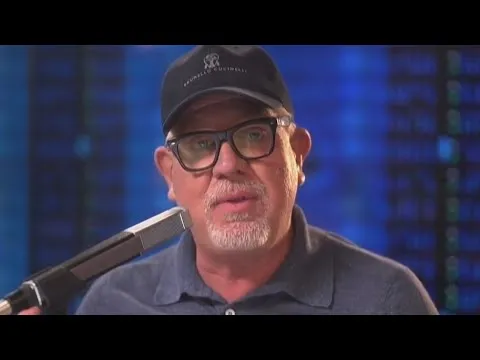
Middle East Must Lead Iran Response, US Steps Back
Radio host Glenn Beck believes the United States should not be the primary force dealing with Iran’s actions. He argues that Middle Eastern nations, working together, are better positioned to handle regional security. This shift suggests a move away from traditional US leadership in the Middle East. Beck’s views come at a time of complex global changes and evolving alliances.
Beck’s View on US Role
Beck stated that presidents have often avoided confronting Iran directly. He feels that while the US has the capability to act, its role should be limited to protecting its own national interests. This means getting out of the Middle East as much as possible. The goal is not to fix every problem or change regimes, but to ensure stability that benefits America. He pointed to the Abraham Accords as an example of how regional powers, like Egypt and Saudi Arabia, can work with Israel. This cooperation shows a new dynamic where regional players take more responsibility.
Trump’s Influence on World Order
Beck recalled a conversation with Donald Trump early in his presidency. Trump reportedly said he was reorganizing the entire world, moving away from the post-1945 Bretton Woods system. Beck sees this as a fundamental change in how global affairs are structured. He believes Trump’s approach, which emphasizes putting America first and encouraging allies to take more responsibility, is reshaping international relations. This vision contrasts with previous US foreign policy that often involved deep engagement in regional conflicts.
Divisions in Conservative Media
The discussion touched on divisions within conservative media. Beck noted that some podcasters have criticized President Trump’s actions regarding Iran. He mentioned figures like Tucker Carlson, Alex Jones, and Candace Owens. These critics have been accused of not fully supporting the MAGA movement’s agenda. Beck, however, prefers to focus on principles rather than personalities. He emphasized that disagreeing with the president is not un-American, but actively rooting against him is. He also highlighted the dangerous ‘fog of war’ that can cloud judgment, affecting not just media but also allies.
Pakistan’s Stance and Regional Tensions
A key point of contention was the stance of Pakistan’s Prime Minister. Beck contrasted this with his trust in the US president. He cited a statement from Pakistan’s Defense Minister calling Israel ‘evil and a curse for humanity.’ This harsh rhetoric, coming while peace talks were supposedly underway, highlighted the deep divisions and intense emotions in the region. Beck expressed concern that some podcasters might trust such foreign statements more than their own president. He believes this is a dangerous trend that undermines national unity.
Allies and ‘Freeloading’
Beck was critical of traditional US allies, particularly in Europe. He described them as ‘deadbeat husbands’ who rely on American support without contributing much themselves. He argued that these allies often lecture the US while benefiting from American taxpayers. He believes Trump’s approach has exposed this dynamic. Beck contrasted this with Saudi Arabia and other Middle Eastern nations, who he feels understand threats like the Muslim Brotherhood and have them under control. He suggested that the West, in contrast, is in denial about the impact of radical ideologies.
The Muslim Brotherhood and Radicalization
A significant part of Beck’s argument involves the Muslim Brotherhood. He believes this group poses a serious threat, leading to radicalization. He cited an example of the UAE refusing to send its youth to Great Britain for education because they were returning radicalized from the Muslim Brotherhood there. Beck feels the West is playing ‘stupid games’ and ignoring these dangers. He has made a documentary called ‘Stop the Conquest’ to raise awareness about these issues, encouraging people to share it widely.
Global Impact: Shifting Power Dynamics
This perspective signals a significant potential shift in global power dynamics. For decades, the US has been the primary security guarantor in many parts of the world, especially the Middle East. Beck’s call for regional powers to take the lead, particularly in confronting Iran, suggests a move towards a more multi-polar world. If successful, this could reduce US military commitments and financial burdens abroad. However, it also raises questions about the stability of regions left to manage their own security challenges without direct American oversight. The success of this model depends heavily on the willingness and ability of regional actors like Saudi Arabia and the UAE to form cohesive security partnerships. It also implies that the US will focus more on its direct national interests rather than acting as a global police force. This approach could lead to new alliances and rivalries, fundamentally altering the international order established after World War II.
Historical Context: From Bretton Woods to a New Order
Beck’s reference to the Bretton Woods agreement of 1945 is crucial. This system established the economic and security framework for the post-World War II era, with the US playing a central role. The International Monetary Fund (IMF), World Bank, and a system of fixed exchange rates were created. The US also became the de facto security provider for many regions through alliances like NATO. Beck’s assertion that Trump is ‘reorganizing the entire world’ and discarding this system suggests a return to more nationalistic policies. This echoes historical periods where great powers have redefined their roles and spheres of influence. The current situation could be seen as a modern iteration of such power realignments, where established orders are challenged by new priorities and emerging regional powers.
Economic Leverage and Future Scenarios
The discussion touches on economic factors, particularly energy routes and the cost of security. Beck’s criticism of European allies as ‘freeloaders’ highlights economic dependencies. The idea of countries ‘getting their own oil’ suggests a future where energy security is managed more regionally. If the US significantly reduces its role in the Middle East, the economic stability of global energy markets could be affected. This might lead to higher energy prices or new trade agreements focused on regional security. One scenario is that Middle Eastern nations, led by countries like Saudi Arabia and the UAE, form a stronger security bloc to counter threats like Iran, potentially sidelining traditional Western influence. Another scenario is increased instability if these regional powers fail to cooperate effectively, leading to a power vacuum that other actors might try to fill. A third possibility is a partial US withdrawal, where America remains involved in specific strategic interests but delegates day-to-day security to regional partners.
Source: Middle East — not US — must fix Iran after war: Glenn Beck | Batya! (YouTube)

Related Articles

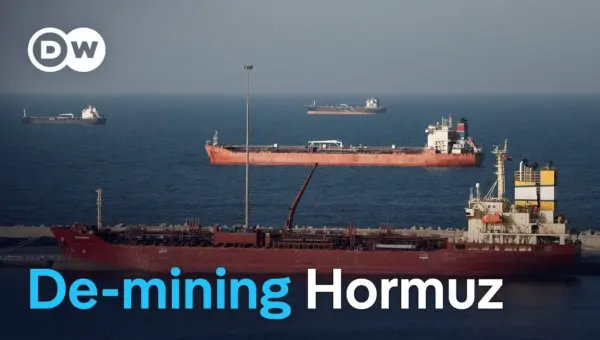
US Warships Clear Strait of Hormuz Amid Mine Threats
US warships are reportedly sweeping the Strait of Hormuz for mines amid escalating tensions with Iran. While the US claims progress, experts note a lack of dedicated mine-clearing vessels in the region and question the current mine threat. The situation's resolution may depend on ongoing peace negotiations.
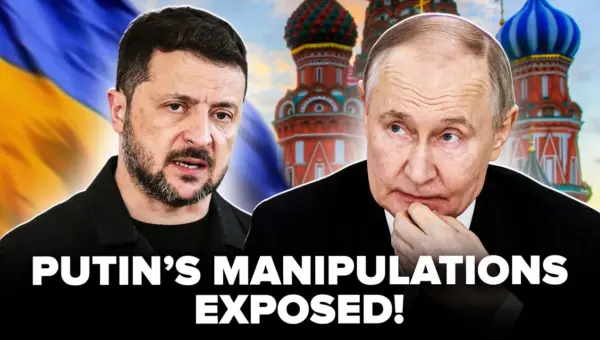
Putin’s Ceasefire Gambit: A Bid for Control
Putin's Easter ceasefire proposal is seen as a bid to regain control of the war narrative amidst battlefield stagnation. Concerns rise over potential U.S. pressure on Ukraine for concessions, while NATO's future and Ukraine's security outlook remain uncertain.

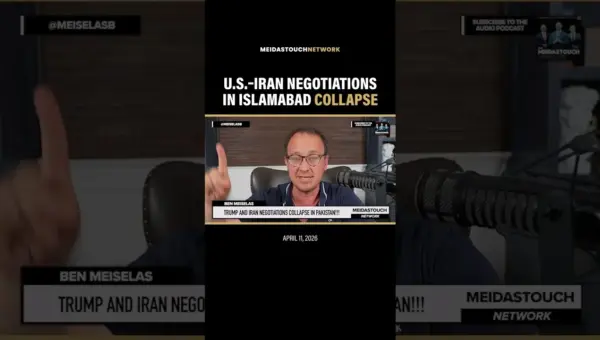
US-Iran Talks Collapse: War Looms After Summit Fails
US-Iran peace talks in Islamabad have collapsed after the Trump administration reportedly tried to change the negotiating framework. Senator JD Vance announced the breakdown, stating Iran refused U.S. demands, signaling a likely return to conflict. The failure occurred while President Trump attended a UFC match.