US Warships Clear Strait of Hormuz Amid Mine Threats
US warships are reportedly sweeping the Strait of Hormuz for mines amid escalating tensions with Iran. While the US claims progress, experts note a lack of dedicated mine-clearing vessels in the region and question the current mine threat. The situation's resolution may depend on ongoing peace negotiations.

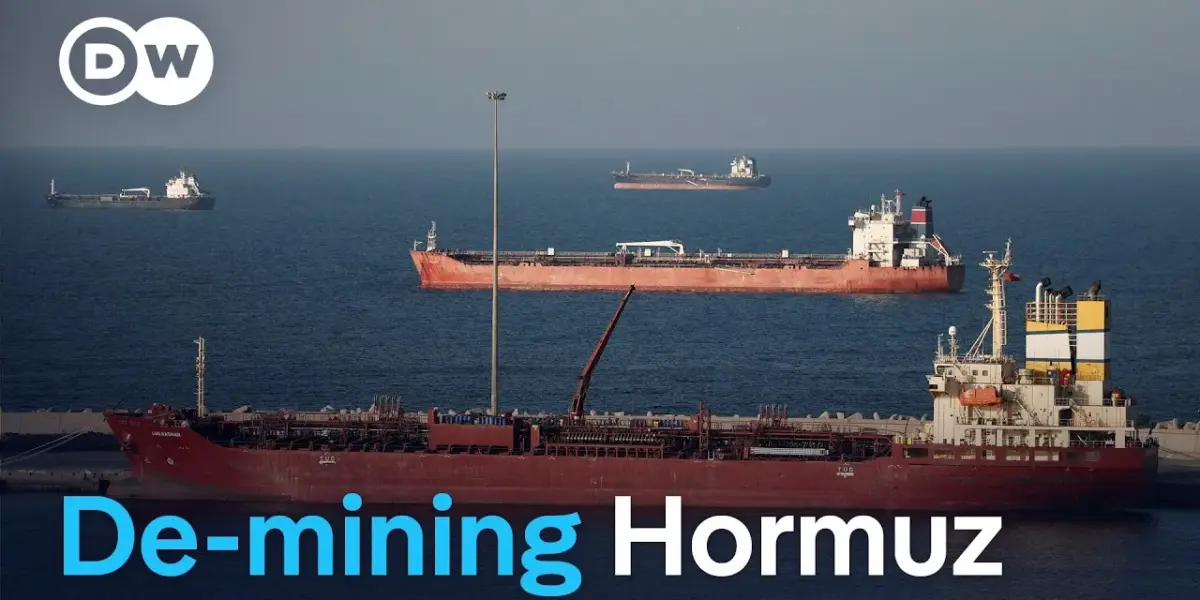
US Warships Navigate Hormuz Amid Mine Concerns
US warships have reportedly begun clearing the Strait of Hormuz, a vital global trade route, amid concerns over potential Iranian mine threats. The move comes as peace negotiations are underway, adding a layer of tension to diplomatic efforts. The situation highlights the ongoing challenges of ensuring safe passage through the strategically important waterway.
Assessing the Mine Threat
President Trump stated that US warships have been sweeping the strait for mines, claiming to have defeated Iranian naval assets. However, experts like Fazi Nadimi from the Washington Institute for Near East Policy suggest a more complex reality on the ground. Reports indicate that two US Navy destroyers briefly transited the strait and returned to the Gulf of Oman, a move seen as testing for threats and exploring alternative routes along the Omani shore.
Nadimi clarified that these destroyers themselves lack mine detection or clearing capabilities. Specialized equipment is needed for such operations. He noted that the US Navy’s dedicated mine-clearing vessels, the Avenger-class ships, were decommissioned and replaced by Independence-class littoral combat ships, which have since left the region. While the US could deploy mine-clearing assets if the environment is permissive, Nadimi stressed that such operations take weeks, if not months, and he expressed uncertainty about the current presence of mines in the strait.
Iran’s Stance and Capabilities
Iran has previously warned of severe consequences for any military ships transiting the Strait of Hormuz. Nadimi believes Iran aims to assert control over the waterway but is unlikely to act on its threats, especially with ongoing peace talks. He stated that while threats exist, the Iranian Revolutionary Guard Corps (IRGC) may not be in a position to enforce them currently.
Estimates of Iran’s mine arsenal vary, with figures ranging up to 5,000 mines of different types, including drifting, moored, influence, and bottom mines. Influence mines are particularly difficult to detect as they react to pressure, magnetic, or acoustic signatures. Iran is known to possess moored bottom mines, but high currents in the strait could affect drifting mines. The possibility of unconventional, camouflaged mines also presents a detection challenge.
A New York Times report suggests Iran may not be able to locate all the mines it has planted, which, if true, indicates a lack of control over its own operations. Nadimi suggested this could mean Iran failed to properly catalog mine locations. He also indicated that Iran’s own mine-sweeping capabilities, once significant with American-made helicopters, have been severely degraded by past bombings, leaving them with limited operational capacity.
US Mine-Clearing Gaps and International Help
The US Navy’s shift from dedicated mine-sweeping ships to littoral combat ships, which have modular mine-clearing packages, has raised questions. These newer ships, equipped with drones and helicopters, possess advanced capabilities but were reportedly moved out of the Persian Gulf before recent hostilities. While US Marines have highly capable helicopters that could be deployed, their involvement remains speculative.
European nations are considered leaders in maritime demining technology. NATO maintains ready groups capable of deployment. Nadimi believes Europe would be willing to assist with demining operations under permissive conditions, but their involvement might be strictly defensive, mirroring past operations like the successful but defensive EU naval force in the Bab el-Mandeb strait during the Houthi crisis.
Future of the Strait of Hormuz
The future of the Strait of Hormuz hinges on the outcome of ongoing negotiations. If a deal is not reached, a return to military confrontation is likely. Nadimi warned that the US might need to undertake offensive operations to secure islands and coastal defenses overlooking the strait and engage IRGC units to ensure freedom of navigation. Such an operation would be risky and likely non-permissive, potentially deterring European participation.
Maintaining open passage through the Strait of Hormuz could require significant military action, including potential ground operations on key islands like Kish and Larak, where the IRGC has substantial defensive capabilities. The path forward remains uncertain, with a peaceful resolution dependent on diplomatic success, while military escalation remains a distinct possibility if talks fail.
Source: How safe is the Strait of Hormuz now? | DW News (YouTube)

Related Articles


US-Iran Talks Collapse: Trump’s Dealmaking Falters
Recent U.S.-Iran negotiations in Pakistan have collapsed, with both sides blaming the other for changing the framework and imposing demands. The failure raises concerns about renewed conflict and highlights deep-seated mistrust.


Iran Talks Collapse: No Deal on Nuclear or Strait Fees
International talks aimed at halting Iran's nuclear program have collapsed, with negotiators returning home without a deal. Key disagreements over uranium enrichment and control of the Strait of Hormuz remain unresolved, raising concerns about regional stability and oil prices.

Trump Warns China on Iran Arms: A Global Power Play
Former President Donald Trump has issued a stern warning to China, cautioning against supplying weapons to Iran. This geopolitical statement comes amid U.S. diplomatic efforts in Pakistan and military operations in the Strait of Hormuz. The warning highlights potential U.S.-China friction and its global implications.