Iran Nuclear Talks Stall, U.S. Cites Lack of Trust
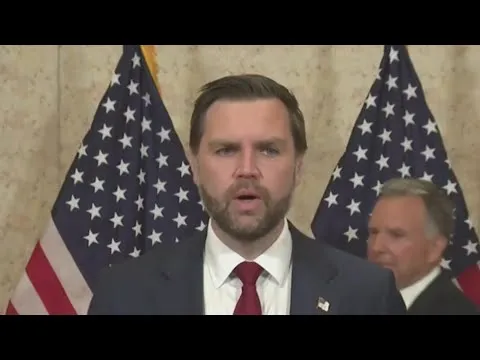
Direct talks between the U.S. and Iran in Pakistan have failed to secure an agreement on Iran's nuclear program. Senator JD Vance reported 21 hours of discussions ended without Iran accepting U.S. terms for long-term nuclear non-proliferation, raising concerns for global security.

Iran Nuclear Talks Stall, U.S. Cites Lack of Trust
Direct talks between the United States and Iran aimed at preventing Tehran from developing nuclear weapons have failed to reach an agreement. Senator JD Vance reported that after 21 hours of discussions in Pakistan, no deal was struck. The U.S. presented its terms clearly, but Iran has not accepted them. This outcome raises concerns for American security and global stability.
U.S. Demands and Iranian Response
The core U.S. demand is a clear commitment from Iran that it will not pursue nuclear weapons or the technology needed to build them. This commitment must be long-term, not just for the present or near future. Senator Vance stated that the U.S. outlined its “red lines” – what it absolutely would not compromise on. They also showed flexibility on other points. However, Iran has not provided the fundamental guarantee the U.S. seeks regarding its nuclear program. This lack of trust remains a major obstacle.
Pakistan’s Role as Host
Pakistan played a crucial role in hosting these high-stakes negotiations. Prime Minister Anwaar-ul-Haq Kakar and Field Marshal Asim Munir are credited with being excellent hosts. They worked hard to help bridge the gap between the two sides and facilitate a deal. Despite their efforts, the fundamental disagreements prevented a breakthrough. The Pakistani government’s commitment to diplomacy in the region is evident through its willingness to host such sensitive talks.
U.S. Internal Communication
During the 21-hour negotiation period, the U.S. team maintained constant communication with Washington. Senator Vance spoke with President Trump multiple times, as did other members of the national security team, including Admiral Cooper, Peta Marco, and Scott. This ensured that the U.S. negotiating position remained aligned with the President’s directives. The team was instructed to negotiate in good faith and make a sincere effort to reach an agreement.
Historical Context of Iran’s Nuclear Program
Iran’s nuclear program has been a source of international concern for decades. Previous agreements, like the Joint Comprehensive Plan of Action (JCPOA) signed in 2015, aimed to limit Iran’s nuclear activities in exchange for sanctions relief. However, the U.S. withdrew from the JCPOA in 2018 under the Trump administration, leading to renewed tensions and Iran’s subsequent expansion of its nuclear activities. The current talks represent an attempt to find a new path forward, but the deep-seated distrust and differing objectives make progress difficult. The U.S. notes that some of Iran’s previous enrichment facilities have been destroyed, but this does not resolve the core issue of Iran’s long-term nuclear intentions.
Economic and Security Implications
The failure to reach an agreement has significant implications. For the U.S., it means continued uncertainty about Iran’s nuclear ambitions. This could lead to increased regional tensions and potentially a more aggressive U.S. response, possibly including further sanctions or military posturing. Iran, facing continued economic pressure from sanctions, may feel compelled to accelerate its nuclear program to gain leverage. The global economy also has a stake, as instability in the Middle East, particularly concerning oil supplies, can disrupt markets. The control of energy routes and resources in the region is always a critical factor in international diplomacy.
Potential Future Scenarios
Several scenarios could unfold from this impasse. One possibility is that negotiations will resume after a period of reflection, with both sides perhaps adjusting their positions. Another scenario involves Iran deciding to significantly increase its uranium enrichment, pushing closer to weapons-grade material. This would likely trigger a stronger international reaction, potentially including coordinated sanctions by global powers or even military action. A third, less likely, scenario is that one side makes a substantial concession to break the deadlock. The path forward depends heavily on the political will and strategic calculations of both Tehran and Washington.
Global Impact: Why This Reshapes the World Order
The ongoing standoff over Iran’s nuclear program is a critical test for international diplomacy and the global non-proliferation regime. It highlights the challenges of securing verifiable commitments from nations with complex political systems and strategic interests. The U.S. insistence on a long-term, verifiable guarantee against weaponization reflects a desire to maintain a stable international order where nuclear weapons do not proliferate. Iran’s stance, while not explicitly stated as seeking nuclear weapons, suggests a desire for strategic autonomy and leverage, potentially challenging existing regional power dynamics. The inability to resolve this issue peacefully could embolden other states to pursue nuclear capabilities, further destabilizing the global security landscape and undermining efforts to control the spread of nuclear weapons. The outcome of these talks, or lack thereof, will shape regional security architecture and the effectiveness of international arms control efforts for years to come.
Source: JD Vance: No agreement reached with Iran in first conversations since ceasefire | NewsNation Prime (YouTube)

Related Articles

US-Iran Talks Collapse: War Looms After Summit Fails
US-Iran peace talks in Islamabad have collapsed after the Trump administration reportedly tried to change the negotiating framework. Senator JD Vance announced the breakdown, stating Iran refused U.S. demands, signaling a likely return to conflict. The failure occurred while President Trump attended a UFC match.

Robots Turn Tide: Ukraine’s Tech Edge Crushes Russian Forces
Ukraine's innovative use of ground robotics is fundamentally altering the nature of warfare, offering a strategic advantage over Russia. These machines are reducing casualties, enabling territorial gains, and paving the way for Ukraine's future economic strength.

US-Iran Talks Collapse: Trump’s Dealmaking Falters
Recent U.S.-Iran negotiations in Pakistan have collapsed, with both sides blaming the other for changing the framework and imposing demands. The failure raises concerns about renewed conflict and highlights deep-seated mistrust.