MTG Calls for GOP to Burn, Reveals Deep Fissures
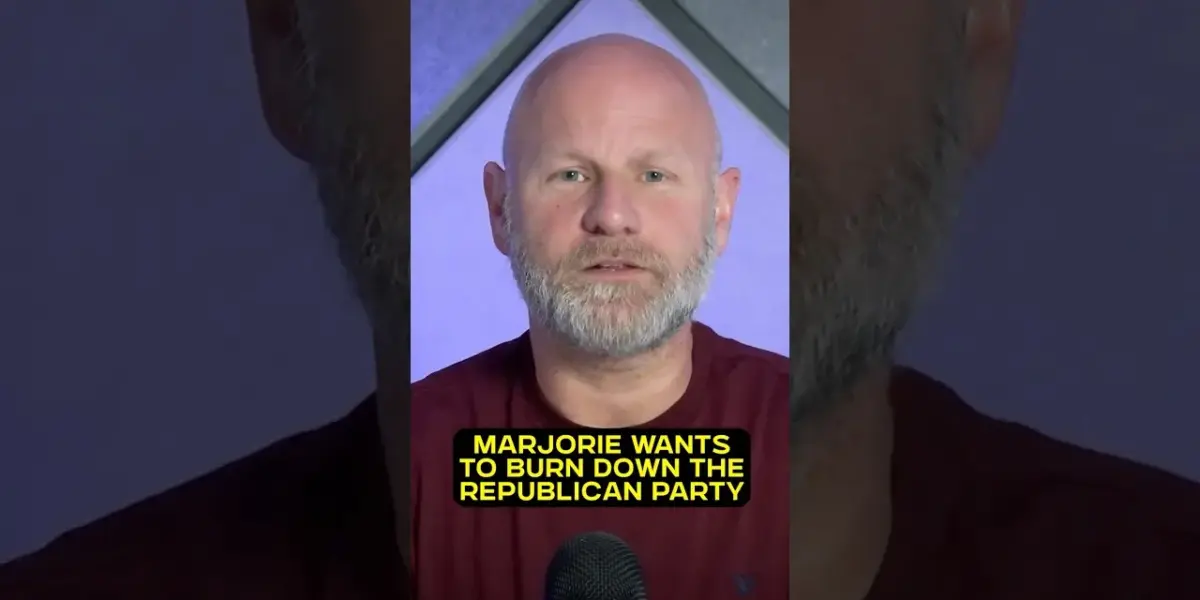
Marjorie Taylor Greene's call to "burn the GOP to the ground" on Alex Jones' podcast reveals deep divisions within the Republican party. She also criticized the Trump movement as a "cult" and spoke out against donor influence from groups like AIPAC.

MTG Calls for GOP to Burn, Reveals Deep Fissures
Congresswoman Marjorie Taylor Greene recently appeared on Alex Jones’ podcast, making a striking statement: the Republican party, or GOP, should be “burned to the ground.” This declaration, coming from a prominent Republican figure, highlights deep divisions within the party and raises questions about its future direction. Greene didn’t stop there, further explaining her stance.
She suggested that loyalty to former President Trump has become like a “cult.” Greene argued that people who have supported Trump for years, like herself, need to “open their eyes and deal with reality.” She stated that the current version of Trump is not the same man they initially supported. Greene believes the movement has turned into a “cult” where demands for “cult-like worship” are made by Trump and those around him.
While Greene’s call to dismantle the GOP and her critique of the Trump movement as a cult might resonate with some, the analysis suggests she is late to this realization. The argument presented is that the “cult-like” nature was always present. Greene is seen as finally noticing something that has been there all along. The perspective offered is that Trump has always been the “cult leader,” and the party has functioned as such for a long time. The commentary suggests that if Greene had stopped her statements there, her points might have been seen as more broadly accepted.
However, Greene continued, pivoting to a different, controversial point. She claimed that elected officials are controlled by donors with a specific interest in Israel. Greene clarified that she meant the “secular government of Israel,” not Jewish people, and preemptively dismissed accusations of anti-Semitism. She urged people to support candidates who refuse money from AIPAC or similar donors.
Why This Matters
Greene’s strong words indicate a significant internal struggle within the Republican party. Her desire to “burn the GOP to the ground” suggests a belief that the current party structure is beyond repair. This sentiment could alienate traditional Republican voters while potentially energizing a more radical base or those seeking a complete overhaul of the political system. The idea that the party is a “cult” reflects a growing disillusionment with political leadership and the nature of political movements in the digital age, where loyalty can be intensely cultivated and maintained.
Furthermore, her comments about donor influence, specifically mentioning Israel, touch upon a sensitive and often debated topic in American politics. By singling out AIPAC, Greene is challenging a powerful lobbying group and potentially opening new avenues for debate about foreign policy and campaign finance. This move could attract attention from various factions, including those who are critical of U.S. foreign policy in the Middle East and those concerned about the influence of money in politics.
Historical Context and Trends
The Republican party has a long history of internal debates and ideological shifts. From the rise of conservatism in the mid-20th century to the Reagan era and beyond, the party has adapted to changing demographics and political landscapes. The Trump era, however, marked a particularly sharp departure for many, characterized by a strong populist appeal, a focus on identity politics, and a direct challenge to established political norms.
Marjorie Taylor Greene herself rose to prominence by embodying a more confrontational and ideologically driven wing of the Republican party. Her alignment with Trump and her willingness to express controversial views have made her a polarizing but influential figure. Her current statements can be seen as a culmination of these trends, reflecting a desire to push the party further left or, in her words, to dismantle it entirely in favor of something new.
The idea of political movements functioning like “cults” is not entirely new in political science discussions. However, Greene’s direct application of the term to the Trump movement, and her own role within it, adds a new layer to the conversation. It reflects a growing public awareness and discussion about the psychological dynamics of political loyalty and the power of charismatic leaders.
Implications and Future Outlook
Greene’s statements could have several implications for the Republican party. If her “burn it down” sentiment gains traction, it could lead to further fragmentation, with different factions vying for control or even breaking away. This could weaken the party’s ability to present a united front in elections and policy debates. Alternatively, her bold pronouncements might galvanize a segment of the base, pushing the party further in a populist and anti-establishment direction.
Her critique of donor influence, particularly concerning AIPAC, could also have ripple effects. It might spark more open discussions about the role of lobbying and foreign influence in American politics. Depending on how this narrative develops, it could influence primary challenges, donor strategies, and even legislative priorities for candidates who align with Greene’s views.
Looking ahead, the Republican party faces a critical juncture. It must grapple with the legacy of the Trump years, the demands of its diverse base, and the influence of figures like Greene. Whether the party can reconcile these internal tensions or will continue to fracture remains a significant question for American politics. Greene’s willingness to speak so directly about these issues, even if controversially, ensures these debates will continue to be a central part of the political conversation.
Source: MTG is FINISHED with Republicans (YouTube)

Related Articles

Trump Lashes Out: Are His Own Allies Now ‘Low IQ Losers’?
Donald Trump unleashed a fiery tirade on Truth Social, labeling former allies like Tucker Carlson and Megyn Kelly as "low IQ losers." This attack questions the loyalty of key figures who have supported him, suggesting they are merely opportunistic "hangers-on" rather than true MAGA supporters. The incident reveals potential internal friction within the movement and raises questions about Trump's leadership and the future direction of MAGA.


Vance Plays Peacemaker Amidst War’s Failed Promises
Vice President JD Vance is in a precarious position, attempting to broker peace in the Middle East after his administration's involvement in a war. Critics accuse him of hypocrisy and political maneuvering, questioning the sincerity of his anti-war stance and the potential outcomes of the current negotiations.

Trump’s UFC Detour: A Political Spectacle?
President Donald Trump's recent trip to a UFC event in Miami highlights how politicians strategically use popular culture for political gain. This move mirrors historical practices of leaders appearing at public gatherings to connect with voters and project an image. It signals a trend of engaging audiences through unconventional, high-visibility events.