US Warship Tests Iran’s Resolve in Key Strait
A U.S. Navy warship's uncoordinated transit through the Strait of Hormuz is seen as a U.S. display of strength amid ongoing Iran-U.S. talks. Iran claims the ship was forced back, while U.S. officials assert freedom of navigation. This event, alongside Iran's list of non-negotiable demands, signals a complex negotiation landscape with high stakes for regional stability.

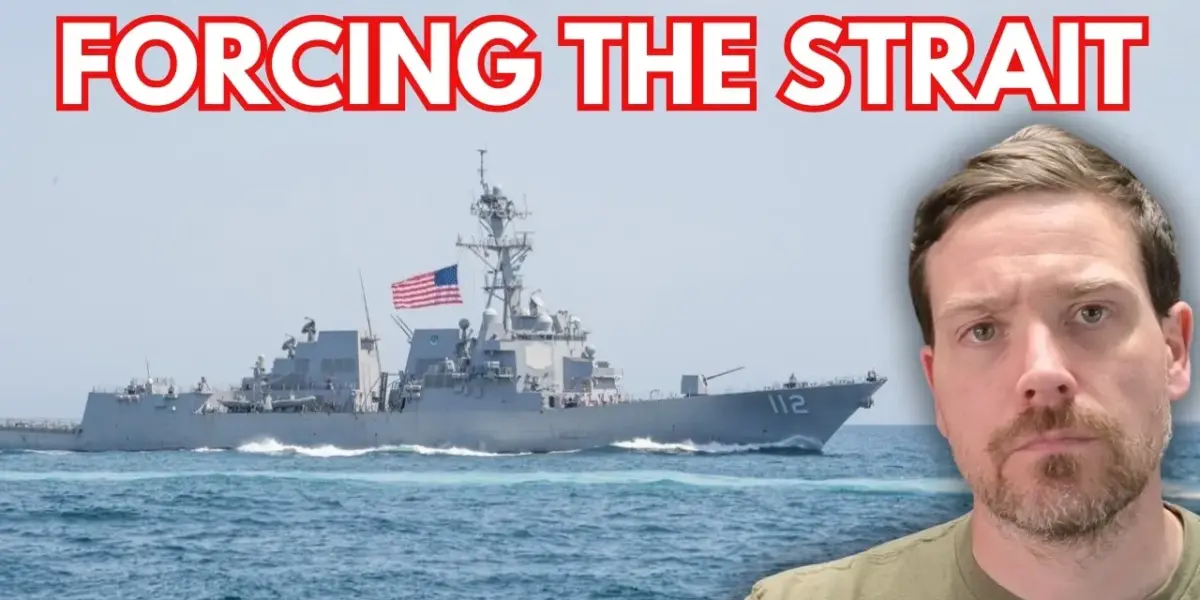
US Warship Tests Iran’s Resolve in Key Strait
Tensions between the United States and Iran are high, with both nations reportedly engaged in talks for a potential settlement. Amidst these diplomatic efforts, a recent U.S. Navy warship maneuver through the Strait of Hormuz has added another layer of complexity. This action, described by the U.S. as a freedom of navigation operation, marks the first such passage without prior coordination with Iran since the current conflict began about six weeks ago. However, Iran offers a starkly different account, claiming the U.S. vessel was warned and forced to turn back.
The Strait of Hormuz: A Vital Chokepoint
To understand the significance of this event, it’s crucial to look at a map. Iran controls much of the northern and western coastline of the Strait of Hormuz, a narrow waterway connecting the Persian Gulf to the Gulf of Oman. This strategic passage is vital for global shipping, with an estimated 20% of the world’s oil passing through it daily. The strait’s narrow width, around 21 miles at its widest point, makes it easily monitored and potentially controlled by Iran. The presence of Iranian drones and the possibility of sea mines further highlight the risks involved in navigating this area.
The U.S. Navy vessel, reportedly the USS Michael Murphy, sailed from east to west through the strait, moving from the Persian Gulf towards the Arabian Sea. U.S. officials frame this as an assertion of the right to navigate international waters freely. Analysts suggest the ship may have traveled a short distance, possibly near Dubai, before turning back. This operation is noteworthy because many U.S. Navy ships have maintained a greater distance from Iran since the conflict started. Moving closer, and especially transiting the strait, is seen as a deliberate signal.
Key details about the operation are still emerging. There’s no indication it was a mine-clearing mission or an escort operation to protect commercial tankers. Publicly available tracking information suggests the Michael Murphy was indeed in the Persian Gulf at one point, supporting the U.S. claim of the transit. This freedom of navigation maneuver is the first by the U.S. Navy in this critical waterway since the war began.
Conflicting Narratives and Negotiation Leverage
The U.S. action coincided with a statement from former President Trump, who declared that clearance operations in the Strait of Hormuz had begun. His statement also criticized the media and asserted that Iran was losing the conflict. He added that the U.S. was undertaking this effort as a favor to many countries, suggesting they lacked the courage to do it themselves.
This event, happening as ceasefire talks are underway, carries inherent risks. Iran’s official response, as reported by the FARS news agency, is that the U.S. destroyer was heading towards the strait but was forced to retreat after Iran issued a warning. According to Iran, they informed the U.S. through Pakistani intermediaries that the ship would face fire within 30 minutes if it continued, which would jeopardize the ongoing negotiations. An Iranian Foreign Ministry representative stated that diplomatic and military actions prevented a violation of the ceasefire.
These opposing accounts offer insight into who might feel they have the upper hand in the ongoing negotiations. During wartime discussions, perceived leverage is as important as actual leverage. A nation might continue fighting if it believes it has more power than it truly does, leading to a prolonged and deadlier conflict. The U.S. warship’s passage, if it indeed occurred as reported, suggests confidence from the U.S. side, believing Iran would not risk firing on the vessel and derail the talks, as Iran has too much to gain from a negotiated settlement.
The fact that Iran did not report the U.S. ship’s presence until after the U.S. announced the completion of its maneuver could support the U.S. narrative. Advanced notice would typically be given for such movements, and ships are not particularly fast. Iran’s delayed and reframed response might be an attempt to regain standing.
Iran’s Conditions and Shifting Demands
Adding another layer to the situation is a separate report from Iran’s Tasnim News regarding preconditions for talks. Iran claims that all preconditions have been met, citing a reduction in Israeli strikes and Washington’s acceptance of releasing Iranian assets. This development, if true, would suggest a different dynamic, potentially indicating that Iran feels it has leverage. However, the conflict between Hezbollah and the Israeli Defense Forces in northern Israel and southern Lebanon has not stopped, contradicting Iran’s earlier stance that talks would not begin until that fighting ceased.
The issue of frozen Iranian assets is also significant. Reports mention figures around $10 billion, though the White House has denied any funds have been released. The timing of these demands is notable; if Iran felt comfortable adding new conditions recently, it could imply a belief in their ability to extract more concessions. Receiving any amount of money simply to engage in ceasefire talks could signal that Iran, and perhaps even the U.S., views Iran as having the stronger position.
Tasnim News also outlined four fundamental and non-negotiable conditions from Iran for the mediators. These include full sovereignty over the Strait of Hormuz, complete war reparations from the U.S. and Israel, unconditional release of all blocked assets, and a durable ceasefire across the entire West Asia region. These demands are more extensive than previous proposals and represent a significant hardening of Iran’s position. The assertion of full control over the Strait of Hormuz is particularly striking, as this was not a prominent demand just months ago.
Why This Matters
The conflicting reports and the nature of Iran’s demands suggest a complex negotiation landscape. The U.S. warship’s passage through the Strait of Hormuz can be seen as a direct challenge to Iran’s assertion of control and a demonstration of U.S. resolve. Conversely, Iran’s claims of forcing the ship back and its subsequent negotiation demands indicate a potential effort to project strength and secure significant concessions.
The implications for the Strait of Hormuz are particularly concerning. It is becoming increasingly likely that the status quo of this vital shipping lane will change. While full Iranian control might be optimistic to rule out, Iran now views it as a core condition for ending the war. This could mean that the U.S. might have to make concessions on this issue to achieve other objectives in the talks. The next 24 to 48 hours will be critical in determining whether a diplomatic resolution is possible or if the conflict is set to escalate further.
Historical Context and Future Outlook
The Strait of Hormuz has long been a focal point of geopolitical tension between the U.S. and Iran. Historically, Iran has viewed its control over the strait as a strategic imperative, while the U.S. has emphasized freedom of navigation and the unimpeded flow of global commerce. Incidents in the strait have often been triggers for broader regional instability. The current conflict, which has lasted several weeks, has already disrupted regional security and global trade, making the outcome of these negotiations crucial.
The future outlook depends heavily on the success of the ongoing diplomatic efforts. If negotiations fail, the risk of a wider and more devastating conflict increases, potentially drawing in other regional and international players. The differing interpretations of events, such as the warship passage, highlight the deep mistrust and the high stakes involved. The inclusion of demands like war reparations and full control over strategic waterways suggests Iran is seeking a fundamental shift in regional power dynamics. The world watches closely to see if a peaceful resolution can be found or if the conflict will intensify.
Source: A US Warship Just Tested Iran In The Strait Of Hormuz (YouTube)

Related Articles

US-Iran Peace Talks Hit Major Roadblocks in Islamabad
High-level peace talks between the United States and Iran have commenced in Islamabad, Pakistan, but face significant obstacles. Preconditions set by Iran, including an immediate ceasefire between Hezbollah and Israel and sanctions relief, threaten to derail the negotiations. Key sticking points include Iran's nuclear program and control over the Strait of Hormuz, with both sides claiming advantage.

Iran Talks Stall Amid Lebanon Strikes, Strait of Hormuz Tensions
High-level U.S.-Iran talks are underway but face major hurdles, including ongoing Israeli strikes in Lebanon and lingering disputes over the Strait of Hormuz. Iran demands asset unfreezing and a Lebanon ceasefire, while the U.S. focuses on securing vital shipping lanes.
Iran Seizes Strait of Hormuz as US Policy Crumbles
Iran is tightening its grip on the critical Strait of Hormuz, a major oil shipping route, following a ceasefire agreement with the Trump administration. This move appears to disregard long-standing U.S. demands and signals a significant rollback of American influence in the Middle East.