TV’s Most Disappointing Endings: A Look Back
From 'Smallville's' visual cheats to 'Game of Thrones' rushed conclusion, this list revisits the most disappointing series finales in television history. Discover which shows left fans feeling betrayed.

From ‘Game of Thrones’ to ‘Smallville,’ Fan-Favorite Shows Fizzle Out
In the grand tapestry of television, a satisfying series finale is the ultimate achievement. It’s the culmination of years of storytelling, character development, and audience investment. Yet, for every show that sticks the landing, there are several that stumble, leaving fans bewildered, frustrated, and even feeling betrayed. WatchMojo’s latest countdown, “Top 19 Worst TV Finales Of All Time,” shines a spotlight on these dismal endings, reminding us that even the most beloved series can falter when it comes to saying goodbye.
The Betrayal of the ‘No Tights, No Flights’ Rule
Take, for instance, the decade-long journey of Smallville. For 10 seasons and 217 episodes, fans adhered to a strict mantra: “no tights, no flights.” The anticipation to finally see Tom Welling don the iconic Superman suit was palpable. However, the series finale, “Finale,” delivered a visual cheat. Instead of a clear, heroic shot of Superman in all his glory, audiences were subjected to extreme close-ups, distant CGI models, and a rudimentary shirt-rip animation. It felt less like a triumphant transformation and more like a reluctant acknowledgment of the source material, leaving many fans feeling that their decade-long loyalty was met with a disappointing lack of payoff.
‘The X-Files’: A Lore Dump Instead of a Bang
Similarly, The X-Files, a show built on suspense and conspiracy, ended its original run with “The Truth.” After years of chasing the unknown and unraveling complex government plots, the finale opted for a bloated, two-hour exposition dump. The courtroom drama, which saw Mulder on trial, served as a flimsy excuse to rehash past events and bring back familiar faces. What should have been a peak moment of narrative momentum devolved into a tedious history lesson, prioritizing lore over the thrilling chase that defined the series.
‘The 100’: A Sci-Fi Pivot That Lost Its Way
The CW’s The 100, known for its gritty, survival-driven narrative, took a sharp turn in its final season with “The Last War.” The series finale saw the human race transcending into a glowing alien hive mind, a nihilistic conclusion that suggested humanity’s inherent unworthiness. This bizarre pivot into high-concept fantasy alienated a fanbase that had grown accustomed to grounded, high-stakes survival. Compounding the disappointment was the seemingly senseless death of fan-favorite Bellamy Blake just episodes prior, leaving viewers questioning the very essence of the show they had followed for years.
When Real-Life Scandals Derail a Series
The fallout from real-world events can also cast a long shadow over a series finale. House of Cards, once a political thriller powerhouse, found itself in an impossible situation following the accusations against its lead, Kevin Spacey. The show’s final season, “Chapter 73,” attempted a pivot to Claire Underwood’s leadership, but the narrative felt disjointed and lacked the strategic brilliance of its earlier seasons. The conclusion, which involved the convoluted death of Doug Stamper, felt less like a dramatic climax and more like a desperate attempt to wrap things up, leaving unresolved plot threads and a weary audience.
Evil Twins and Bad Accents: The ‘Pretty Little Liars’ Predicament
For fans of teen mysteries, the finale of Pretty Little Liars, titled “Till Death Do Us Part,” proved to be a particularly bitter pill. After seven seasons of intricate clues and escalating drama, the reveal of the antagonist, “AD,” as Spencer Hastings’ never-before-mentioned evil British twin sister, Alex Drake, was met with widespread derision. The reliance on the tired evil twin trope, coupled with a questionable accent, turned a would-be thrilling reveal into a comedic anticlimax, feeling like a lazy solution to a narrative corner the writers had written themselves into.
‘Sherlock’: Abandoning Logic for Superpowers
The BBC’s acclaimed update of Sherlock Holmes, Sherlock, also faltered in its final episodes. “The Final Problem” saw the show abandon the grounded deduction that made it a hit, introducing Sherlock’s super-genius sister, Eurus, with mind-control powers. The episode devolved into a series of death games, complete with impossible stakes and outlandish set pieces that felt more akin to a James Bond film than a Sherlock Holmes story. The introduction of a secret, superpowered sibling felt like a desperate attempt to inject drama, sacrificing the show’s core identity.
‘Roseanne’: A Lottery Win That Was All a Dream
The original run of Roseanne is infamous for its polarizing ninth season, which saw the blue-collar Connors win the lottery. The finale, “Into That Good Night,” then proceeded to invalidate the entire season by revealing it was all a fabrication within Roseanne’s book, a coping mechanism for trauma. The most devastating twist was the revelation that Dan Conner was dead all along. This narrative choice felt needlessly cruel, negating the happy moments viewers had invested in and invalidating the show’s history, a move thankfully rectified by the later revival.
‘Star Trek: Enterprise’: A ‘Dream’ Finale
Even the venerable Star Trek franchise wasn’t immune to finale fumbles. Star Trek: Enterprise concluded with “These Are the Voyages…”, an episode that framed the entire series as a holodeck simulation being watched by Captain Riker and Counselor Troi from The Next Generation. This meta-narrative approach stripped the actual Enterprise crew of their agency, turning them into background characters in a misguided attempt at fan service. The contrived death of beloved character Trip Tucker only added insult to injury, leaving fans and actors alike feeling disrespected.
‘Killing Eve’: A Tragic End to a Torrid Romance
The dynamic between Eve and Villanelle in Killing Eve was a captivating force for four seasons. The finale, “Hello, Losers.,” saw the two characters finally unite, only for the moment of earned joy to be brutally snatched away minutes later when Villanelle is unceremoniously killed. This abrupt and bleak conclusion was criticized as a textbook example of the “bury your gays” trope, punishing characters for finding happiness. The sudden end rendered the entire four-year journey emotionally hollow for many viewers.
‘Seinfeld’: A Trial of Petty Behavior
The iconic sitcom Seinfeld ended with “The Finale,” which saw Jerry, George, Elaine, and Kramer on trial for their collective selfishness. While the idea of bringing back characters they’d wronged over the years sounded promising, the execution felt more like a glorified clip show. The verdict, a year in prison for their petty behavior, felt unearned and overly harsh, especially considering the deeply flawed nature of almost every character in the show’s history. Many felt a more fitting end would have been a continuation of their status quo, reflecting the show’s core premise.
‘Battlestar Galactica’: A Divisive ‘Deus Ex Machina’
Battlestar Galactica‘s finale, “Daybreak,” offered a clever twist: the fabled Earth was a nuclear wasteland, but a mysterious set of coordinates led the survivors to a planet that would become our Earth. While the twist was intriguing, its execution felt like a deus ex machina, leaving many questions about Starbuck’s role and the nature of their salvation unanswered. Author George R.R. Martin famously criticized the ending as the show simply saying, “God did it.”
‘Quantum Leap’: An Ambiguous Leap Home
The frustration with Quantum Leap‘s finale, “Mirror Image,” stems from its ambiguity. Creator Donald P. Bellisario, unsure of a renewal, left Sam Beckett’s return home uncertain. Instead of a definitive conclusion, audiences were met with a title card stating he continued to leap through spacetime. This left a bitter blemish on an otherwise beloved series, with fans yearning for the satisfying resolution that never came.
‘Two and a Half Men’: A Piano Drop and a Meta Joke
Following Charlie Sheen’s departure, Two and a Half Men limped towards its conclusion. The finale teased Sheen’s return, only to reveal a body double being crushed by a piano. In a baffling meta-joke, showrunner Chuck Lorre was then also crushed by a piano after uttering Sheen’s catchphrase, “Winning.” The intended humor was lost on many, leaving a nonsensical and unsatisfying end to the long-running sitcom.
‘True Blood’: A Wedding and a Stake
Fans of True Blood stuck around for the final season hoping for satisfying romantic conclusions. The finale, “Thank You,” delivered a wedding between Jessica and Hoyt, a couple who never garnered significant fan support. Jason settled down with Hoyt’s ex, and Sookie’s romantic future remained ambiguous. Bill chose to die, and Sookie’s eventual partner was a random, underdeveloped character. The lack of clear resolutions for beloved characters left many viewers feeling unfulfilled.
‘St. Elsewhere’: A Snow Globe Revelation
The medical drama St. Elsewhere delivered one of television’s most infamous and confusing finales with “The Last One.” It was revealed that the entire series, the characters, and the storylines were merely the figments of an autistic child’s imagination, existing within a snow globe. This revelation cast doubt on the show’s crossovers with other series, questioning if NBC’s entire universe was contained within one child’s mind.
‘Lost’: Limbo and Unanswered Questions
Lost, a show renowned for its intricate mysteries, concluded with “The End.” While the finale provided some closure, it left a multitude of questions unanswered regarding Walt’s abilities, Christian Shepard’s body, and the mysterious “Mother.” The explanation for the Flash Sideways timeline as a form of limbo, while bittersweet for some, felt predictable and uninspired to many who had predicted such a fate since the show’s early seasons.
‘Dexter’: From Serial Killer to Lumberjack
The dark and complex journey of Dexter Morgan ended with a baffling twist: Dexter became a lumberjack. After eight seasons of concealing his dark passenger, the finale “Remember the Monsters?” offered no public outing or confrontation. Instead, Dexter embraced a solitary, seemingly mundane existence. This ending lacked buildup and payoff, leaving fans with a blank stare from Dexter, mirroring the perceived emptiness of the finale itself.
‘How I Met Your Mother’: The Mother Was the McGuffin
The long-awaited reveal of the Mother in How I Met Your Mother‘s finale, “Last Forever,” was overshadowed by a more devastating twist: the Mother had been dead for six years, and the entire story was Ted’s elaborate way of asking Robin out again. This undermined the show’s premise and the audience’s investment in the Mother’s character, especially after dedicating the final season to her wedding weekend with Barney. The rug was pulled out from under viewers, leaving them feeling misled.
‘Game of Thrones’: The Iron Throne’s Rushed End
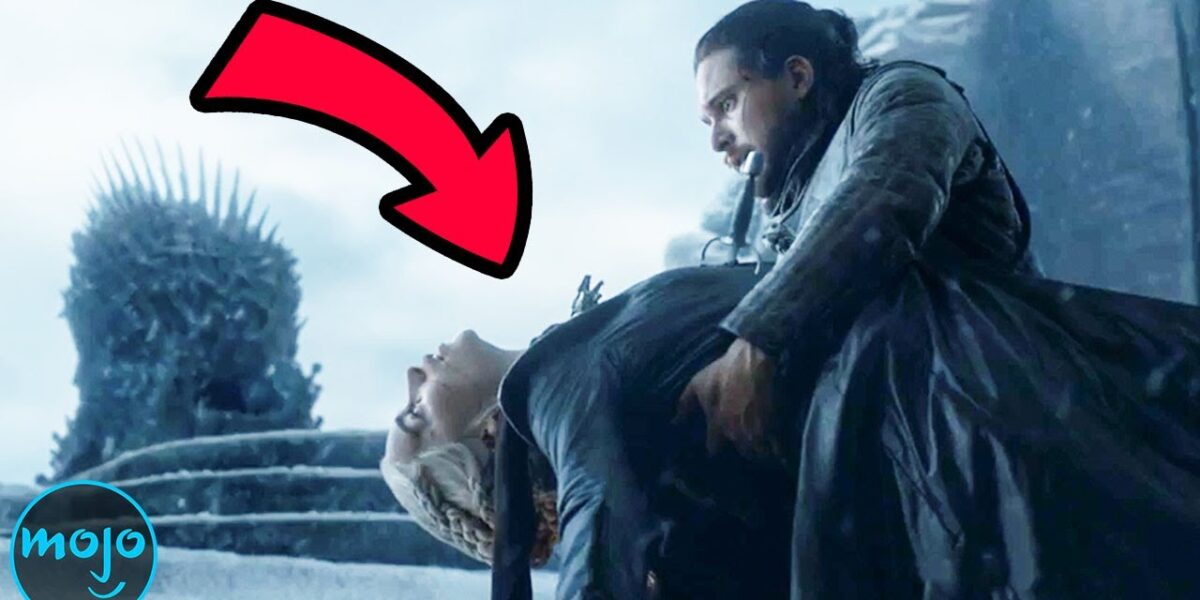
Perhaps the most high-profile disappointment in recent memory is the finale of Game of Thrones, “The Iron Throne.” After Daenerys’s descent into madness, the finale rushed through a season’s worth of plot points. Daenerys’s death, Bran’s unexpected ascension to the throne, and Jon Snow’s discarded arc all felt unearned and hastily executed. The infamous water bottle left in a shot served as a potent symbol of the rushed production, leaving fans lamenting the lack of a proper rewrite or additional takes for such an epic conclusion.
Source: Top 19 Worst TV Finales Of All Time (YouTube)

Related Articles


TV’s Most Wild Sex Scenes Revealed!
TV history is packed with moments of intense passion that pushed the boundaries of broadcast. From snowy trysts in 'Spartacus' to explosive encounters in 'The Boys,' these scenes shocked and thrilled audiences. We countdown the most over-the-top intimate moments.


TV’s Best Goodbyes: Top 30 Finales That Stunned Audiences
From the heartwarming resolutions of 'Schitt's Creek' to the gut-wrenching ambiguity of 'Lost', this list dives into the top 30 most memorable TV finales. Discover which shows stuck the landing and which left audiences talking.


SAG Awards Boost ‘Sinners,’ Paramount & HBO Merge?
The 2026 awards season is heating up with SAG Awards predictions favoring 'Sinners,' while a potential Paramount and HBO Max streaming merger could shake up the industry. Plus, a writer has been secured for the highly anticipated 'Game of Thrones' movie.