Master Self-Awareness: Unlock Your Potential with the Johari Window
The Johari Window is a psychological tool that helps individuals understand their self-awareness and how they are perceived by others. By dividing self-knowledge into four panes—Arena, Facade, Blind Spot, and Unknown—it offers a framework for personal growth and improved relationships.

Master Self-Awareness: Unlock Your Potential with the Johari Window
Understanding ourselves is a lifelong journey, and a powerful tool called the Johari Window can help illuminate the path. Developed in 1955 by psychologists Joseph Luft and Harrington Ingham, this model offers a simple yet profound framework for exploring self-awareness and interpersonal relationships. It breaks down our perception of ourselves and how others see us into four key areas, helping us discover hidden aspects of our personality and improve our connections with others.
The Four Panes of the Johari Window
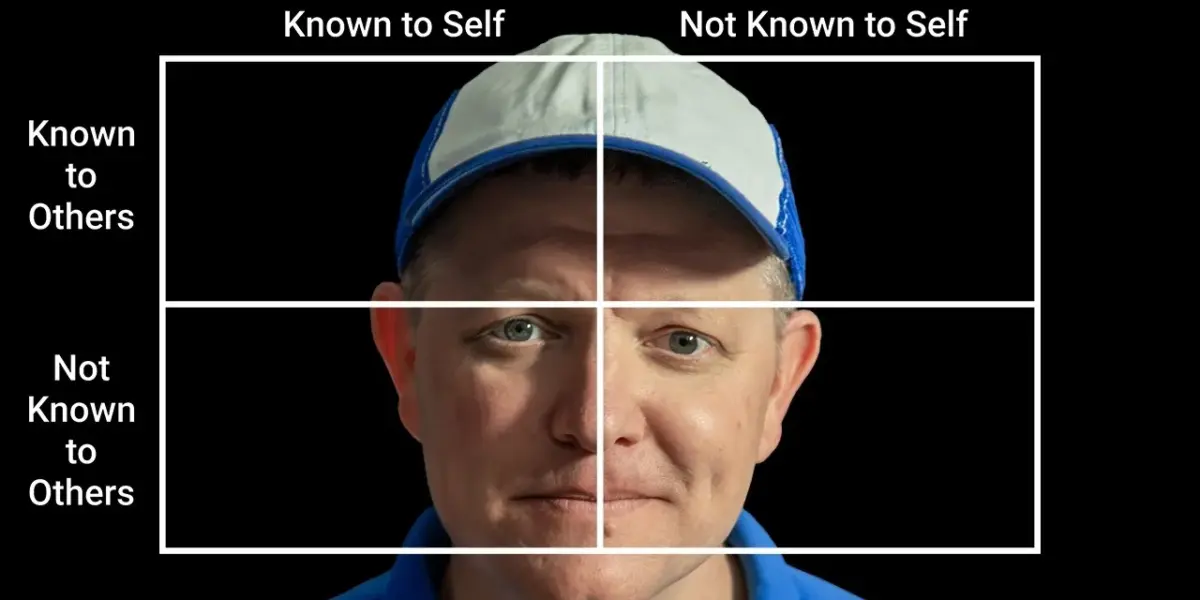
Imagine a window divided into four panes. Each pane represents a different combination of what is known to ourselves and what is known to others:
- The Arena (Open/Public Area): This is the largest pane in a healthy, well-adjusted individual. It contains information about yourself that you know, and others also know about you. This includes your personality traits, behaviors, skills, and public information like your job or hobbies. For example, if you are an engineer and people know you are an engineer, that information resides in the Arena.
- The Facade (Hidden Area): This pane holds information that you know about yourself, but you choose to keep hidden from others. This can include your personal feelings, secrets, past experiences, or insecurities. You might withhold this information because you are not ready to share it, or because you want to maintain a certain image. For instance, a hidden past struggle or a private ambition would be in the Facade.
- The Blind Spot (Blind Area): This is a crucial and often unsettling pane. It contains information that others know about you, but you are unaware of. These are your blind spots – behaviors, habits, or personality traits that you don’t see in yourself, but are noticeable to those around you. This could be a recurring habit, a way you communicate that others find off-putting, or an unconscious bias. Recognizing and addressing blind spots is key to personal growth.
- The Unknown Area: This pane represents what is unknown to both yourself and others. It can include hidden talents, undeveloped potential, or aspects of your personality that have not yet been revealed through experience or self-reflection. Discovering this area often happens through new experiences, challenges, or introspection.
Expanding the Arena: The Path to Growth
The ultimate goal when using the Johari Window is to expand the Arena – the area of mutual understanding between yourself and others. This expansion happens in two primary ways:
- Reducing the Facade: By disclosing information about yourself to others, you move content from the Facade into the Arena. This involves vulnerability and sharing your feelings, experiences, and thoughts. When you open up to trusted individuals, they gain a more complete picture of who you are.
- Reducing the Blind Spot: By seeking and receiving feedback from others, you can bring information from your Blind Spot into the Arena. This requires actively listening to how others perceive you, even if it’s difficult to hear. Constructive feedback from friends, family, or colleagues can reveal aspects of yourself you never knew existed.
Why Self-Awareness Matters
The Johari Window highlights that our self-knowledge is not always complete. We all have blind spots, and others often see us more clearly than we see ourselves. This realization is not a cause for alarm, but an invitation to growth.
Developing self-awareness through tools like the Johari Window has profound implications for our relationships. When we understand ourselves better, we can communicate more effectively, build stronger connections, and navigate social situations with greater ease. Conversely, a lack of self-awareness can lead to misunderstandings, conflict, and strained relationships.
The model also touches upon the increasing sense of loneliness in modern society. While technology connects us in new ways, it can also create a distance in genuine human interaction. Understanding how we build and perceive relationships becomes even more critical in this context.
Exploring the Unknown
Discovering the Unknown area requires different approaches. For those with faith, prayer and spiritual practice can offer insights into aspects of oneself that are hidden even from oneself, as faith suggests a divine omniscience. For others, embracing new experiences, stepping outside comfort zones, and engaging in activities where one’s reactions are unfamiliar can reveal hidden potentials and coping mechanisms.
The journey of self-discovery is ongoing. By consciously working to reduce our hidden and blind areas and explore the unknown, we can foster deeper self-understanding, enhance our relationships, and live more authentic and fulfilling lives. The Johari Window provides a roadmap for this essential exploration.
Source: What Other People Are Not Telling You…. (Understanding The Johari Window) – Smarter Every Day 314 (YouTube)

Related Articles


Aging Well: Navigating Challenges and Finding Purpose
Discover practical strategies for navigating the challenges of aging, from managing complex trauma triggers to finding new purpose and wisdom. Learn how to care for aging parents while protecting your own well-being.


Lemon Juice ‘Invisibility’ Robbery Leads to Psychological Discovery
A bizarre 1995 bank robbery, where perpetrators used lemon juice believing it would make them invisible to cameras, led to their swift capture. The incident inspired research into the Dunning-Kruger effect, a psychological phenomenon where incompetence breeds overconfidence.


Study Questions Parenthood’s Happiness Boost
A new study in Evolutionary Psychology questions whether parenthood leads to greater happiness, finding no evidence to support the common belief. Experts and parents on a recent broadcast shared mixed views, highlighting personal growth and unique joys alongside stress and challenges.