China Arms Iran: Is a US Invasion Imminent?
China is reportedly rushing advanced missiles to Iran during a ceasefire, fueling fears of a potential US invasion. Meanwhile, Iran claims it cannot clear mines in the Strait of Hormuz, while conflicting reports emerge about ongoing US-Iran negotiations.


China Rushes Missiles to Iran Amid Ceasefire Fears
Reports suggest China is quickly sending advanced missiles to Iran. This is happening during a ceasefire, raising concerns about a potential US ground invasion. The weapons include surface-to-air missiles and man-portable air-defense systems, or MANPADS. These are shoulder-fired missiles that can shoot down aircraft and helicopters. While not the most high-tech, they are very dangerous. They can be hidden easily and fired quickly when planes approach.
Russia’s Role and Iran’s Strait of Hormuz Claims
This isn’t the first time weapons have been sent during a ceasefire. Russia reportedly sent humanitarian flights that may have carried air defense weapons. One US F-15 was shot down, and MANPADS are suspected as the cause. Now, China appears to be doing the same, arming Iran during this lull in fighting. Meanwhile, Iran claims it cannot guarantee safe passage through the Strait of Hormuz. They say they laid mines but can’t find them all to remove them. This makes reopening the vital shipping lane difficult.
US officials believe Iran is using the mine excuse to avoid reopening the Strait of Hormuz. They suspect Iran simply doesn’t want to remove the mines.
However, three oil tankers recently passed through the Strait. Two were from China. This raises questions about Iran’s claim of being unable to clear the mines. It suggests that if payment is made, passage might be possible. This could be a tactic to gain negotiating power or charge tolls.
Conflicting Reports on Negotiations and Iran’s Leadership
Negotiations between the US and Iran are reportedly happening in Pakistan. However, there are conflicting reports on whether these talks have officially begun. Some sources say they have started, while others claim they won’t begin until a ceasefire is agreed upon in Lebanon. Adding to the instability, reports indicate Iran’s new Supreme Leader, Mojtaba Khamenei, suffered severe injuries during an earlier air strike. His face is reportedly disfigured, and he may have lost a leg. This could leave the hardline IRGC in even greater control.
Attacks Continue and President Trump’s Stance
Despite the ceasefire, attacks seem to be continuing in a more covert manner. There are unconfirmed reports of a missile launch from Iran hitting a refinery in Kuwait. President Trump has commented on the situation, stating that a good deal with Iran would mean no nuclear weapons. He also believes the Strait of Hormuz would open if the US simply left, as Iran needs the revenue. He insists the US will not allow Iran to control the Strait, calling it international water. He also dismissed reports of the US agreeing to release Iran’s frozen assets as false.
Damage and Recovered Technology
New footage shows damage to Qatar’s natural gas production hub from an Iranian ballistic missile. Early warning radar systems in Qatar also appear to have sustained damage. Furthermore, Iran claims to have recovered a US-made countermeasure system from the wreckage of a C-130 aircraft that was involved in a rescue operation. This technology could be sent to Russia and China for reverse engineering, posing a potential security risk.
Why This Matters
The situation is highly volatile. China’s alleged arming of Iran during a ceasefire could significantly escalate regional tensions. If a US ground invasion were to occur, Chinese-supplied weapons could pose a serious threat to American troops. Iran’s continued control over the Strait of Hormuz, whether through genuine inability to clear mines or strategic maneuvering, impacts global oil prices and shipping. The conflicting reports on negotiations highlight the difficulty in finding a diplomatic solution. The potential consolidation of power by hardliners within Iran, following the Supreme Leader’s injuries, could lead to more aggressive actions.
Implications, Trends, and Future Outlook
This situation points to a growing alignment between China and Iran, potentially challenging US influence in the Middle East. The use of MANPADS and ballistic missiles suggests a continued reliance on asymmetric warfare tactics by Iran. The successful recovery of advanced US technology by Iran could lead to future advancements in adversary weapon systems. The future outlook is uncertain, with a high risk of renewed conflict. Diplomatic efforts are fragile, and any misstep could reignite a wider war. The ability of Iran to control or influence passage through the Strait of Hormuz remains a critical factor in regional stability and global energy markets.
Historical Context and Background
Tensions between the US and Iran have been high for decades, particularly after the 1979 Iranian Revolution. The Strait of Hormuz has historically been a flashpoint, with Iran threatening to close it during past conflicts. The US has consistently maintained that freedom of navigation in the Strait is vital for global commerce. China’s increasing assertiveness on the global stage, coupled with its strategic partnership with Iran, is a more recent development. Russia’s involvement in supplying military aid to Iran also reflects a broader pattern of challenging US interests in the region.
Source: BREAKING: China RACES Missiles To Iran To KILL U.S Troops (YouTube)

Related Articles

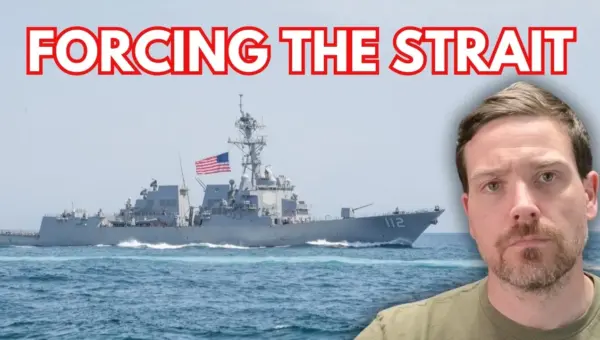
US Warship Tests Iran’s Resolve in Key Strait
A U.S. Navy warship's uncoordinated transit through the Strait of Hormuz is seen as a U.S. display of strength amid ongoing Iran-U.S. talks. Iran claims the ship was forced back, while U.S. officials assert freedom of navigation. This event, alongside Iran's list of non-negotiable demands, signals a complex negotiation landscape with high stakes for regional stability.


US-Iran Peace Talks Hit Major Roadblocks in Islamabad
High-level peace talks between the United States and Iran have commenced in Islamabad, Pakistan, but face significant obstacles. Preconditions set by Iran, including an immediate ceasefire between Hezbollah and Israel and sanctions relief, threaten to derail the negotiations. Key sticking points include Iran's nuclear program and control over the Strait of Hormuz, with both sides claiming advantage.

Iran Talks Stall Amid Lebanon Strikes, Strait of Hormuz Tensions
High-level U.S.-Iran talks are underway but face major hurdles, including ongoing Israeli strikes in Lebanon and lingering disputes over the Strait of Hormuz. Iran demands asset unfreezing and a Lebanon ceasefire, while the U.S. focuses on securing vital shipping lanes.