Moon Mission Returns: A New Era for Space Exploration
The Artemis II mission's successful splashdown marks a new era in space exploration, bringing astronauts home safely after a historic journey to the far side of the Moon. The mission tested crucial systems and pushed human boundaries, inspiring a new generation.


Moon Mission Returns: A New Era for Space Exploration
The Artemis II mission has successfully brought its crew back to Earth, splashing down in the Pacific Ocean after a 10-day journey. This mission pushed the boundaries of human spaceflight, sending astronauts farther from our planet than ever before. The safe return marks a significant achievement for NASA and signals a new chapter in our quest to explore the cosmos.
Hilt Boling, a young enthusiast who gained attention for his excitement during the Artemis launch, shared his thoughts on the mission’s success. He described the return as “really awesome.” When asked about his favorite part of the mission, Boling found it hard to pick just one, highlighting the many amazing events that occurred. He watched every second of the journey, showing a deep engagement with the space program.
Concerns During Reentry
The reentry process, while made to look easy, presented moments of tension. Boling admitted to feeling nervous as the crew capsule returned to Earth. He explained that the rocket’s energy was largely spent during the mission, making the return a high-stakes maneuver. The capsule essentially uses its remaining fuel to slow down, preparing for the intense forces of atmospheric entry. This is a critical phase where the capsule faces extreme heat and stress.
The capsule entered Earth’s orbit at a staggering 25,000 miles per hour. During this descent, the outside temperature of the capsule reached half the heat of the sun’s surface. These figures underscore the immense challenges and dangers involved in bringing astronauts home safely from deep space.
Behind the Scenes at Kennedy Space Center
Before the mission’s launch, Boling had the unique opportunity to take a special tour of the Kennedy Space Center. He visited SWAMP Works, which is described as a Lunar Rover development facility. This place is compared to Lockheed’s Skunk Works, known for its innovative and secret projects. During his visit, Boling even got to drive a simulated lunar rover, experiencing what it might be like to travel on the Moon’s surface.
The simulation used materials from Earth to mimic lunar dust. Boling’s tour offered him a firsthand look at the technology and dedication behind NASA’s space exploration efforts. Seeing the actual spacecraft up close, like the capsule he later watched on TV, gave him a new perspective on its massive scale.
The Scale of Space Exploration
Boling reflected on the size of the Artemis capsule, noting that it looks much smaller on television than it does in person. He described it as “huge,” emphasizing the vast difference in scale when standing next to such a craft. This personal experience provided a tangible understanding of the engineering marvels that make deep space travel possible.
A New Era Dawns
The successful completion of the Artemis II mission is more than just a return to Earth. It represents a significant step forward in humanity’s journey to explore the Moon and beyond. The mission tested critical systems and human endurance, paving the way for future lunar missions and potential journeys to Mars.
NASA’s commitment to pushing the boundaries of space exploration continues. With Artemis II’s return, the agency has demonstrated its capability to send humans on complex, long-duration missions far from home. This achievement inspires a new generation of scientists, engineers, and explorers.
Global Impact
The success of Artemis II has global implications. It reinforces the United States’ leadership in space exploration and encourages international cooperation in future space endeavors. Missions like these foster scientific advancement and technological innovation that can benefit all of humanity. The data gathered and experiences gained will be invaluable for planning subsequent missions, including potential lunar bases and human expeditions to the Red Planet.
The public’s fascination, exemplified by Hilt Boling’s enthusiasm, shows a continued global interest in space. This support is vital for maintaining the momentum of space programs. As we look towards the future, missions like Artemis II remind us of our innate drive to explore and understand the universe around us.
Source: Hilt Boling reacts to Artemis II returning to Earth | Katie Pavlich Tonight (YouTube)

Related Articles

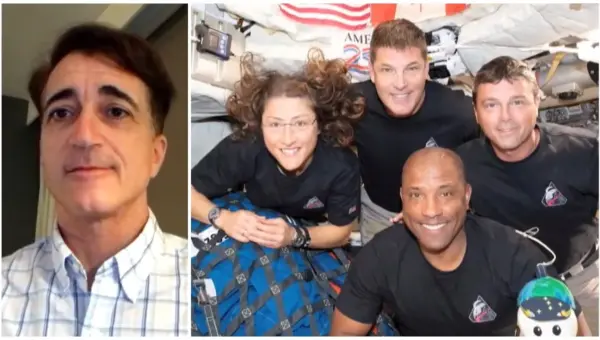
Artemis II Mission: A Giant Leap Back to the Moon
Artemis II's historic journey around the Moon signifies humanity's return to deep space after 50 years. The mission highlights the incredible complexity and teamwork required for space travel, paving the way for a sustained lunar presence. Rigorous training and deep trust are key to performing under immense pressure.


Artemis II Splashdown: A Triumph of Human Ingenuity
The Artemis II mission successfully returned to Earth, marking a major milestone in lunar exploration. The Orion capsule splashed down safely after a nearly 10-day journey. This achievement highlights advanced technology, historical parallels with Apollo, and the human element of spaceflight.

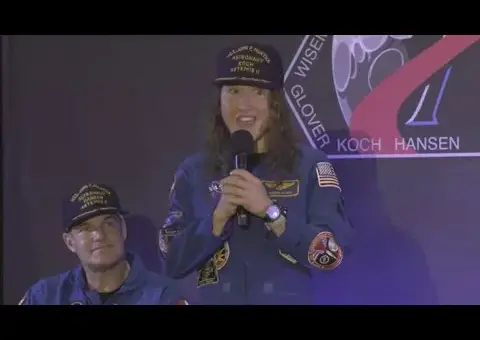
US Aims for Lunar Dominance with New Artemis Missions
NASA's Artemis program is charting a course for the Moon with upcoming missions III, IV, and V. These missions aim to test new lunar landers, return humans to the surface for the first time since 1972, and establish a foundation for sustained exploration.