Taiwan Opposition Leader’s China Embrace Sparks Outrage
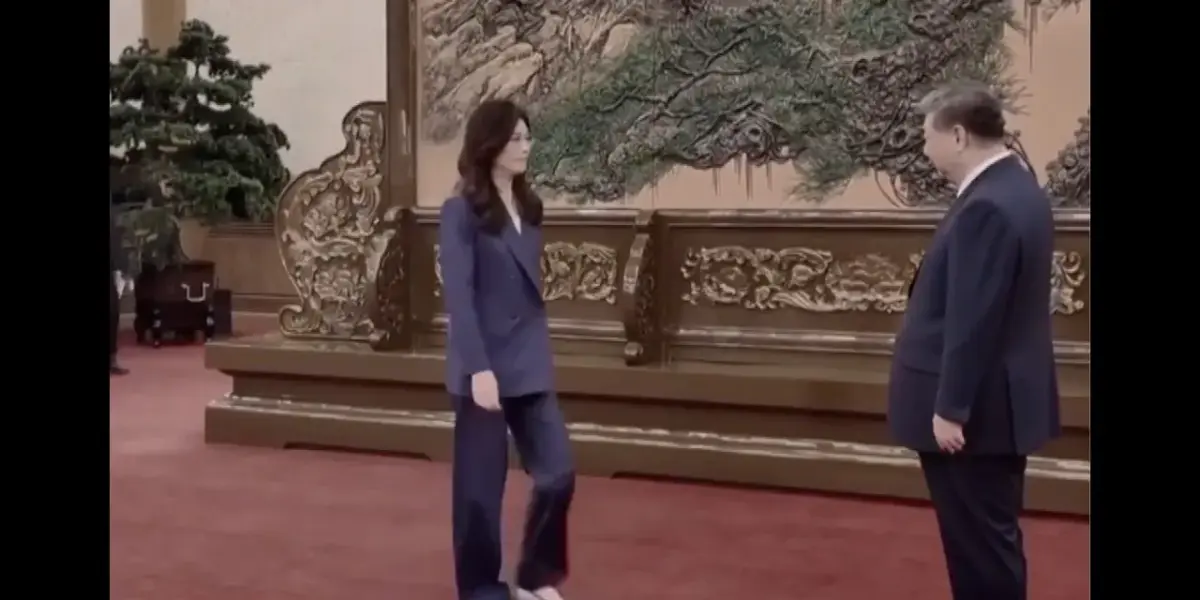
Taiwan's opposition leader Hung Hsiu-chu met with Chinese leader Xi Jinping, sparking outrage. Her embrace of Beijing's narrative on the 'one China' policy and the Taiwan Strait contrasts sharply with Taiwan's ruling party and mainstream public opinion. The meeting highlights the ongoing debate over Taiwan's sovereignty and its future relationship with mainland China.

Taiwan Opposition Leader’s China Embrace Sparks Outrage
Taiwan’s opposition leader, Hung Hsiu-chu, recently met with Chinese leader Xi Jinping. Her party, the Kuomintang (KMT), has long held pro-Beijing views. The meeting focused on cross-strait relations, with both sides emphasizing peace. However, the underlying tension revolves around Taiwan’s sovereignty, a deeply divisive issue.
The ‘One China’ Puzzle
At the heart of the discussion was the “one China” policy. Both Hung and Xi referenced it, but its meaning remains unclear. Does it refer to Communist China or Taiwan’s official name, the Republic of China? Taiwan’s current government, a close ally of the United States, is closely watching these developments. The KMT’s stance often differs sharply from the ruling party’s.
Peace on Whose Terms?
The leaders agreed on a desire for peace, not conflict. But Xi Jinping views Taiwan as a part of China, a claim Taiwan’s government firmly rejects. Hung Hsiu-chu stated that the only basis for talks is the “1992 consensus” and opposition to Taiwan’s independence. This consensus is a vague agreement that both sides belong to “one China” without defining which one. The Communist Party in Beijing has never accepted Taiwan’s official name, the Republic of China.
Xi’s Shadow Looms Large
Xi Jinping has not ruled out using force to bring Taiwan under Beijing’s control. In recent years, China has conducted numerous military drills around the island. Hung suggested that the Taiwan Strait should no longer be a flashpoint for conflict. She also stated it should not be used as a pawn by other countries. This echoes Beijing’s view that the strait is an internal Chinese matter.
A Vital Waterway, A Strategic Chessboard
Beijing regularly sends military aircraft and ships into the Taiwan Strait, often crossing its median line. This action is seen as a threat to Taiwan’s government. However, the U.S. and its allies view the strait as international waters. They regularly send their own ships through to ensure freedom of navigation. The Taiwan Strait is one of the world’s busiest shipping lanes. It is also a crucial supply line for energy to allies like Japan and South Korea.
Echoes of Hong Kong?
Hung also mentioned respecting the different social systems and ways of life between China and Taiwan. This sounds similar to Beijing’s “one country, two systems” approach used for Hong Kong. However, critics point out that Hong Kong has lost its freedoms. Many who oppose the Communist Party have been imprisoned there.
Taiwan’s Official Condemnation
Taiwan’s top official in charge of China policy strongly criticized Hung’s remarks. He stated that the Chinese Communists are trying to mislead the world. They want to make it seem like Taiwan is an internal Chinese issue. He added that Chairman Hung repeated the Communist Party’s message and praised their leadership. This, he said, goes against the wishes of most Taiwanese people. It also clashes with global concerns about peace and opposition to China’s bullying tactics in the region.
Defense Spending and Disagreement
Meanwhile, the U.S. Senate recently sent a delegation to Taiwan. They expressed support for Taiwan’s proposed $40 billion defense budget. This is the largest in Taiwan’s history. Notably, Hung Hsiu-chu opposes this significant increase in defense spending.
Why This Matters
This meeting and the public statements highlight a fundamental divide in how Taiwan views its future and its relationship with mainland China. The KMT’s long-standing ties to Beijing create friction with the current government, which prioritizes Taiwan’s autonomy and democratic values. Hung’s alignment with Beijing’s narrative, particularly regarding the Taiwan Strait and the “one China” principle, raises concerns among those who advocate for Taiwan’s self-determination and fear increasing Chinese influence.
Historical Context
The KMT ruled mainland China before the Communist Party victory in the Chinese Civil War in 1949. They then retreated to Taiwan. For decades, both sides claimed to be the legitimate government of all China. Over time, Taiwan has developed into a vibrant democracy. Most Taiwanese people now identify as Taiwanese rather than Chinese. This shift in identity makes Beijing’s claims of sovereignty increasingly difficult to accept for the majority.
Implications and Future Outlook
The KMT’s pro-Beijing stance, as exemplified by Hung’s meeting with Xi, could complicate Taiwan’s international relations. It also feeds into Beijing’s narrative that unification is inevitable and supported by at least some Taiwanese. The U.S. and its allies are watching closely. They are concerned about regional stability and the potential for conflict. Taiwan’s decision to increase its defense budget signals a commitment to self-defense, even as internal political divisions persist. The future will likely see continued tension between Beijing’s assertive stance and Taiwan’s democratic aspirations, with international powers playing a significant role.
Source: Taiwan Official Condemns Opposition Leader's Pro CCP Stance (YouTube)

Related Articles
Xi’s Inner Circle Cracks: Aide’s Fall Signals Power Struggle
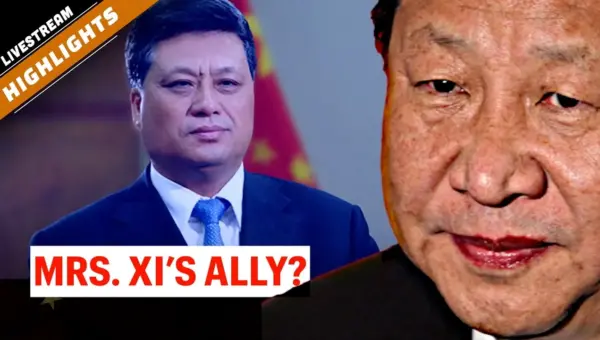
The removal of Ma Xingrui, a close ally of Xi Jinping, signals a potential power struggle within China's elite. Unusual details surrounding his downfall suggest a challenge to Xi's authority from older party factions, with personal ties to the First Lady adding further complexity.

Trump Exploits Iran’s Factional Chaos for Deal
The Trump administration is reportedly exploiting deep divisions within the Iranian regime to gain leverage in ongoing peace talks. By fueling infighting among various factions, the US aims to secure a more favorable deal or weaken its adversaries through internal conflict. This strategy also extends to pressuring China economically by disrupting its access to discounted oil.
China Courts US Oil Amid Iran Deal, Rare Earth Race Heats Up
China is now importing US oil amid a complex geopolitical landscape, including brokering an Iran ceasefire and facing challenges in its rare earths dominance. Meanwhile, regional disputes over strategic islands and airspace add to global tensions.