Navy Divers Ready for Artemis Astronaut Recovery Mission
U.S. Navy divers are undergoing rigorous training and are on high alert for the upcoming Artemis 2 astronaut recovery. Retired Navy diver Thomas McConnell highlighted the intense anticipation, meticulous preparation, and critical safety protocols involved in welcoming the astronauts back to Earth after their historic mission.

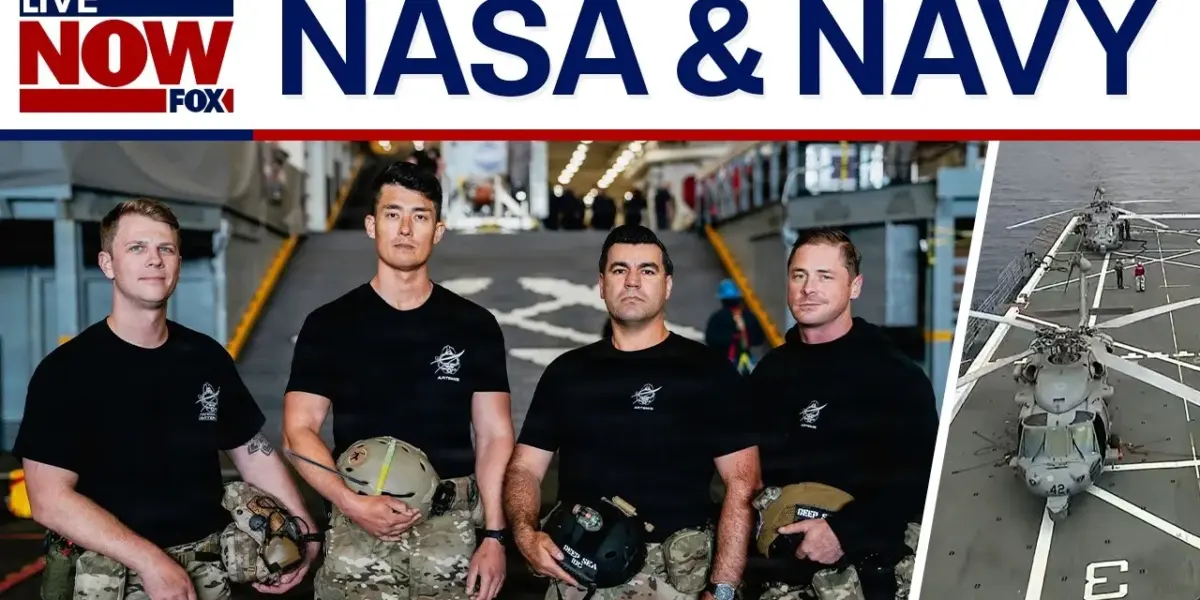
Navy Divers Prepare for Historic Artemis Astronaut Return
The U.S. Navy’s dive medical recovery team is on standby, ready to welcome the Artemis 2 astronauts back to Earth. This marks the first time in over 50 years that astronauts will splash down in the Pacific Ocean, and the Navy divers are set to be the first faces the crew will see. Their role is critical in ensuring a safe and successful recovery of the astronauts and the Orion capsule.
Anticipation and Tensions for Recovery Teams
Retired U.S. Navy diver Thomas McConnell shared insights into the mindset of the divers preparing for this significant mission. “All anticipation, it’s nerves,” McConnell explained. He highlighted the intense focus on safety and teamwork, especially when dealing with the extreme conditions of a spacecraft re-entry. The divers are aware of the astronauts traveling at over 25,000 miles per hour, a process that turns the capsule’s outer layer into plasma. A particularly tense moment occurs during the communications blackout, a period of silence that can be unnerving for any diver working deep underwater. McConnell likened this to losing contact with a diver via an umbilical cord, where any loss of communication raises immediate concerns about the diver’s well-being.
“That blackout moment is going to be extremely tense and I know once we hear that first blip of communications and we know that the all the parachutes have launched that’ll just be a a moment of now we can celebrate.”
The relief and celebration will come once communication is re-established and the parachutes are confirmed to have deployed. This signifies that the most critical phase of re-entry is complete. The recovery process itself requires extreme caution. Divers must approach the capsule slowly and deliberately, treating it like any other vessel recovery, with safety as the absolute top priority.
Extensive Training for a Unique Mission
Given that this type of recovery hasn’t occurred since the Apollo missions, the training for the Artemis dive teams has been extensive and highly specialized. McConnell detailed the rigorous preparation involved. “There is quite a few Artemis training capsules,” he stated. These include mock-ups of the Orion capsule, often made of plastic for easier handling during training exercises. The divers have also trained extensively at the neutral buoyancy laboratory in Texas, simulating the weightlessness astronauts experience in space. Furthermore, they’ve practiced with a vessel that can submerge and sink, allowing them to rehearse every movement and procedure in a controlled environment. “Every movement they take, every step they make, every inch they move on the boat has already been rehearsed and perfected,” McConnell emphasized, underscoring the meticulous planning involved.
Pride in Service and San Diego’s Role
The news that the USS John P. Murtha will lead the recovery mission was met with enthusiasm. McConnell expressed his pride, calling the involvement of the sailors “wonderful” and “great.” He extended his gratitude to all the crew members, from those in the galley to the engine room and those directly involved in receiving the capsule. “Huya for every one of y’all. It’s it’s a proud moment for everybody here in San Diego. It’s a proud moment for the United States,” he declared. The recovery operation, taking place near San Diego, is a source of significant pride for the local community and the nation.
What’s Next for Artemis Recovery
As the Artemis 2 mission progresses towards its scheduled return, the focus will increasingly shift to the recovery operations. The U.S. Navy divers, having undergone extensive preparation, will execute their critical role. The world will be watching as this historic splashdown unfolds, marking a significant milestone in humanity’s return to the Moon and beyond. The success of this recovery will pave the way for future Artemis missions, further solidifying America’s presence in deep space exploration.
Source: Artemis splashdown: US Navy will help with recovery (YouTube)

Related Articles


Artemis II Faces Fiery Re-entry: Expert Warns of ‘Danger Zone’
Space policy expert Art Harman warns that the re-entry of NASA's Artemis II mission into Earth's atmosphere presents a significant 'danger zone.' This critical phase tests the spacecraft's heat shield and the crew's safety, drawing lessons from past spaceflight tragedies.


Artemis II Astronauts Near Earth After Historic Moon Mission
The Artemis II astronauts are nearing Earth after a historic 10-day mission, marking the farthest human space travel to date. The journey included groundbreaking firsts and moments of national unity, though some noted a muted response from the President. The crew now faces the critical re-entry phase, a testament to NASA's scientific expertise.


Moon Mission Sparks New Space Race
The Artemis II crew's safe return from a lunar orbit mission highlights a new era of space exploration. This successful splashdown underscores the growing international competition and cooperation in space, often referred to as a new space race.