Xi’s Inner Circle Cracks: Aide’s Fall Signals Power Struggle
The removal of Ma Xingrui, a close ally of Xi Jinping, signals a potential power struggle within China's elite. Unusual details surrounding his downfall suggest a challenge to Xi's authority from older party factions, with personal ties to the First Lady adding further complexity.

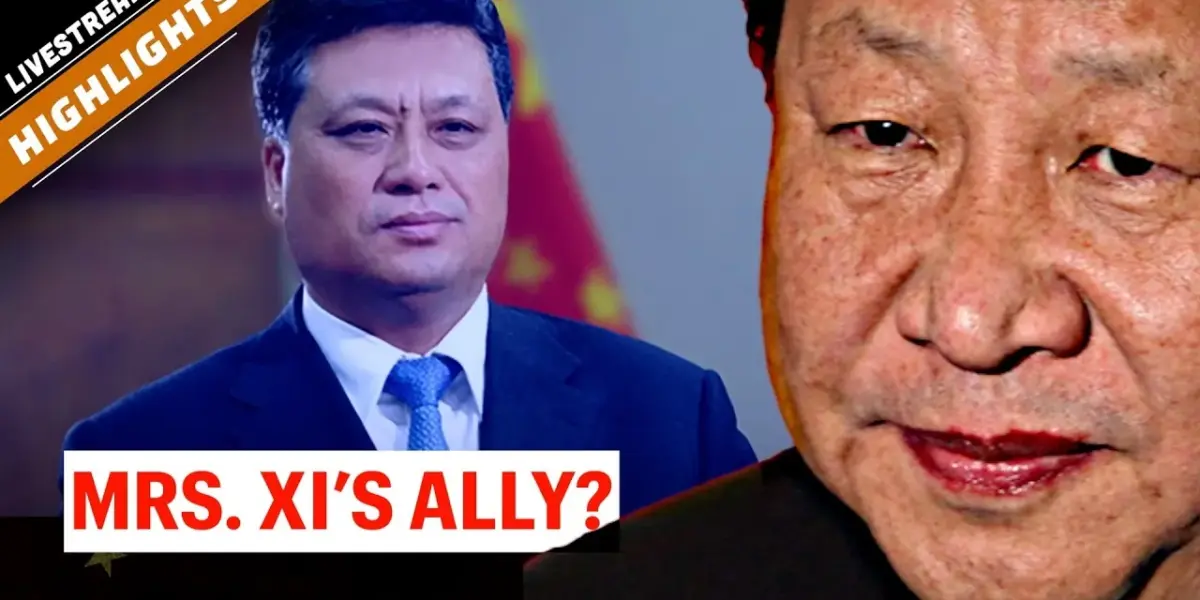
Xi’s Inner Circle Cracks: Aide’s Fall Signals Power Struggle
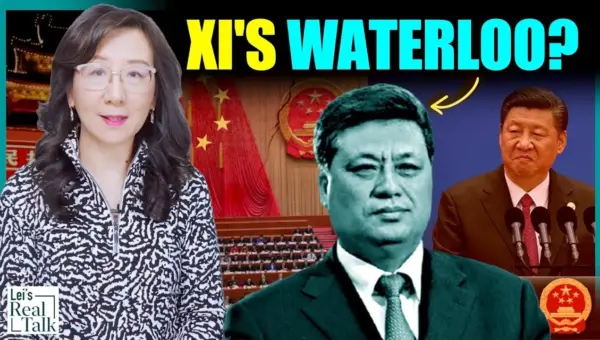
In a stunning turn of events, Ma Xingrui, a high-ranking official and close confidant of Chinese President Xi Jinping, has been removed from his post. This marks the fourth Politburo member to fall from grace under Xi’s leadership and the third in just the past year. Some are already calling this moment a potential turning point, or Xi Jinping’s “Waterloo moment,” suggesting a deeper political struggle is unfolding within the highest levels of the Chinese Communist Party (CCP).
A Meteoric Rise, A Sudden Fall
Ma Xingrui’s career trajectory was nothing short of extraordinary. He rose from a general manager at a state-owned aerospace company to a key figure in Guangdong province and eventually a member of the Politburo in less than a decade. This rapid ascent, completed in just nine years, is exceptionally rare; most officials take 15 to 20 years to reach such a high level. His swift promotion suggests he was not just a capable official but a hand-picked candidate, placed on a fast track by Xi himself, starting around 2013 when Xi’s wife, Peng Liyuan, became China’s first lady.
Ma’s connection to Xi runs deep. He hails from the same city as Xi’s wife, Shandong, and reports suggest shared financial interests and networks. Some unconfirmed rumors even claim they may be distant relatives. Crucially, Ma’s political rise coincided with Xi’s consolidation of power. After a brief stint in Beijing, Ma was sent to Guangdong, a province with significant ties to the Xi family. Xi Jinping’s father rebuilt his political career there, and the family maintained strong ties and assets in the region. Governing Guangdong, especially the affluent city of Shenzhen, meant overseeing interests vital to the Xi family. This role demanded absolute trust, making Ma’s position a testament to Xi’s confidence in him.
Unusual Omissions Hint at Deeper Issues
The official announcement of Ma’s removal was notably brief and contained significant omissions. Unlike previous high-profile cases, Ma was not referred to as a “comrade.” Furthermore, the announcement did not specify who approved the decision, omitting the standard phrase “approved by the CCP Central Committee” or “approved by the top leadership.” This is a stark contrast to the removals of officials like Bo Xilai and Sun Zhengcai, who were both referred to as comrades and whose removals were clearly attributed to central leadership decisions, even though they were considered Xi’s political rivals.
The severity of the charges against Ma also stands out. While previous officials were investigated for “disciplinary violations,” Ma is being investigated for “disciplinary and legal violations.” This suggests a more serious transgression, one that goes beyond party rules into criminal activity. This combination of a less clear procedural announcement for a more serious offense creates a contradiction, leading to speculation that the decision to remove Ma might not have come from Xi’s central leadership at all.
A Battle Between Two Power Centers?
The unusual circumstances surrounding Ma’s downfall suggest a possible power struggle between Xi Jinping and an older faction of party elders. This elder-backed group is reportedly associated with a coordination and decision-making body formed last year, which includes figures like former Premier Wen Jiabao. If this is the case, Ma might have been removed not by Xi, but despite Xi’s wishes.
The timeline supports this theory. Ma lost his position as Party Secretary of Xinjiang in July, just one month after this new coordination body was announced. While Xi appeared to launch a counter-offensive after the arrest of another official, Zhang Xiaoya, in January, Ma’s fate remained uncertain. The promotion of Ma’s close aide, Gu Yonghan, just days after Zhang’s downfall, initially suggested Xi could still protect his allies. However, Gu was suddenly placed under investigation in late March, followed by Ma’s official downfall a week later. This sequence of events points to a direct confrontation between Xi’s faction and the elder-backed group.
The Personal Dimension: A Blow to the First Lady?
Beyond the political implications, Ma’s fall also carries a personal sting for Xi Jinping. Ma’s wife, Ding Xueqing, is reportedly very close to Xi’s wife, Peng Liyuan. She is described as a top “insurance broker” among Politburo families, allegedly handling large financial transactions disguised as insurance policies for the children of Politburo members. These policies, often ranging from $6 million to $20 million Hong Kong dollars, could reportedly be quickly converted into cash, with some transactions taking place in the presence of Peng Liyuan. This close personal and financial entanglement between Ma, his wife, and the First Lady creates a difficult situation for Xi. If opponents decide to pursue Ma’s wife, the pressure could extend directly to Peng Liyuan, giving Xi’s rivals significant leverage.
Regional Silence Speaks Volumes
The reactions from key provinces further highlight the divisions within the party. Xinjiang, where Ma last served, quickly declared full support for the central committee’s decision to investigate him, even though the committee’s role wasn’t mentioned in the announcement. This swift show of loyalty might be from an official, Chen Quanguo, who is not seen as part of Xi’s inner circle but is associated with former leaders like Hu Jintao and Wen Jiabao.
In contrast, Guangdong, where Ma built much of his political career, has remained silent. The Party Secretary of Guangdong, Li Xi, is a close ally of Xi Jinping. His silence suggests a cautious approach, possibly indicating internal friction or a lack of unified support for Xi’s actions. This stark difference in regional responses—one region openly supporting the decision and another remaining silent—suggests the CCP is no longer a monolithic entity but a divided system grappling with competing power centers.
Why This Matters
The downfall of Ma Xingrui is more than just another anti-corruption purge. It signals a potential shift in the balance of power within China’s leadership. The unusual handling of his case suggests a direct challenge to Xi Jinping’s authority, possibly orchestrated by older factions within the party. The personal connections involved, particularly the alleged ties to Xi’s wife, add another layer of complexity and potential instability. The divided responses from key provinces indicate that Xi’s grip on power may not be as absolute as it appears. This internal friction could impact China’s policy decisions and its standing on the global stage.
Looking Ahead
The coming months will be critical in understanding the full implications of Ma Xingrui’s removal. If Xi Jinping can successfully navigate this challenge and reassert his authority, it will solidify his control. However, if the elder faction continues to exert influence, it could lead to a more fractured leadership and potential policy shifts. The situation highlights the ongoing power dynamics within the CCP, a system that often operates with a high degree of opacity. Observers will be watching closely for further signs of internal conflict or consolidation of power.
Source: Who Took Down Ma Xingrui and Why? (YouTube)

Related Articles
China’s Power Play: Xi’s Grip Loosens?
The unexplained removal of high-ranking official Ma Xingrui from China's Politburo suggests a potential shift within the Communist Party. Unusual silence from key leaders and speculation about competing power centers hint at a significant political event.
China Fuels Iran’s War: Xi’s Deceptive Two-Front Strategy
A Chinese scholar alleges China is secretly supplying Iran with military tech and equipment, fueling its conflict. This is reportedly part of Xi Jinping's strategy to bog down the US and create space for China's own ambitions.
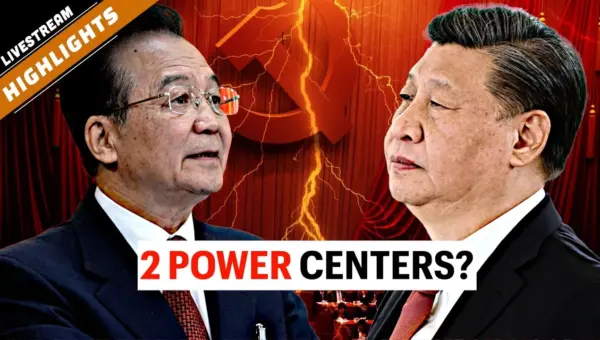
Retired Leader’s Public Show Hints Xi’s Grip Weakens
A recent video of retired Premier Wen Jiabao's public appearance, complete with unusual military security, suggests that President Xi Jinping's control over China's Communist Party may be weaker than believed. The event hints at ongoing power struggles and divisions within the top leadership.