AI Moguls’ Unchecked Power Sparks Alarm Over Humanity’s Future
A new report scrutinizes OpenAI CEO Sam Altman's alleged disregard for the consequences of AI, fueling broader concerns about unchecked power in Big Tech. Critics warn that a lack of empathy and introspection among AI leaders poses risks to jobs, democracy, and humanity itself, calling for urgent regulation and democratic input.


AI Leaders’ Lack of Empathy Fuels Concerns Over Humanity’s Future
The rapid advancement of artificial intelligence (AI) is raising serious questions about its impact on jobs, democracy, and the very definition of humanity. As tech billionaires increasingly shape our economy and influence critical decisions, a new report highlights concerns about the mindset of those leading some of the most powerful AI companies. These leaders, critics argue, may lack the empathy and foresight needed to guide a technology with such profound consequences.
OpenAI Chief Under Fire for Alleged Deception
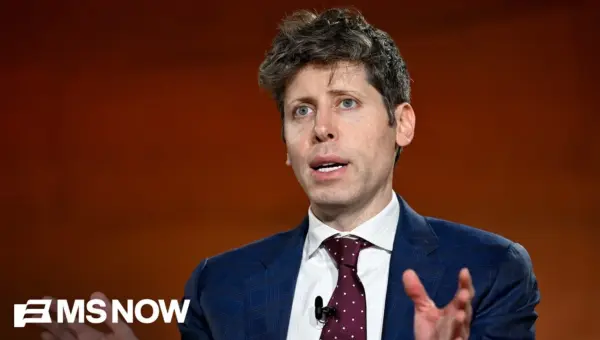
A recent investigative report from The New Yorker, based on over 100 interviews and internal documents, has put Sam Altman, the CEO of OpenAI, the company behind ChatGPT, under intense scrutiny. The report suggests a troubling pattern of behavior, with one board member quoted as saying Altman has a “sociopathic lack of concern for the consequences of deception” and is “unconstrained by truth.” Internal memos allegedly show Altman misleading executives about safety protocols, a serious issue given the far-reaching impact of AI.
OpenAI has pushed back, calling the report a rehashing of old material from biased sources. However, the allegations add to a growing pressure on the leaders of powerful, often secretive, AI firms. The lack of transparency in these privately held companies, which may soon wield more influence than publicly traded corporations, is a significant concern.
AI’s Societal Impact: Jobs, Democracy, and Control
The speed at which AI is developing means it could reshape our world faster than many realize. This technology affects everything from how we get information and news to how we work and live. Experts warn that within a few years, AI could eliminate millions of jobs, leaving many to question whether society will have a say in these changes before it’s too late.
The concentration of power in the hands of a few tech billionaires is also a major worry. They not only influence the job market but also play a role in military decisions and control vast amounts of information. This raises fears of a future where a small group has a stranglehold over our data, our devices, and what our children consume.
Calls for Urgent Regulation Amid Existential Threats
Some Democrats are sounding the alarm, urging a sense of urgency to regulate AI before it overwhelms society. They warn that without careful oversight, this technology could overpower humanity, leading to unforgivable harm. This harm, they argue, is occurring precisely because there is no federal legislation to govern AI.
“If we are not careful, this is the type of technology that will overpower us and the people will never forgive us for that.”
The concept of an “existential threat” is often discussed, with some suggesting it’s even used by AI companies and politicians to gain attention and support for their agendas. However, experts like those interviewed suggest that even a small chance of such a threat, or the risk of millions of job losses, warrants government intervention and regulation.
A Call for Introspection and Empathy in Tech Leadership
Critics point to a broader issue within Silicon Valley: a perceived anti-intellectualism and a disdain for deep thought among some tech elites. Writers like Elizabeth Spires and Thomas Chatterton-Williams argue that these leaders often believe they have nothing left to learn and view introspection as a waste of time. This is particularly concerning when their work is profoundly shaping our collective reality.
The contrast is drawn with figures like J. Robert Oppenheimer and Andrei Sakharov, who, after developing powerful technologies, grappled with their ethical implications and advocated for human rights. The concern is that today’s AI leaders may lack this moral compass. As Chatterton-Williams noted, the people whose work most profoundly shapes our reality seem least interested in considering what makes life worth living, such as humanity, equality, and diversity.
The Path Forward: Regulation and Democratic Input
While Congress may move slowly, other avenues for accountability exist, including civil courts. Past cases have shown that tech companies can be held responsible for the harm caused by their products, such as social media addiction among young people.
The discussion emphasizes the need for a democratic process where the public can weigh in on the development and deployment of AI. The idea that leaders might be willing to digitize their brains, even at the cost of their lives, as suggested in reports about Sam Altman, highlights a potential detachment from human values that concerns many.
Ultimately, the push is for an AI revolution that benefits everyone, not just a select few tech billionaires. This requires a shift towards leaders who possess a strong sense of stewardship and a deep concern for the human consequences of their creations.
Source: Confronting Trump tech bros! Ari on AI, labor & humanity with Jelani Cobb & Thomas Williams (YouTube)

Related Articles


OpenAI’s Sam Altman: Genius or Sociopath?
A new New Yorker report scrutinizes OpenAI CEO Sam Altman, portraying him as a power-hungry leader whose ambition may have overshadowed the company's operational stability. The article raises serious questions about his leadership style and the true nature of OpenAI's rapid rise.

OpenAI CEO Sam Altman’s Truthfulness Questioned in New Report
A new profile in The New Yorker raises serious questions about OpenAI CEO Sam Altman's truthfulness and leadership. The report, based on interviews with over a hundred sources, details allegations of deception and conflicting business practices. This scrutiny comes as OpenAI's influence grows in a largely unregulated AI industry, prompting calls for greater transparency and accountability.


Mind Control Tech Frees Man From ALS Paralysis
A groundbreaking brain implant from Neuralink has enabled Brad Smith, who lost his ability to speak due to ALS, to communicate and control computers using only his thoughts. The technology allows him to type, play games, and even have his AI-cloned voice speak for him, significantly improving his quality of life and independence.