Trump Admits No Backup Plan for Strait Crisis
A recent admission revealed a lack of a backup plan for the critical Strait of Hormuz crisis. This mirrors past predictions that failed to materialize, raising concerns about preparedness in managing international volatility.

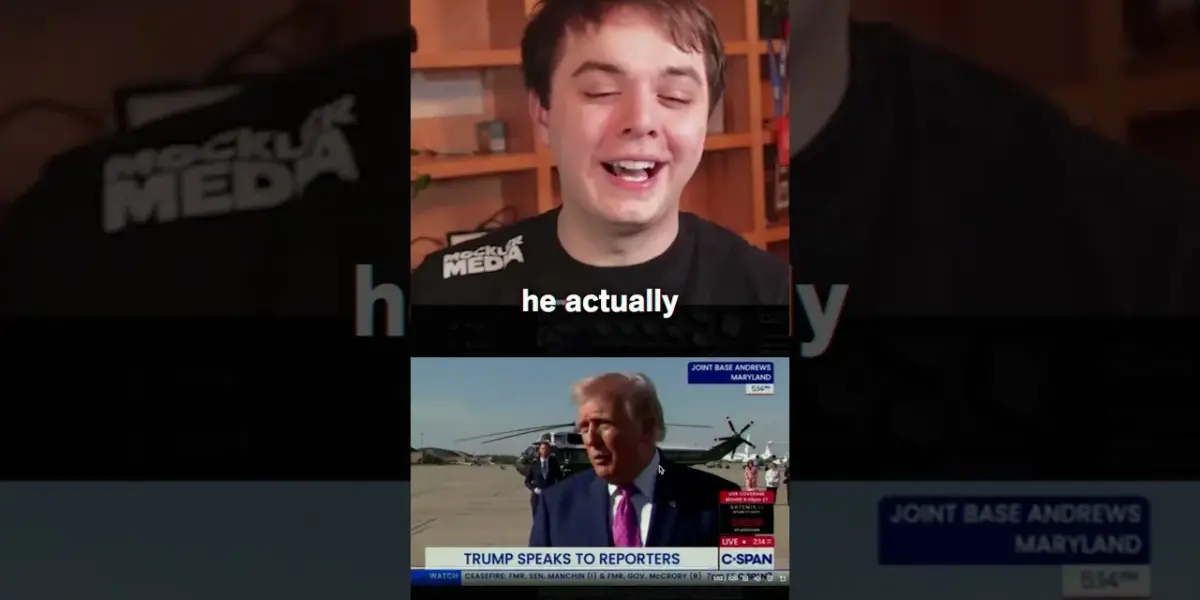
Trump Admits No Backup Plan for Strait Crisis
During a recent discussion, a surprising statement emerged regarding a critical international issue: the Strait of Hormuz. When asked about a backup plan, a prominent figure responded with a striking admission. He stated, “I don’t have a backup plan.” This direct answer suggests a reliance on a single course of action for a potentially volatile situation.
The question about a backup plan arose in the context of the Strait of Hormuz, a vital waterway for global oil transport. The individual’s reaction to the question was notable. His face reportedly showed a look of surprise, as if the question itself was unexpected or unwelcome. This reaction hints at a mindset where contingency planning might not have been a priority.
The response continued, asserting that a backup plan wasn’t needed. The reasoning provided was that the military situation was such that the adversary’s forces were considered defeated and gone. Furthermore, it was suggested that the Strait would open up automatically. The explanation was that if they simply left, the Strait would open on its own because otherwise, no money would be made. This implies an assumption that economic interests would naturally resolve the situation.
Echoes of Past Predictions
This approach, relying on an outcome to happen automatically or miraculously, brings to mind similar past statements. Specifically, it was compared to a previous prediction about COVID-19. At one point, it was said that the virus would “disappear one day like a miracle.” That statement was made several years ago, yet COVID-19 did not vanish.
While the severity of the pandemic has lessened, and it is no longer a ravaging global crisis, COVID-19 still exists. It did not disappear magically as predicted. This historical parallel suggests a pattern of expecting complex problems to resolve themselves without a clear, actionable strategy.
The Reality of the Strait of Hormuz
The Strait of Hormuz is a narrow body of water between Iran and Oman. It is a crucial chokepoint for the world’s oil supply. Roughly 30% of the world’s seaborne oil trade passes through it daily. Any disruption here can have immediate and significant global economic consequences.
The idea that the Strait would simply open up automatically if a certain course of action was taken, or not taken, is a bold claim. It suggests a belief that economic pressures alone would force its reopening. However, geopolitical situations are often more complex. They involve political will, military readiness, and unpredictable actors.
The assertion that the military is defeated and gone also warrants scrutiny. Military situations can change rapidly. Assuming a complete and permanent defeat of opposing forces can be a dangerous oversimplification. The history of international relations is filled with examples where perceived victories were temporary, or where underestimated adversaries regrouped.
Why This Matters
The admission of having no backup plan for a situation as critical as the Strait of Hormuz is significant. It raises questions about preparedness and risk management in foreign policy. When dealing with potential international crises, having multiple contingency plans is a standard practice for security and stability.
The reliance on an automatic resolution, similar to the COVID-19 prediction, could be a risky strategy. It suggests a hope that problems will solve themselves rather than a concrete plan to address them. Such an approach might leave policymakers vulnerable if events do not unfold as expected.
The Strait of Hormuz is not just a geographical location; it’s a symbol of global economic vulnerability. Any instability there affects energy prices worldwide, impacting everything from the cost of gasoline to the price of goods. Therefore, how this situation is managed is of direct concern to economies and individuals across the globe.
Implications and Future Outlook
The lack of a backup plan might imply a confidence in a specific strategy’s success, or perhaps an underestimation of the potential for complications. If the primary plan fails, or if unforeseen events occur, the absence of alternatives could lead to a reactive and potentially chaotic response.
This situation highlights a broader trend in political discourse. Sometimes, bold pronouncements are made without the detailed, practical strategies to back them up. The focus can be on the desired outcome rather than the methodical steps needed to achieve it, especially when dealing with complex international relations.
Looking ahead, the situation in the Strait of Hormuz will likely remain a point of geopolitical focus. The effectiveness of any strategy, planned or unplanned, will be tested by real-world events. The world will be watching to see if the Strait opens automatically, or if a more deliberate and prepared approach is eventually required.
The comparison to the COVID-19 prediction serves as a caution. Miraculous disappearances are rare in complex global affairs. Whether it’s a pandemic or a strategic waterway, proactive planning and adaptable strategies are usually more reliable than wishful thinking. The challenge lies in translating intentions into effective actions, especially when the stakes are so high.
Source: Trump: “No Backup Plan” for Strait Crisis #politics #fyp #new (YouTube)

Related Articles
Moon Missions Reignite Space Race Ambitions
The Artemis II mission has shifted focus back to the Moon, revealing new geological insights and boosting confidence in lunar hardware. This renewed emphasis signals a potential new era of sustained lunar presence, moving beyond earlier Mars-focused ambitions and echoing the historical space race.

Trump’s Iran Plan: Empty Promises or Strategic Gamble?
Donald Trump's recent statements on Iran's control of the Strait of Hormuz are being criticized for lacking concrete plans and historical understanding. Critics argue his claims of easy solutions ignore the complex reality of U.S.-Iran relations and the IRGC's significant influence.
Trump Threatens Iran: ‘Loading Up Ships’ for Escalation
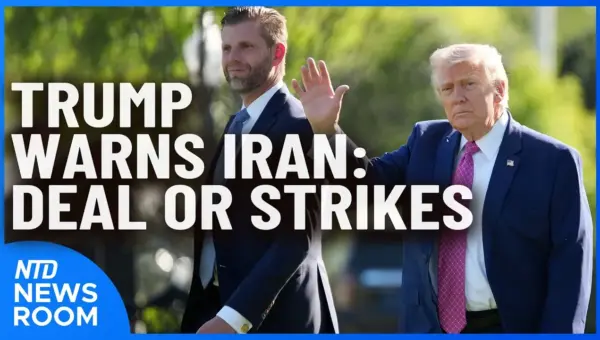
President Trump is sending a strong warning to Iran ahead of high-level talks in Pakistan, threatening further military action if negotiations fail. The US is preparing for potential escalation while also extending an 'open hand' for diplomacy.