Moon Missions Reignite Space Race Ambitions
The Artemis II mission has shifted focus back to the Moon, revealing new geological insights and boosting confidence in lunar hardware. This renewed emphasis signals a potential new era of sustained lunar presence, moving beyond earlier Mars-focused ambitions and echoing the historical space race.

Moon Missions Reignite Space Race Ambitions
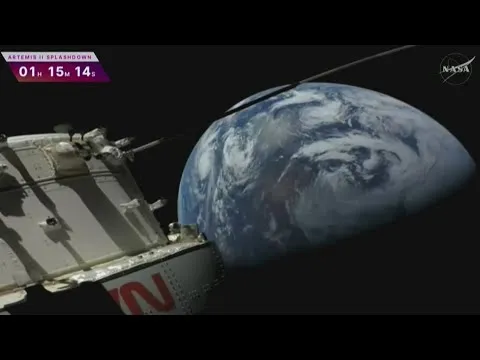
Recent observations from the Artemis II mission have highlighted a renewed focus on lunar exploration, shifting attention away from Mars and signaling a potential new era in space. This historic mission, which sent astronauts around the Moon, provided valuable insights into both the lunar surface and the capabilities of our spacecraft.
New Lunar Discoveries Emerge
During the mission, scientists were surprised to observe up to six impact flashes on the Moon’s surface during an eclipse. This finding offers a tantalizing clue for future geological studies. More significantly, the astronauts spent hours observing the Moon’s geology with their own eyes. It has been over 54 years since humans last walked on the Moon, and many of the areas viewed by the Artemis II crew had never been seen directly before. We have only studied these places through images and data from orbiting spacecraft. Having humans observe the Moon directly provides a unique and unparalleled perspective. It’s like seeing a picture of a famous painting versus seeing the actual artwork in person; the experience is vastly different. Astronauts can notice subtle color variations and textures that might be missed by cameras.
Hardware Confidence Grows
For former test pilots and engineers, a key takeaway from Artemis II was the performance of the spacecraft’s hardware. This mission was designed as a crucial test flight for the entire system. The success of the mission has built confidence in our ability to establish a permanent human presence on the Moon. This is seen as a vital step before eventually setting our sights on Mars. It’s important to note the orientation of the crew during re-entry: they faced the heat shield. While perhaps not a preferred orientation for fighter pilots, it’s a necessary reality for flying in a capsule.
Mars vs. Moon: A Strategic Pivot
There has been a noticeable shift in emphasis regarding space exploration goals. While the focus was heavily on Mars exploration in recent months, NASA is now placing a greater emphasis on the Moon. The new NASA Administrator has made it clear that the agency is concentrating on the Moon. The plan is to build an outpost or base on the Moon. This suggests a strategy to return to the Moon and establish a lasting presence there, a goal that could occupy humanity for the next couple of decades. This return to the Moon is seen as a stepping stone for future, more ambitious missions.
Historical Echoes and Future Visions
The renewed push for lunar exploration echoes the spirit of the original space race. For those who remember the Apollo missions, like the panelists who were serving in Vietnam when Apollo 11 landed, the current advancements are remarkable. The ability to watch live feeds and hear astronauts describe their experiences in real-time represents a significant leap in how we connect with space exploration. This accessible approach allows more people to witness and engage with these historic moments. The question now is how to maintain this momentum beyond the initial excitement. The challenge is not just the technical aspects of space travel, but also sustaining public interest and political support, ensuring the program continues at full speed.
Global Impact
The renewed focus on the Moon has significant geopolitical implications. As major spacefaring nations like the United States, China, and others advance their lunar ambitions, competition for resources and strategic positioning on the Moon could intensify. Establishing a permanent presence could lead to new international agreements and potential disputes over lunar territory and resources. This shift also has economic consequences, driving innovation in technology and materials science, and potentially opening new markets for space-related industries. The accessibility of information and live feeds from missions like Artemis II also fosters global interest and collaboration in space, inspiring future generations of scientists and explorers worldwide.
Why This Reshapes the World Order
The current emphasis on lunar bases and sustained presence signifies a move beyond the flags-and-footprints era of the original space race. It suggests a long-term vision for human expansion beyond Earth, potentially leading to the Moon becoming a hub for further exploration, scientific research, and even resource extraction. This could fundamentally alter the global balance of power, with nations that establish a strong foothold on the Moon gaining significant strategic and economic advantages. The development of new technologies required for lunar habitation and resource utilization could also have widespread applications on Earth, further integrating space with terrestrial economies and societies. The Moon, once a distant symbol of human achievement, may soon become a tangible frontier for international cooperation and competition.
Source: What we learned from Artemis II mission: Panel | The Hill (YouTube)

Related Articles


Trump’s Iran Plan: Empty Promises or Strategic Gamble?
Donald Trump's recent statements on Iran's control of the Strait of Hormuz are being criticized for lacking concrete plans and historical understanding. Critics argue his claims of easy solutions ignore the complex reality of U.S.-Iran relations and the IRGC's significant influence.


Artemis 2 Crew Captures Stunning Earth Views from Moon Orbit
The Artemis 2 mission has captivated the world with stunning images of Earth from lunar orbit and record-breaking distances. Meanwhile, proposed NASA budget cuts, new insights from the James Webb Telescope, and novel approaches to exploring Mercury highlight the dynamic nature of space exploration.


US Energy Exports Undermine Foes, Boost Jobs
U.S. energy exports are a potent geopolitical tool, bolstering allies and undermining adversaries like Russia, according to House Majority Leader Steve Scalise. Increased domestic production, particularly from the Gulf of Mexico, is creating jobs and attracting billions in private investment.