NASA Nears Moon Return Milestone
NASA's Johnson Space Center is on high alert for the safe return of the Artemis II crew from lunar orbit. Director Vanessa Wyche highlighted the mission's personal significance and the extensive global effort involved in ensuring a successful splashdown. This critical test flight paves the way for future lunar exploration.


NASA Nears Moon Return Milestone
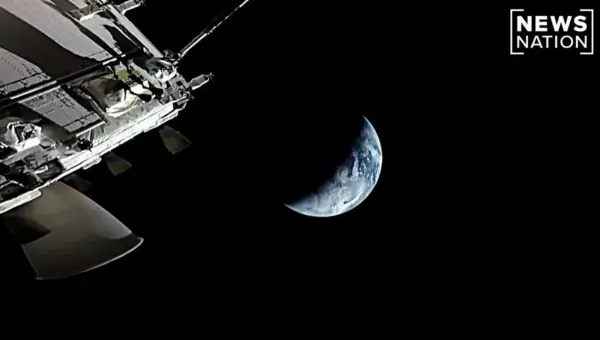
The Johnson Space Center (JSC) in Houston is buzzing with anticipation as NASA prepares for the return of the Artemis II crew from their historic mission around the Moon. For the past ten days, astronauts have been in deep space, a remarkable feat managed by the dedicated teams at JSC. This mission marks a significant step in America’s return to lunar exploration, with JSC playing a central role in ensuring astronaut safety and mission success.
A Deeply Personal Mission
Director of the Johnson Space Center, Vanessa Wyche, spoke about the “magical” atmosphere and the intense focus on bringing the four Artemis II astronauts home safely. She described a profound personal connection to the crew, having met with them before their launch and monitored their progress from launch control. Wyche emphasized the importance of the mission’s success not just for NASA, but for the families waiting on Earth.
“We had astronauts on board the International Space Station in lower Earth orbit,” Wyche explained. “And then we have a crew that is coming back from the Moon. So they were in deep space. We had humans off the planet in two different locations, different spacecraft. It has been beyond my wildest dreams of phenomenal.”
The Critical Splashdown
The final moments of the Artemis II mission involve re-entry into Earth’s atmosphere at speeds nearing 25,000 miles per hour. This critical phase requires precise planning and execution. Wyche will be in mission control, waiting for the parachutes to deploy and the Orion capsule to splash down in the ocean. Only then, when the recovery teams have secured the astronauts, will she be able to “breathe again.”
“Tonight is the big night and we have to make sure that everything goes perfectly so that they can get home,” Wyche stated. “We have trained for this. We have planned for this. Our teams all around the globe are ready.” The operation involves a global network of satellites, planes, and naval assets, including the U.S. Navy, to ensure a swift and safe recovery.
Technological Hurdles and Confidence
While the mission has been largely successful, NASA has faced and overcome challenges. Wyche mentioned “anomalies” and issues that the team worked through together, highlighting the resilience of the space agency. One specific point of public interest has been the Orion spacecraft’s heat shield.
“The one thing that people keep talking about, especially today, the heat shield,” Wyche noted. NASA has conducted extensive testing on the heat shield, and changes in the mission’s trajectory are expected to enhance its performance during re-entry. Wyche expressed strong confidence in the shield’s ability to protect the crew.
A Global Endeavor
The success of Artemis II is not just a NASA achievement but a testament to international cooperation and public support. Wyche expressed deep gratitude for the prayers, love, and encouragement from around the world, stating that it provides a significant boost to the team. The families of the astronauts will be present in mission control, sharing in the tense anticipation and the eventual celebration.
“We’re laser focused and we are always cool, calm, and collected, but we are all human,” Wyche said about the atmosphere in mission control. “So we’re all feeling the same excitement that everyone else is.” The mission’s successful completion will be a moment of profound relief and pride for the entire team, marking a crucial step towards future lunar missions.
Global Impact
The Artemis II mission, even as a test flight, signifies a renewed commitment by the United States to human space exploration beyond low Earth orbit. Its success bolsters NASA’s capabilities and paves the way for the Artemis III mission, which aims to land astronauts, including the first woman, on the Moon. This return to lunar surface operations is not just about scientific discovery; it’s about establishing a sustained human presence and developing technologies that could eventually support missions to Mars. The collaborative nature of space exploration, involving international partners and commercial companies, sets a precedent for future global scientific endeavors.
Historical Context
This moment echoes the early days of space exploration, such as the Apollo program, which captivated the world. Like the Mercury and Gemini programs before it, Artemis is a systematic approach to developing the technology and experience needed for more ambitious goals. The challenges faced, from engineering complex spacecraft like Orion to ensuring astronaut safety during re-entry, are familiar hurdles that past space agencies have overcome. The current mission builds upon decades of accumulated knowledge and technological advancements in rocketry, life support, and navigation.
Future Scenarios
A successful Artemis II splashdown will undoubtedly energize the Artemis program, increasing confidence for the more complex Artemis III mission. The primary future scenario is a continued, steady progression towards lunar landings and the establishment of a lunar base. However, potential challenges remain, including budget constraints, further technical issues with spacecraft components, or shifts in political priorities. A less likely but possible scenario involves significant delays or setbacks, which could prompt a reassessment of timelines and strategies. For now, the focus remains on celebrating this critical return and preparing for the next steps in humanity’s journey back to the Moon.
Source: 'We're laser focused' on return of Artemis II crew: Johnson Space Center director | NewsNation (YouTube)

Related Articles


Navy Secures Artemis Mission’s Risky Return
The U.S. Navy is playing a vital role in the safe return of NASA's Artemis astronauts. The splashdown in the Pacific Ocean marks the final, dangerous phase of the mission. This operation highlights the complex coordination between military and space agencies.

NASA Tests Heat Shield for Crewed Artemis Return
NASA is conducting extensive tests on the Orion spacecraft's heat shield for the upcoming Artemis II mission. This shield is critical for protecting astronauts from extreme temperatures during Earth re-entry. Following observations from Artemis I, NASA has performed significant testing and expressed confidence in the system's safety.


Artemis II Crew Faces Risky Reentry After Historic Moon Mission
The Artemis II crew is set to splashdown off the coast of California after a historic mission to the far side of the Moon. They face a perilous reentry into Earth's atmosphere, with the spacecraft's heat shield under intense scrutiny. This mission paves the way for future lunar and Mars exploration.