Jesus’ Resurrection: Faith Meets History in Holy Land
Exploring the historical and archaeological evidence surrounding Jesus' resurrection in Jerusalem. Experts weigh theories of burial, the empty tomb, and post-crucifixion appearances, contrasting faith-based beliefs with skeptical explanations.

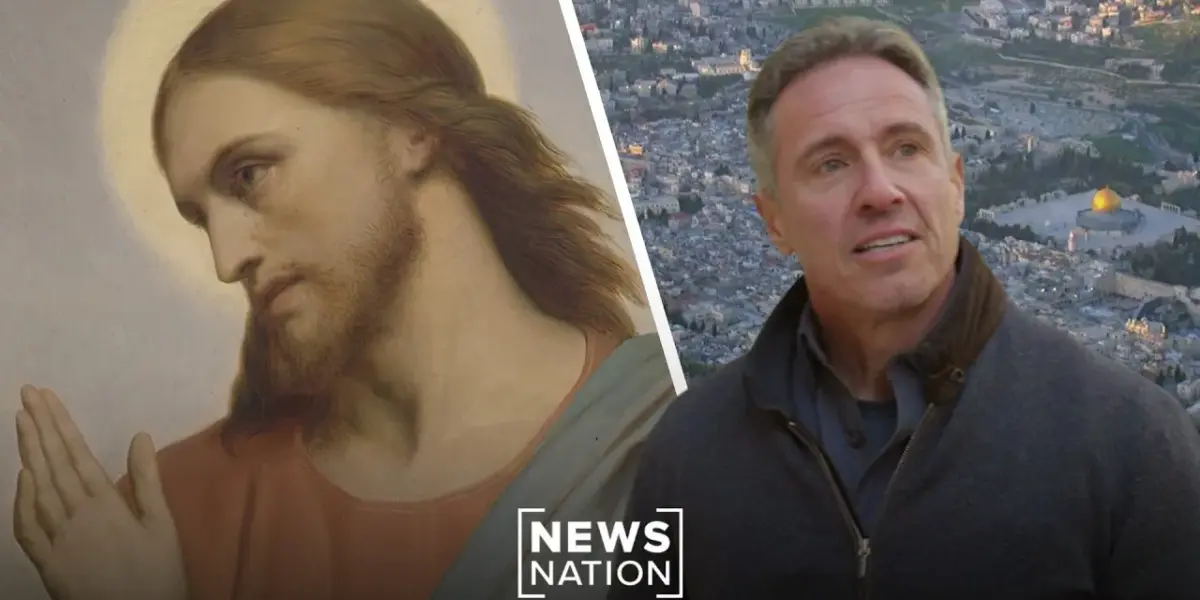
Jesus’ Resurrection: Faith Meets History in Holy Land
The story of Jesus’ death and resurrection is one of history’s most powerful and debated events. For centuries, people have traveled to Jerusalem, the “holy city,” to explore the places where these events are believed to have happened. This journey involves sifting through ancient texts, archaeological finds, and deeply held beliefs to understand what truly occurred and why it continues to matter so much.
Jerusalem: A City of Sacred Sites
Jerusalem is a city sacred to Christians, Jews, and Muslims. Its ancient walls have been rebuilt many times, but the truth of Jesus’ story lies beneath layers of history and interpretation. Finding this truth requires a guide, and experts like Reverend Dr. Petra Helt, who teaches early Christianity at the Hebrew University, help explore these complex questions.
The Core Question: Fact or Faith?
Traditional Christians believe the Easter miracle is a historical fact, the foundation of their faith. If Jesus did not rise from the dead, his claims to divinity would be false, and his followers would have no rational basis for their belief. Scholars like Michael Lacona and Dale Allison Jr. have written extensively on the resurrection, but they offer different conclusions about whether it can be proven as historical fact.
Evidence from the Past
The earliest written accounts of the resurrection appear decades after Jesus’ death, in the Apostle Paul’s letters. While we don’t have direct interviews from that time, non-Christian historians like Josephus and Tacitus confirm Jesus existed, had followers, and was crucified. Archaeological evidence also supports the existence of key figures like Caiaphas, the high priest, and Pontius Pilate, the Roman official who ordered the crucifixion. These finds show that the people involved in the story were real historical figures.
The Via Dolorosa and the Holy Sepulchre
The Via Dolorosa, or “Way of Sorrow,” is a traditional path in Jerusalem where Jesus is believed to have carried his cross. Along this route, sites like an indent in the stone, worn smooth by countless hands, evoke deep emotion and connection for believers. While these places are powerful for faith, their exact historical accuracy is debated. Most scholars believe Jesus likely walked a different path to Golgotha, the site of crucifixion.
The Church of the Holy Sepulchre is a central site for Christians, believed to be where Jesus was crucified, buried, and resurrected. Father Marwan Das, a Franciscan monk, explains that understanding the geography, archaeology, and history of the area helps confirm its importance. Inside the church, a spot under an altar is believed to be where the cross was placed. While physical evidence like this helps connect people to their faith, the events that followed remain a subject of intense discussion.
The Burial and the Empty Tomb
According to tradition, Jesus’ body was placed in a tomb belonging to Joseph of Arimathea. However, some scholars question whether crucified individuals were typically given proper burials. Evidence, such as an ossuary (bone box) found with a nail still in the heelbone of a crucified man, suggests that some crucified criminals did receive burials. This supports the idea that Jesus, a prominent figure, would have been buried by his followers.
The question then becomes: was this tomb the one mentioned in the Gospels? The proximity of the Holy Sepulchre to other first-century Jewish tombs and the fact that Emperor Hadrian later built a pagan temple there to suppress Christianity lend weight to its location. However, another theory points to a tomb discovered in the Talpiot neighborhood, containing ossuaries with names like “Jesus son of Joseph” and “Judah son of Jesus.” This theory, which suggests Jesus may have married and had a family, has been largely dismissed by scholars due to commonality of names and geographical improbability of the family moving from Galilee.
Skeptical Theories for the Empty Tomb
Many skeptical theories attempt to explain the empty tomb without resorting to resurrection. One idea is that Jesus’ body was stolen by sorcerers for magical purposes, as ancient texts show a demand for body parts from those who died violently. Another theory, even mentioned in the Gospel of Matthew, suggests the disciples stole the body to fake a resurrection. However, the presence of guards at the tomb, as described in Matthew, would have made such a theft difficult.
An earthquake is another proposed explanation for the stone being rolled away, as described in Matthew. However, historians often view such dramatic events in biblical texts as “special effects” added to enhance the narrative rather than literal historical occurrences. The core agreement across the Gospels is that Jesus was crucified, died, buried, and rose again.
Could Jesus Have Survived?
Some theories suggest Jesus might not have died on the cross at all. While cases of people being mistakenly declared dead exist, the brutal process of scourging and crucifixion, followed by a spear wound, makes survival highly improbable. Even if he had survived, his condition would likely not have convinced anyone he had been resurrected.
The Garden Tomb and Accelerated Decomposition
Another location, the Garden Tomb, is favored by some Protestants as the site of crucifixion and burial. Its skull-like rock face and ancient tomb have drawn many believers. However, academics generally agree this site was not used for burials in the first century.
An exotic theory involves “accelerated decomposition,” seen in traditions like Tibetan monks creating “rainbow bodies.” This suggests a body might rapidly disappear, leaving little trace. However, there is no historical evidence for such rapid decay occurring in the context of first-century Judea.
The Strongest Evidence: Appearances
Conservative scholars like Professor Lacona argue that the strongest evidence for the resurrection lies in the appearances of Jesus after his death. The Gospels describe Jesus appearing to Mary Magdalene, the two disciples on the road to Emmaus, and his disciples in a locked room. The fact that women, who held a low social status, were the first witnesses is seen by some as a sign of historical accuracy, as they wouldn’t be chosen to invent such a story.
The appearances themselves are puzzling. Disciples did not always recognize Jesus immediately, leading some to suggest hallucinations. However, studies show that group hallucinations are rare and unlikely to produce such consistent accounts. The nature of Jesus’ appearances, including his ability to enter locked rooms, suggests a transformed, possibly bodily, resurrection, not just a spirit or hallucination.
Ultimately, while many historical and skeptical explanations exist for the empty tomb, the core claims of Jesus’ crucifixion, burial, and resurrection remain central to Christian faith. The debate continues, blending historical inquiry with personal belief.
Source: Chris Cuomo investigates the mystery of Jesus’ resurrection (YouTube)

Related Articles


Faith Surges: Americans Reconnect with Religion
Americans across all age groups are experiencing a spiritual revival, turning back to faith and religious institutions. This trend is driven by a search for community, authenticity, and meaning, often fueled by disillusionment with politics. Young people, particularly Gen Z, are at the forefront of this resurgence, seeking connection to enduring traditions and values.


Trump’s Easter Threat: War and Faith Collide
Donald Trump's Easter Sunday announcement, filled with threats of war and a call to "open the straight, you crazy bastards, or you'll be living in hell," starkly contrasted with the holiday's message of peace. Even allies questioned the jarring rhetoric. This incident highlights the complex relationship between faith, politics, and leadership.

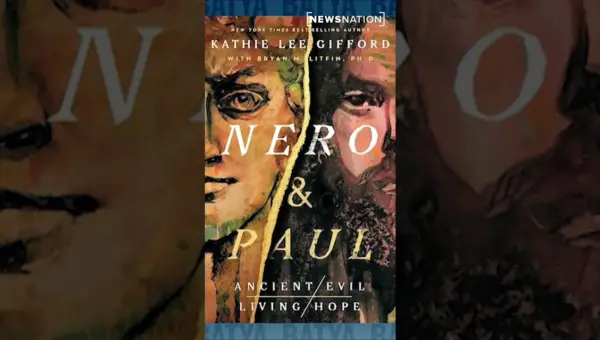
Ancient Rome’s Power Clash Echoes in Modern Hope
Kathie Lee Gifford's new book, "Nero and Paul," contrasts the tyrannical Emperor Nero with the Apostle Paul. It explores how Paul's message of grace offered hope and ultimately influenced the Roman world. Gifford believes this ancient story still resonates with people seeking meaning today.