Germany Weighs Hungary’s Future as Orban Faces Election
Germany's government officially remains neutral on Hungary's upcoming elections, but privately hopes for Prime Minister Viktor Orban's defeat. Orban's obstructionist stance within the EU, particularly regarding aid to Ukraine, has strained relations with Berlin. Experts suggest a change in Budapest could bring a more pragmatic partner to the EU.

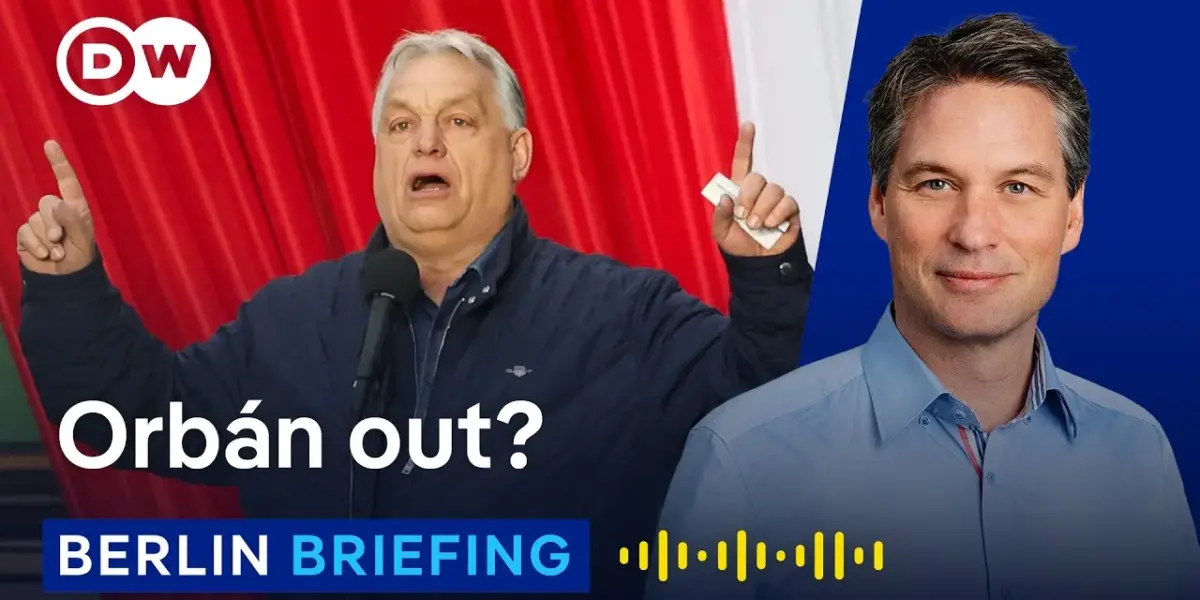
Germany Secretly Hopes Orban Loses Election
On April 10, 2026, just two days before crucial elections in Hungary, the German government maintained an official stance of neutrality regarding the outcome. However, behind closed doors, there’s a strong undercurrent of hope in Berlin that Prime Minister Viktor Orban might be on the losing side. Orban, who has been a vocal critic and obstacle within the European Union for 16 years, recently blocked a vital 90 billion euro loan package for Ukraine, a move opposed by most other EU member states. This action, among others, has strained relations between Germany and Hungary, fueling speculation about Germany’s quiet wish for a change in Budapest.
Kai Olaf Lang, an expert at the German Institute for International and Security Affairs, suggested that while official government statements emphasize respecting democratic outcomes, the reality is more complex. “Every professional government would not like to be accused of interfering in elections by showing preferences,” Lang explained. “But then there’s the other layer… if Victor Orban had to leave, this would at least open the opportunity for a more flexible, a more pragmatic partner in Budapest.” He added that many in Germany would feel a “great relief” with a change of government, especially given that the ruling parties in Germany are not aligned with Orban’s political family.
Hungarian Perspective: Divided Society, EU Ambitions
Dora Deri, head of the Hungarian service at the podcast’s parent organization, described Hungarian society as deeply polarized. She noted that while Orban frames his opposition as being against “Brussels bureaucrats” rather than the European Union itself, EU support remains strong among the Hungarian people. “The EU and the European Union is very important for the Hungarian people and they want to be part of it,” Deri stated. Hungarians value European ideals and do not wish to leave the bloc.
Regarding Germany’s role, Deri observed that Germany itself has not been a major focus in the Hungarian election campaign. The current German government, under Chancellor Olaf Scholz, has maintained a relatively neutral public stance. However, a meeting between Orban’s challenger, Peter Magyar, and German Chancellor Scholz at the Munich Security Conference was seen as significant. This meeting provided Magyar, who lacks Orban’s international backing from figures like Marine Le Pen or Matteo Salvini, with a crucial show of support and legitimacy.
Orban’s Stance on Germany: A Clash of Values
Lang elaborated on Orban’s complex relationship with Germany, suggesting the Hungarian leader favors a “traditional Germany.” Orban has previously criticized Germany’s immigration policies and its perceived shift towards liberal and green values. “He wants to have the kind of the traditional Germany, built on a strong economy and a Germany which should not go liberal and green in a way,” Lang said. This critique, coupled with Germany’s rule of law and migration policy concerns, creates a sense of frustration in the bilateral relationship.
Deri added that Orban’s government heavily uses criticism of Germany’s multiculturalism and immigration policies as a propaganda tool. However, she also highlighted Orban’s historical ties to German politicians and his government’s strong economic links, particularly with the German auto industry. Despite disagreements, there’s an acknowledgment of deep-seated economic bonds and a historical “founding myth” of German-Hungarian relations dating back to 1989.
The Challenger: Peter Magyar’s Approach
Peter Magyar’s political platform, particularly his foreign policy stance, signals a clear desire to reset relations with the EU, Germany, and Poland. His designated foreign minister, Anita Orbán (no relation to Viktor Orban), has explicitly stated a goal to re-establish ties with these key European partners. “They really want to reset the relationships with the European Union. So with Brussels, with Berlin, with Germany and with Warsaw,” Deri explained.
Magyar’s core message is centered on Hungary’s Western European identity, a departure from Orban’s cultivation of ties with Russia and China. He has also leveraged scandals involving foreign-invested battery factories, which have faced accusations of environmental pollution, to criticize Orban’s economic policies. This focus on reorienting Hungary towards the West marks a significant potential shift if his party gains power.
The Ukraine War: A Major Point of Contention
The ongoing war in Ukraine remains the most divisive issue between Hungary and Germany, and indeed, across the EU. Orban’s vetoes on crucial aid packages and Ukraine’s EU accession talks have significantly complicated the bloc’s ability to act cohesively during a critical time. Germany, under Chancellor Scholz, has voiced strong displeasure with Hungary’s obstructionism, viewing it as a major impediment to European unity and security.
Lang emphasized that while other issues like migration and rule of law have caused disputes, the Ukraine dossier is particularly damaging. Hungary’s stance is seen as “heavily complicating the capability to act of the European Union,” especially when the bloc faces pressure from various global actors. This fundamental disagreement over security policy and Russia poses a significant challenge to any future German-Hungarian relations, regardless of who leads Hungary.
US Influence and Election Interference Claims
The visit of U.S. Vice President JD Vance, who openly supported Orban, highlighted the international dimension of the election. Vance urged Hungarians to “stand with Victor Orban” against “bureaucrats in Brussels,” framing the choice as one of sovereignty and Western civilization. This rhetoric mirrors Orban’s own narrative, drawing parallels to Donald Trump’s support for national conservative leaders.
However, Deri suggested that such international endorsements, while theatrical, may not sway undecided voters. “It’s something which is already there for many years in Hungary,” she noted, referring to the existing support for Orban within his base. The German government, through spokesperson Sebastian Hille, indirectly countered Vance’s claims of EU interference by pointing out the timing of Vance’s visit itself as a form of external influence.
Lang agreed that there is a clear “special relationship” between Orban and the MAGA movement in the United States, with Hungary seen by some in the US as a model for conservative governance. Yet, he echoed Deri’s sentiment that such visits are unlikely to be decisive. Magyar, in contrast, has been cautious about accepting international endorsements that could be framed as foreign interference, emphasizing that Hungarian decisions must be made in Hungary.
Potential Outcomes and Future Challenges
Looking ahead, the election results could lead to significant shifts, regardless of the winner. If Orban wins, he faces a stronger opposition in parliament than ever before, promising intense political battles. If Magyar’s party prevails, they will need to navigate the complex task of reforming Hungary’s institutions, which Deri described as a “captured state” with controlled media and public bodies.
Lang predicted that a Magyar victory would involve a push to normalize relations with the EU, likely through rule of law reforms to unlock frozen funds. However, securing a constitutional majority for such changes could prove difficult. While Magyar would likely lift vetoes on Ukraine, he might not drastically alter Hungary’s stance on migration or other European policy issues, suggesting a degree of policy continuity.
Ultimately, both potential outcomes present formidable challenges. Governing Hungary, especially in times of economic strain affecting healthcare and education, will be difficult. The influence of external actors, the deep societal divisions, and the entrenched political system mean that the real work for any Hungarian government will begin long after the votes are counted.
Source: Is Berlin betting against Orbán? | Berlin Briefing Podcast (YouTube)

Related Articles

Buttigieg Spars With MAGA Host Over Iran War Claims
Transportation Secretary Pete Buttigieg and a MAGA host clashed over Iran's nuclear program and the justification for military action. The debate highlighted differing views on presidential credibility and American strength.

Trump’s Iran War: A Costly Disaster at Home and Abroad
Critics are calling the recent conflict with Iran an "unmitigated disaster," highlighting a failure to achieve regime change and significant costs at home. The war has resulted in American lives lost, billions spent, and rising gas prices, raising serious questions about its worth.

Netanyahu Pushed for Iran Attack; Only Trump Said Yes
John Kerry confirmed that Israeli Prime Minister Benjamin Netanyahu proposed attacking Iran to multiple U.S. presidents. While Barack Obama, George W. Bush, and Joe Biden refused, Donald Trump was the only one who agreed to the plan. This highlights significant differences in foreign policy approaches among U.S. leaders regarding Iran.