Trump’s Iran Policy Strengthened Hardliners, Experts Say
Experts argue that former President Trump's "maximum pressure" policy against Iran inadvertently strengthened hardliners and made the country more determined to pursue nuclear capabilities. The analysis highlights missed diplomatic opportunities and the unintended consequences of military action, suggesting a need for more nuanced strategies.

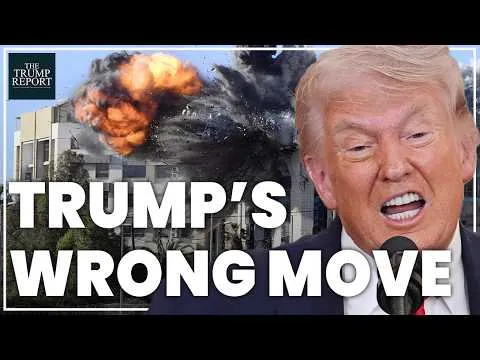
Trump’s Iran Policy Strengthened Hardliners, Experts Say
When former President Donald Trump took office, his administration pursued a policy of “maximum pressure” against Iran. The goal was to isolate the country and force it to change its behavior, particularly regarding its nuclear program. However, according to Mark Fitzpatrick, a nuclear proliferation expert and former U.S. diplomat, this approach had unintended consequences, making Iran stronger and more resistant to international pressure.
Fitzpatrick, an associate fellow at the International Institute for Strategic Studies, believes that the Trump administration’s approach to negotiations with Iran was flawed from the start. He points to the negotiators themselves, Steve Witko and Jared Kushner, as lacking the necessary experience and understanding of Iran’s position. “They really misunderstood Iran’s position,” Fitzpatrick stated.
Missed Opportunities in Diplomacy
The negotiations were complicated by deeply opposing views between the U.S. and Iran. Fitzpatrick explained that the American team did not fully grasp what Iran was communicating. They also lacked experts who understood nuclear matters and Iran’s history with its nuclear program. This led to a misinterpretation of Iran’s willingness to negotiate. “Other people who have been dealing with Iran thought that Iran was serious about negotiations,” Fitzpatrick noted. He added that Iran’s negotiating style can be challenging for those unfamiliar with it.
A key point of misunderstanding involved Iran’s desire to maintain its right to enrich uranium. While Iran was willing to pause enrichment for a period, this nuance was reportedly lost on the U.S. team. “Whit and Kushner came away with that, thinking that Iran was insisting on maintaining its program,” Fitzpatrick said. This was then conveyed to President Trump, leading him to believe Iran was still pursuing nuclear weapons, even though Iran’s aim was to keep the technology alive for future potential use, not immediate weaponization.
The War’s Unintended Consequences
Fitzpatrick strongly believes the subsequent war with Iran was a mistake. “This war was absolutely the wrong move,” he declared. He argues that the U.S. and its allies gained little from the conflict. Instead, Iran ended up with greater control over the Strait of Hormuz, a vital shipping lane. Furthermore, the war led to a rise of more hard-line leadership within Iran.
The death of the previous Supreme Leader resulted in an even more hard-line successor. Importantly, the previous leader had issued a religious decree, or fatwa, against the production of nuclear weapons. This fatwa no longer applies to the current leadership. Fitzpatrick suggests that the attack has made Iran more determined to maintain its ability to produce nuclear weapons, leading to a firmer stance against the United States.
Controlling Iran’s Nuclear Program
With past deals broken and military action taken, the question remains how to control Iran’s nuclear program. Fitzpatrick sees a possibility for a new agreement. This would involve finding ambiguous language around Iran’s right to enrichment, a point both sides disagree on. “Diplomats can find words that would keep it ambiguous,” he suggested.
Currently, Iran is not enriching uranium, which is a positive sign. Extending this period is key. The main concern is Iran’s stockpile of highly enriched uranium, which could potentially yield enough for several bombs. However, this material is currently buried under rubble from recent attacks. Recovering it would require heavy equipment and would be easily observable by international satellites. This situation, Fitzpatrick believes, prevents Iran from producing a nuclear weapon in the short term.
The Impact of Withdrawing from the Deal
Fitzpatrick highlighted that the near weapons-grade uranium stockpile was built up after President Trump abandoned the 2015 nuclear deal. The original deal had significantly reduced Iran’s stockpile and limited its enrichment levels to 3.67%, suitable for nuclear reactors. When Trump withdrew from the deal, Iran was no longer bound by these restrictions. It then increased its enrichment levels to 20%, and later to 60%, producing enough material for multiple weapons.
The Rise of Hardliners
Despite Trump’s claims of creating a better negotiating environment, the leadership in Iran has become more hard-line. The new Supreme Leader does not adhere to the previous fatwa against nuclear weapons. While specific details about figures like Muhammad Bakr Kalibaf, who appears to be influential, are limited, he is known to be a former Revolutionary Guard commander and a hardliner with some experience in dealing with other countries.
Fitzpatrick acknowledged that negotiating with Iran is difficult, likening it to buying a car without wheels. However, he stressed that in any negotiation with adversaries, trust is built through verification and adherence to agreements. He pointed out that Iran was complying with the 2015 nuclear deal, as confirmed by the International Atomic Energy Agency (IAEA). The U.S. withdrawal, not Iran’s non-compliance, led to the deal’s collapse, creating a valid reason for Iran’s distrust of the U.S.
Iran’s Missile Program and Nuclear Ambitions
The recent war may have degraded Iran’s missile capabilities, with reports suggesting about half of their missiles and launchers were destroyed. However, the extent to which their production capability has been impacted is unclear. While the U.S. may not be directly threatened by Iran’s missiles, Israel faces a significant risk. Missiles are Iran’s primary means of projecting power against adversaries it cannot confront militarily.
Regarding the nuclear program, the path to plutonium production is largely blocked. The focus remains on highly enriched uranium. While key facilities at Natanz and Fordow have been damaged, they may not be completely destroyed. The potential for a new facility at Pickax Mountain, where inspectors have not been present, is a concern. If Iran can recover its buried enriched uranium and process it further, it could move closer to developing a nuclear weapon.
A Path Forward?
Experts estimated that before the recent attacks, Iran could have produced a weapon in about a year. The damage to its facilities may have pushed this timeline back by a couple of years. The process of enriching uranium further, from 20% to 60% or 90%, is more complex but achievable. The buried enriched uranium could even be used to create a dirty bomb, causing panic and widespread concern, though not necessarily a catastrophic disaster.
Despite economic hardship and public discontent, Iran’s government has shown resilience. The recent conflict has, paradoxically, strengthened national cohesion rather than weakening the regime. While the economy remains strained, Iran has a history of enduring sanctions and difficult times.
Best Case Scenario
Fitzpatrick outlined a best-case scenario: Iran ensures free passage through the Strait of Hormuz, its ability to produce nuclear weapons is blocked for an extended period through monitored uranium recovery, and IAEA inspectors have full access to all nuclear facilities. While Iran’s missile program and support for regional proxies remain concerns, a reduction in these capabilities would be a positive development. Ultimately, the goal is to create a future where people in the region do not live under the threat of conflict and extremism.
Why This Matters
The analysis suggests that the Trump administration’s confrontational approach to Iran may have backfired. Instead of achieving its goals, it appears to have empowered hardliners within Iran, increased regional tensions, and potentially pushed Iran closer to nuclear capability in the long run. This underscores the complex nature of international diplomacy and the need for nuanced strategies when dealing with volatile geopolitical situations. The events also highlight the importance of maintaining international agreements and the role of verification in building trust and ensuring global security.
Implications, Trends, and Future Outlook
The situation with Iran remains a critical issue in global security. The trend indicates that hard-line elements within Iran may have been emboldened, making future diplomatic solutions more challenging. The continued development of Iran’s nuclear and missile programs, even if delayed, poses a significant threat to regional stability, particularly for Israel. The future outlook depends on a delicate balance of deterrence, diplomacy, and international cooperation. Any new agreement would need robust verification mechanisms to ensure compliance and rebuild trust.
Historical Context and Background
The current tensions have deep roots, stretching back to the 1979 Iranian Revolution. The U.S. withdrawal from the Joint Comprehensive Plan of Action (JCPOA) in 2018 marked a significant turning point, undoing years of diplomatic effort. The JCPOA, agreed upon in 2015, was designed to prevent Iran from developing nuclear weapons in exchange for sanctions relief. Its collapse has led to a renewed escalation of Iran’s nuclear activities and increased regional instability. The history of U.S.-Iran relations is marked by periods of hostility and limited engagement, making any path toward de-escalation a difficult but necessary undertaking.
Source: Trump has only achieved one thing: Iran is stronger & more hard-line (YouTube)

Related Articles

NATO Allies Urged to Step Up Support for US
Retired Navy SEAL Mike Cirelli urges NATO allies to increase their support for U.S. international efforts, citing delays in crucial operations. NATO's chief acknowledges past slow responses, while Cirelli emphasizes the need for allies to take greater responsibility for global security, especially concerning energy supplies.

UK Offers Iran Negotiation Insight to Aid Trump’s Stalled Deal
The UK is offering its diplomatic expertise to the US to help President Trump navigate complex negotiations with Iran. As talks loom amidst uncertainty and strained UK-US relations, London believes its experience can aid in achieving a settlement and reopening the Strait of Hormuz. Discussions also highlight the UK's defense readiness and its role in regional stability.
US-Iran Talks Falter Amid Hormuz Standoff, Ceasefire Strain
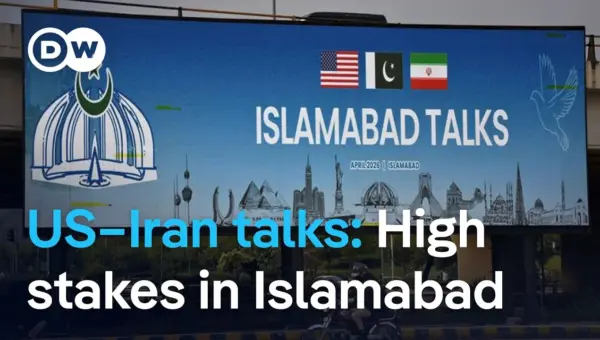
A fragile ceasefire between the US and Iran is under severe strain as tensions rise over the critical Strait of Hormuz. Both nations accuse each other of violating the terms of a recent deal, while international efforts to secure the vital shipping lane intensify. Crucial peace talks are underway in Pakistan, but deep-seated distrust and maximalist demands from both sides cast doubt on the likelihood of a comprehensive agreement.