Iran Halts Strait of Hormuz Traffic Despite Ceasefire
The Strait of Hormuz remains effectively closed to normal traffic despite a recent ceasefire, with Iran reportedly imposing tolls and restricting passage. This continues to disrupt global oil and LNG supplies, leading to significant economic costs. The U.S. military is postured to potentially intervene if diplomatic efforts fail.

Iran Halts Strait of Hormuz Traffic Despite Ceasefire
On April 10th, 2026, the Strait of Hormuz, a vital global shipping lane, remains largely impassable despite a U.S.-backed ceasefire intended to reopen it. This situation raises serious questions about Iran’s commitment to the truce’s core conditions. Maritime data reveals a growing backlog of approximately 3,200 vessels, including 800 tankers and cargo ships, waiting west of the strait. These ships are idling due to uncertainty about safe passage, suggesting Iran may be deliberately restricting traffic.
Ceasefire Terms Ignored
The fragile ceasefire, which began on April 8th, nominally included the reopening of the strait. However, Iran appears to be maintaining selective control, reportedly requiring permission for passage and imposing tolls exceeding $1 million per ship. This practice, likened to mafia extortion, is a significant departure from normal operations. In the 24 hours following the ceasefire, only five ships transited the strait, representing a mere 8.3% of the normal 60-ship daily average. Three vessels were actively transiting at the time of reporting.
Economic Impact and Global Risk
The continued restriction of the Strait of Hormuz has severe economic consequences. An estimated 20% of the world’s oil and 20% of its liquefied natural gas (LNG) are at risk. The daily economic cost has surged to $3.2 billion for oil and $85 billion for LNG. The European Union faces the highest risk, with critical implications for China, India, Japan, and South Korea. The Gulf Cooperation Council states, along with Iraq and Iran itself, are also heavily impacted. Qatar, which relies entirely on Hormuz for its maritime exports, has declared force majeure due to limited alternative LNG infrastructure. Building alternative pipeline routes could take up to three years, a timeline the global economy cannot afford.
Geopolitical Tensions and Internal Iranian Dynamics
The situation highlights a potential internal division within Iran’s Islamic Revolutionary Guard Corps (IRGC). While some factions may favor de-escalation, others appear to be adopting even more hardline stances. Reports suggest that figures like Reza Pahlavi are engaging with Iranian engineers and U.S. technology experts on post-Islamic Republic reconstruction efforts, indicating potential behind-the-scenes political maneuvering. Meanwhile, former President Trump has publicly criticized Iran’s actions, stating that the current situation violates the agreement and warning against charging fees to tankers. He has also posted on Truth Social, demanding Iran cease any fees imposed on vessels.
Potential U.S. Military Response
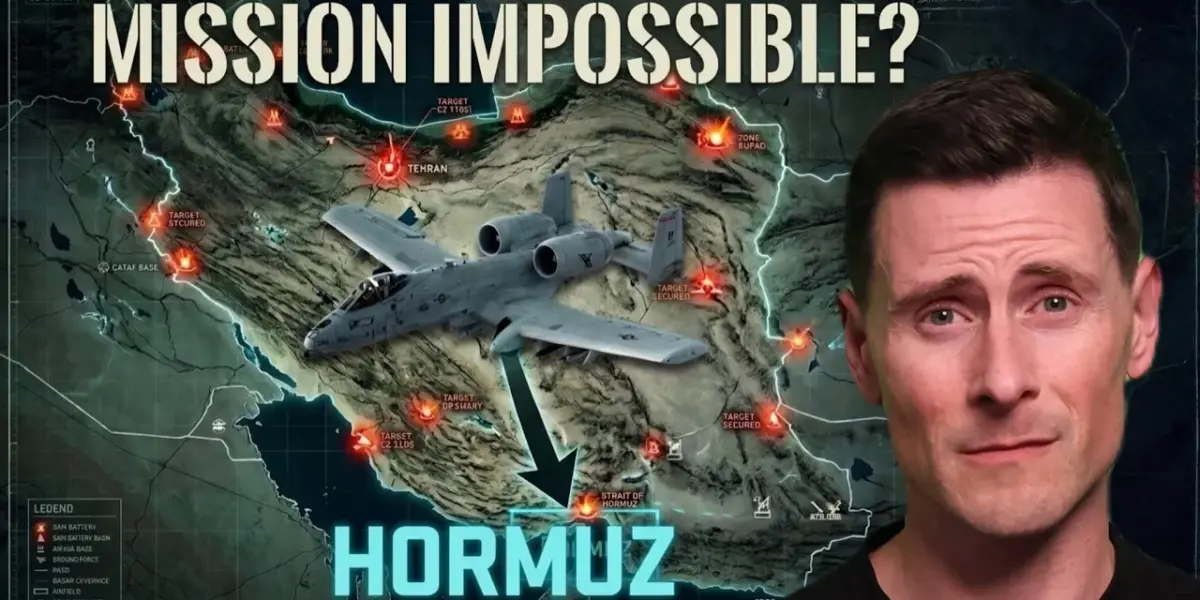
If diplomatic efforts fail, the U.S. military possesses the capability to forcibly reopen the Strait of Hormuz. This would likely involve a multi-faceted operation. Two U.S. supercarrier strike groups, the USS Abraham Lincoln and the USS Gerald R. Ford, are positioned in the region, providing significant air power. Naval escorts, including destroyers and combat ships, would protect commercial tankers. Mine countermeasures would be critical, utilizing specialized helicopters and vessels to sweep for naval mines and coastal missile threats. F-15E Strike Eagles, A-10 Warthogs, and advanced drones would target Iranian coastal missile sites and fast-attack craft, which Iran would likely prioritize in any conflict. Marine Expeditionary Units, including reconnaissance Marines, could also play a key role in seizing strategic islands like Qeshm and Lavan to gain leverage.
Strategic Implications
The ongoing standoff at the Strait of Hormuz underscores the strategic importance of this narrow waterway. It serves as a critical chokepoint for global energy supplies, and any disruption has immediate and far-reaching economic and geopolitical consequences. The U.S. military’s readiness to intervene highlights its commitment to maintaining freedom of navigation and global economic stability. The potential for a military operation, while costly in terms of potential losses, demonstrates the lengths to which the U.S. might go to ensure the unimpeded flow of oil and gas. The situation also reflects the complex geopolitical dynamics involving Iran, its internal factions, and international powers, with significant implications for regional security and global trade.
Source: The INSANE U.S. Military Operation to Open the Strait of Hormuz (YouTube)

Related Articles

Iran Nuclear Talks Heat Up Amid Ceasefire Concerns
The White House is clarifying its stance on Iran's nuclear program, emphasizing that enrichment is off the table. Meanwhile, a high-level delegation is heading to Pakistan for critical talks amid reports of continued hostilities and the alleged closure of the Strait of Hormuz, testing a fragile ceasefire.

US-Iran Talks Falter Amid Hormuz Standoff, Ceasefire Strain
A fragile ceasefire between the US and Iran is under severe strain as tensions rise over the critical Strait of Hormuz. Both nations accuse each other of violating the terms of a recent deal, while international efforts to secure the vital shipping lane intensify. Crucial peace talks are underway in Pakistan, but deep-seated distrust and maximalist demands from both sides cast doubt on the likelihood of a comprehensive agreement.


Netanyahu Pushed for Iran Attack; Only Trump Said Yes
John Kerry confirmed that Israeli Prime Minister Benjamin Netanyahu proposed attacking Iran to multiple U.S. presidents. While Barack Obama, George W. Bush, and Joe Biden refused, Donald Trump was the only one who agreed to the plan. This highlights significant differences in foreign policy approaches among U.S. leaders regarding Iran.