Moon Race Reignites: US, China Vie for Lunar Dominance
The US and China are engaged in a new space race, aiming for lunar dominance. NASA's Artemis program and China's Chang'e missions are key to this competition, driven by technological prowess and resource ambitions. This renewed focus could reshape global power dynamics and future space exploration.


Moon Race Reignites: US, China Vie for Lunar Dominance
The United States and China are locked in a new, high-stakes race to explore the Moon. This competition is not just about planting flags; it’s about securing resources, demonstrating technological power, and shaping the future of space exploration. The Artemis program, led by NASA, aims to return humans to the Moon and establish a long-term presence. Meanwhile, China’s ambitious lunar program is making rapid progress, raising questions about global influence in space.
US Pushes Forward with Artemis Program
NASA’s Artemis program is the cornerstone of America’s lunar ambitions. The program’s goal is to land astronauts on the Moon for the first time since the Apollo missions. It also plans to build a sustainable presence there. These missions are designed to test new technologies and prepare for future human exploration of Mars. The Artemis II mission, which recently concluded, was a critical step. It involved a crewed flight around the Moon, testing the Orion spacecraft and its life support systems.
Challenges and Triumphs in Space Exploration
Space exploration is never simple. The Artemis II mission, while largely successful, faced its share of challenges. One notable issue involved the spacecraft’s toilet system. This problem, though eventually fixed, highlighted the complex engineering required for long-duration space travel. Such technical hurdles are common. They test the ingenuity of astronauts and engineers alike. These missions also bring moments of profound beauty and connection. Images from the far side of the Moon, seen by humans for the first time, were described as breathtaking. One particularly moving moment was when the crew named a new lunar crater after the late wife of Commander Reed Wiseman. This act of remembrance resonated deeply, capturing public imagination.
China’s Growing Lunar Capabilities
China’s space program is advancing rapidly. The Chang’e missions have achieved significant milestones, including landing rovers on the far side of the Moon. This is an area previously unexplored by robotic missions. China has stated its intention to land astronauts on the Moon by 2030. Its program is backed by strong government investment and a clear strategic vision. This includes plans for a lunar research station, potentially in partnership with other nations like Russia.
Motivations and Interests: A Global Chess Match
Both the US and China have compelling reasons to lead in lunar exploration. For the United States, returning to the Moon is about maintaining its leadership in space, a domain critical for national security and economic prosperity. It also serves to strengthen alliances with countries participating in the Artemis Accords, a set of principles for space exploration. China sees lunar dominance as a symbol of its growing global power and technological prowess. Access to lunar resources, such as Helium-3, a potential fuel source for future fusion reactors, is another key motivation. Control over lunar territory could also have strategic implications for future space-based activities.
Global Impact: Reshaping the World Order
The renewed focus on the Moon has significant implications for the global order. It could lead to a new space race, similar to the one between the US and the Soviet Union during the Cold War. This competition could spur innovation and accelerate technological development. However, it also carries risks of increased tension and potential conflict in space. The establishment of international norms and agreements for lunar activities will be crucial. Without clear rules, competition could escalate. The development of lunar bases and resource extraction could also create new economic opportunities and geopolitical challenges.
Historical Context: Echoes of the Past
The current lunar competition echoes the space race of the mid-20th century. The Apollo program was driven by the Cold War rivalry between the US and the USSR. It was a demonstration of ideological and technological superiority. Today’s race, while involving different actors and motivations, shares a similar spirit of competition. Past treaties, like the Outer Space Treaty of 1967, provide a framework for space activities. However, these treaties may need updating to address new challenges like resource ownership and private sector involvement.
Economic Levers and Future Scenarios
Economic factors play a significant role. The immense cost of lunar missions requires substantial government funding and private investment. Control over potential lunar resources could drive future economic growth. The US is encouraging private sector involvement through initiatives like the Commercial Lunar Payload Services program. China’s state-led approach allows for massive, long-term investment. Future scenarios range from peaceful cooperation, where nations share data and resources, to an intensified rivalry with competing claims and potential disputes. The balance of power in space will likely depend on technological advancements, diplomatic efforts, and strategic decisions made in the coming years.
Source: Artemis II mission: A look back at major moments along the way (YouTube)

Related Articles


Trump’s NATO Frustration Fuels Exit Threats, Alliance Faces Crisis
President Trump's frustration with NATO allies over Iran policy has intensified, leading to renewed threats of withdrawal. While legal avenues exist to potentially block a full exit, the U.S. could significantly weaken the alliance by simply withdrawing support and troops, raising concerns among European nations.

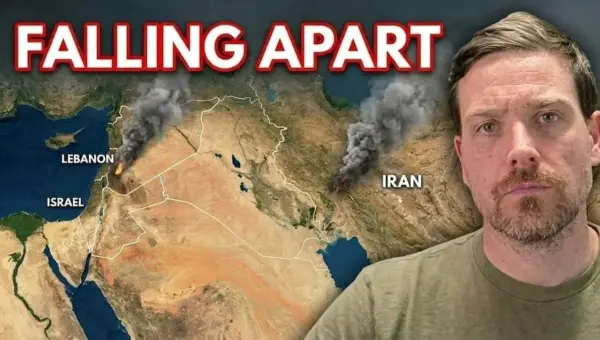
Iran Talks Crumble: Ceasefire Unravels Amidst Standoff
Talks between the U.S. and Iran are on the brink of collapse as preconditions remain unmet and fighting continues. Iran is demanding the release of blocked assets and a full ceasefire before negotiations can begin, while both sides appear to be preparing for renewed hostilities rather than de-escalation.


Ukraine Strikes Deep: Russia’s War Machine Falters
Ukraine's strategic strikes deep within Russia are crippling its war machine, leading to a 93% drop in Russian territorial gains over two months. Economic strain, infrastructure decay, and technological innovation by Ukraine are placing immense pressure on the Putin regime.