UK Sofas Among World’s Most Toxic: Report Reveals Hidden Dangers
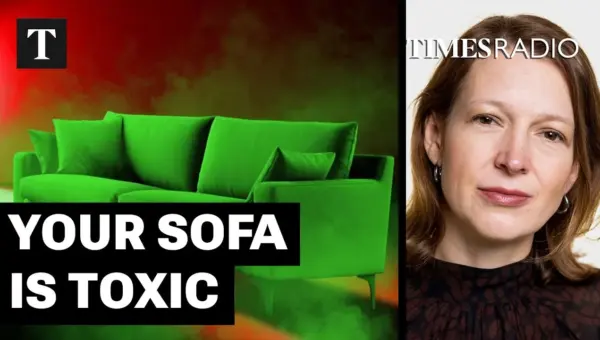
New research reveals that UK sofas are among the most toxic globally due to stringent fire safety regulations mandating the use of harmful flame-retardant chemicals. These chemicals have been linked to serious health issues, including cancer and infertility. While regulatory changes are now being considered, the legacy of these toxic substances in homes will persist for decades.


UK Sofas Among World’s Most Toxic: Report Reveals Hidden Dangers
In a revelation that could shake the comfort of homes across Britain, a comprehensive investigation has uncovered that sofas in the UK may be among the most toxic in the world. This alarming finding stems from decades-old fire safety regulations that, while intended to save lives, have led to the widespread use of potentially harmful flame-retardant chemicals in furniture. The investigation, spearheaded by The Sunday Times, highlights how these chemicals can migrate from furniture into household dust and, subsequently, into our bodies, with links to serious health issues.
A Legacy of Fire Safety and Unforeseen Consequences
The current regulations trace back to a tragic fire at a Woolworth’s store in Manchester in 1979, which claimed the lives of 10 people. In response, the government introduced stringent fire safety standards in 1988. These tests were so demanding that manufacturers found it almost impossible to comply without using significant amounts of flame-retardant chemicals, often embedded in both the foam and fabric of furniture. While the intention was to enhance home safety, the long-term effect has been the proliferation of chemicals now suspected of causing harm.
“Some of these chemicals have been shown to be toxic to humans and animals. And we have indeed in Britain the most toxic sofas in the world.”
The Invisible Threat in Our Living Rooms
Senior reporter Martina Lee spent over two years investigating the issue, consulting scientific papers and experts to present a clear, evidence-based picture. Her research points to flame retardants as the primary concern. These man-made chemicals are designed to slow down ignition, providing crucial extra minutes in a fire. However, they do not remain contained within the furniture. Instead, they break down and release into the air, settling in household dust. This dust is then easily ingested, particularly by young children, who spend more time on the floor and tend to put objects in their mouths.
Health Concerns Linked to Flame Retardants
A growing body of scientific research has linked various types of flame-retardant chemicals to a range of health problems. These include infertility, developmental issues in children such as reduced IQ and attention deficits, and even an increased risk of certain cancers. Most recently, the World Health Organization declared Tris(1-chloro-2-propyl) phosphate (TCP), a chemical commonly found in British sofas and making up as much as 20% of the foam’s volume, as a probable human carcinogen.
Other documented health concerns associated with these chemicals include immune system problems, damage to the cornea and kidneys, and neurological issues. They can also disrupt endocrine functions, affecting sex and thyroid hormones, which may contribute to weight problems, depression, and anxiety. The pervasive nature of these chemicals means that individuals are exposed not only through direct contact with furniture but also through the air and dust in their homes.
Why Britain Stands Alone
The uniquely high levels of flame retardants in British furniture are a direct consequence of the stringent fire safety tests. Unlike many other countries, including those in Europe and North America, the UK’s tests involve exposing furniture to open flames, mimicking a more severe fire scenario. This makes it significantly more challenging to pass the tests without heavy chemical treatment.
In contrast, European standards often rely on a smolder test, using a cigarette as the ignition source. This less intense test is easier to pass with less or no chemical intervention. Experts suggest that the UK’s rigorous testing regime does not necessarily translate to greater fire safety. Fire death rates in the UK have declined at a similar pace to countries with less stringent regulations, offering no conclusive evidence that the high use of flame retardants has saved lives. Furthermore, some research indicates that these chemicals can actually make smoke more toxic, potentially leading to quicker incapacitation in a fire.
Pioneering Change: From Lawyer to Activist
The investigation highlights the crucial role of individuals in driving change. Dorith Fersonulk, a former lawyer who retrained as an upholsterer, was astonished by the amount of research on flame retardants during her studies. After reading a report detailing the health and environmental risks, she became a vocal advocate for reform. Working with scientists, she published research, served on standards committees, and led a petition signed by 6,000 upholsterers, pushing the government to revise the regulations.
Similarly, Dr. Arlene Blum, an environmental health scientist, has a long history of challenging the use of flame retardants. In the 1970s, she co-authored a paper linking a chemical used in children’s pajamas to cancer, leading to its ban in the US. Decades later, she identified the same chemical in American sofas due to similar fire safety regulations. Her efforts led to California changing its rules in 2013, a move that influenced regulations across the US and Canada. Now, she is supporting efforts in the UK.
IKEA’s Stance and Testing Procedures
Even major furniture retailers like IKEA are affected by these regulations. The company produces different sofas for the UK and Ireland, incorporating flame retardants to meet local standards, while offering chemically treated versions for the rest of the world. IKEA’s willingness to allow a journalist rare access to its test labs in Sweden underscored its concern about the use of these chemicals.
During the visit, IKEA demonstrated how its sofas are tested for fire safety. The UK’s stringent tests involve applying an open flame to mini-sofas for several minutes and, in the case of foam, simulating a small bonfire. The furniture must self-extinguish or meet strict weight loss criteria. This contrasts sharply with the European smolder test, which uses a cigarette and is much easier to pass without heavy chemical treatment.
Government Action and What Consumers Can Do
While the government has acknowledged the toxicity concerns—evidenced by a 2023 ruling that bans sofas containing certain chemicals from landfills and requires them to be incinerated—regulatory changes have been slow. The government has now indicated plans to update its fire safety testing rules to align with European and American standards, a move that could significantly reduce the reliance on harmful flame retardants. However, these changes have not yet been implemented.
In the meantime, consumers face difficult choices. Replacing a sofa is a significant expense, and sofas without flame retardants are currently very costly. For those needing to purchase new furniture, experts recommend looking for sofas with leather or wool covers, which can often pass fire tests without direct chemical treatment. It is also advisable to choose furniture with extra layers beneath the textile and to avoid fabrics marketed as inherently flame retardant, as these are treated directly against the skin.
The Road Ahead
Despite the slow pace of regulatory change, there is growing momentum. Advocates like Dorith Fersonulk are hopeful that the recent government announcement signals a turning point. While not yet celebrating, the possibility of reform offers a glimmer of hope. The ongoing government consultation provides an opportunity for the public to voice their concerns. As the UK moves towards potentially safer furniture standards, the long-term health and environmental implications of past practices will continue to be a critical area of focus.
Source: Is Your Furniture Making You Sick? (YouTube)

Related Articles

UK Sofas Linked to Cancer, Health Risks: New Rules Coming
A two-year investigation reveals that most UK sofas contain toxic flame retardant chemicals, linked to cancer and other health issues. The government is now planning to scrap outdated fire safety rules that led to this widespread chemical use.


Health Officials Brace for Trump’s Nuclear Fallout
World Health Organization officials are updating training for nuclear fallout scenarios, signaling serious concerns about potential conflict escalation under Donald Trump. The use of the word 'eventually' suggests a perceived high probability of a nuclear incident, highlighting grave geopolitical risks.


Peptides: The Risky Trend You Need to Know
Peptides, often sold with a 'research use only' label, pose significant health risks due to lack of regulation and potential contamination. Learn why these substances are dangerous and the importance of consulting a doctor.