Eviction Notice Turns Deadly: A Deputy’s Sacrifice
A sheriff's deputy was killed serving an eviction notice in California, highlighting law enforcement dangers. Meanwhile, a massive $267 million hospice fraud scheme involving stolen identities and shell companies was uncovered.


Tragedy Strikes in Porterville: Deputy Killed Serving Eviction
A sheriff’s deputy lost his life while on duty in Central California. The incident occurred yesterday as deputies went to serve an eviction notice at a home in Porterville. Authorities report that a gunman opened fire on the officers as they arrived at the scene.
Deputy Randy Hoppert was part of the team responding to the initial shooting. Sadly, he later died from his injuries at a hospital. The suspect has been identified as 59-year-old David Morales. According to Sheriff Bordro, Morales was expecting law enforcement and prepared an ambush.
The confrontation lasted for hours. It ended tragically when Morales was run over and killed by a SWAT vehicle driven by deputies. Sheriff Bordro issued a strong warning after the event. He stated, “Don’t shoot at cops. You shoot at cops, we’re going to run you over.” This stark statement highlights the dangerous risks law enforcement officers face daily.
Governor Honors Fallen Deputy
California Governor Gavin Newsom released a statement remembering Deputy Hoppert. He praised the deputy’s selflessness, bravery, and dedication to protecting others. Governor Newsom called his actions a lasting example of honor and duty.
Massive Hospice Fraud Scheme Uncovered
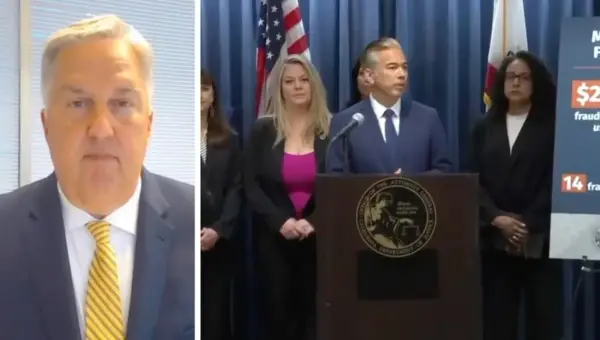
In a separate development, California’s Attorney General announced charges against more than 20 suspects. They are accused in a massive hospice fraud scheme worth $267 million. Fourteen companies were reportedly involved in this elaborate plot.
Investigators found that those running the scheme bought personal information of people living outside California. They purchased this data on the dark web. Then, they used this stolen information to enroll these individuals in Covered California, pretending they were California residents. This allowed them to file fraudulent claims.
The scheme involved people acting as straw owners. These individuals bought several hospice companies. They then billed Medicare for services that were never provided. Fake records, nonexistent offices, and false diagnoses were used to support these fraudulent claims. The people whose identities were stolen were healthy, lived out of state, and had no idea they were listed as hospice patients.
How the Fraud Worked
Once Medicare paid the claims, the money was moved through a complicated system. Over 130 shell companies were used to hide the funds. The money was then spread across various bank accounts, payment apps, and cryptocurrency to avoid detection by authorities. This complex financial web made tracing the money extremely difficult.
Operation Skip Trace Nets Arrests and Seizures
So far, five suspects have been arrested in connection with this fraud. The operation, named “Operation Skip Trace,” also led to the seizure of two handguns and over $750,000 in cash. This bust follows other major healthcare fraud cases announced recently by the Justice Department.
Broader Trend of Healthcare Fraud
Last week, the Justice Department revealed similar schemes, also in California. Those fraudulent activities alone amounted to $50 million. This suggests a larger, ongoing problem of healthcare fraud costing taxpayers billions. The methods used, like identity theft and billing for fake services, are common tactics in these crimes.
Why This Matters
The tragic death of Deputy Hoppert underscores the extreme dangers faced by law enforcement officers, particularly when serving difficult civil orders like evictions. It raises questions about the safety protocols and the potential for escalation in such situations. The sheriff’s blunt warning reflects the frustration and the high stakes involved.
The hospice fraud scheme, on the other hand, highlights a different kind of threat. It shows how criminals exploit vulnerable systems and personal data for immense financial gain. Stealing identities and defrauding government programs like Medicare not only costs taxpayers billions but also erodes trust in essential services. The scale of this particular fraud, $267 million, is staggering and points to sophisticated criminal operations.
Looking Ahead
These events, though different in nature, both touch upon issues of public safety and systemic vulnerabilities. The violence against law enforcement serves as a grim reminder of the societal challenges that persist. Meanwhile, the extensive fraud uncovered points to the need for stronger regulations and more vigilant oversight in healthcare and financial systems.
As technology advances, so do the methods used by criminals. The use of the dark web, shell companies, and cryptocurrency in the fraud case shows how quickly illegal activities can adapt. Authorities will need to continue evolving their investigative techniques to keep pace. The fight against both violent crime and financial crime requires constant vigilance and adaptation from law enforcement and government agencies alike.
Source: Sheriff’s Deputy Killed in Central California While Serving Eviction Notice (YouTube)

Related Articles

California Unmasks $260M Hospice Fraud, Exposing Systemic Flaws
California has busted a $267 million hospice fraud ring, exposing a complex scheme that billed for non-existent patients. This major bust highlights systemic oversight issues and the need for better state-federal cooperation in fighting healthcare fraud.


California Loses $180 Billion to Fraud Under Newsom
California has reportedly lost $180 billion to fraud under Governor Newsom, with critics pointing to issues in hospice care and unemployment benefits. The state faces scrutiny over its economic policies, including high taxes and regulations, while other states report surpluses.


California Hospice Fraud Ring Stole $267M
A massive $267 million Medicare fraud scheme has been uncovered in California, leading to the arrest of 21 individuals. Criminals allegedly used stolen identities from the dark web to purchase and operate 14 hospice companies, billing for services that were never provided. Authorities seized millions in cash and assets during recent raids.