Iranians Face Dilemma: “Human Shields” Amidst Peace Talks
Iranian citizens are reportedly being ordered to serve as "human shields" around critical infrastructure as the U.S. prepares for high-stakes peace talks. Journalist Alina Shirazi highlighted the lack of clear safety guidance for ordinary Iranians, who feel caught between potential military strikes and government directives. The situation unfolds as top U.S. officials head to negotiations aimed at de-escalating tensions.

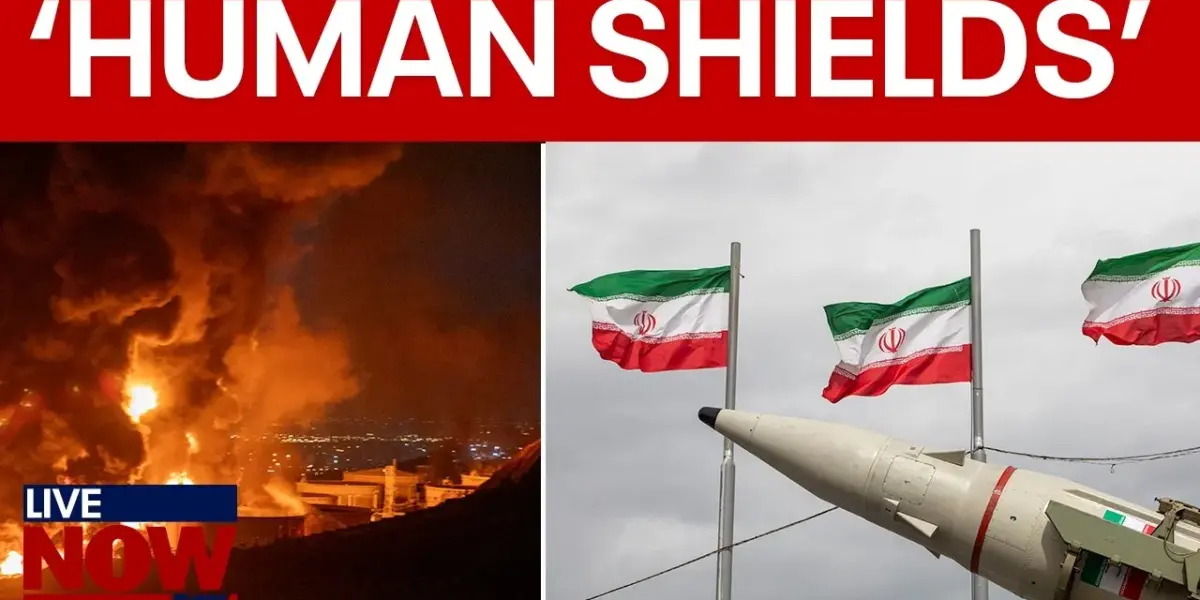
Iran Orders Citizens to Act as “Human Shields” as US Peace Talks Loom
In a deeply concerning development, the Iranian government has reportedly ordered its citizens to act as “human shields” around critical infrastructure sites. This directive comes as the United States prepares for high-level peace talks with Iran, creating a perilous situation for ordinary Iranians caught between escalating tensions and diplomatic efforts.
Alina Shirazi, a senior political correspondent for the Daily Mail, shared harrowing accounts from Iran during a recent White House press briefing. Shirazi described how Iranians are messaging her, desperate for guidance on how to stay safe amidst threats of military action. Many are saying goodbye to loved ones, unsure of what the future holds.
A Journalist’s Plea for Clarity
Shirazi, attending her first White House briefing as part of the Daily Mail team, felt the immense weight of responsibility. She knew that many Iranians were looking to her for answers. “I think Caroline almost knew how badly I needed to get that question answered,” Shirazi stated, referring to White House spokeswoman Karine Jean-Pierre. Shirazi aggressively sought to ask what message should be sent to Iranians who are asking for safety advice.
The question arose after President Trump had previously stated he would “wipe out their civilization” if leaders did not negotiate. Shirazi recounted her efforts to get the question answered, noting that Jean-Pierre seemed taken aback by the human element she brought to the briefing room. Jean-Pierre responded by emphasizing President Trump’s priority to neutralize threats and her hope for Iran to become a country of peace, mentioning ongoing negotiations for long-term stability in the Middle East.
Conflicting Messages and Real-World Fears
However, Shirazi pointed out a significant contradiction in the messaging. She questioned how Iranians should respond when they are told to “stay inside of their homes” on one hand, and to “take back their country” on the other. This lack of clear guidance leaves ordinary citizens in a state of extreme anxiety.
“Iranians are asking what to do to survive,” Shirazi explained. “They’re not asking, you know, questions that might not impact them immediately.” She felt the answers provided by the White House, focusing on negotiations and messaging, did not adequately address the immediate survival concerns of the Iranian people. Shirazi expressed personal worry for her own family and friends in Iran, making the assignment particularly high-stakes for her.
The “Human Shield” Strategy
Shirazi elaborated on the disturbing “human shield” tactic. She reported that the Iranian government was literally instructing people to form human chains around vital locations like power plants and bridges. These were precisely the sites President Trump had threatened to strike. The government framed this as a “moral order,” suggesting that dying in this capacity would be dying for their country.
“We had seen that on the news and I’d spoken to people in Iran and they were telling me the same thing,” Shirazi confirmed. Some government supporters reportedly heeded this call. Meanwhile, other Iranians were frantically evacuating major cities, heading to the countryside and sending goodbye messages to loved ones. Many felt compelled to delete personal messages from their phones, fearing government surveillance.
The situation was described by Shirazi as feeling “apocalyptic,” with people feeling “stuck between a rock and a hard place.” They face the dual threats of potential U.S. strikes and the actions of their own government.
High-Stakes Peace Talks Ahead
This weekend marks a critical juncture with high-level peace talks scheduled. The U.S. delegation includes Vice President JD Vance, Middle East envoy Steve Wickoff, and Jared Kushner. These are the most significant direct negotiations with Iran since 1979.
Iran’s delegation will be led by Mohammad Ghalibaf, the speaker of Iran’s parliament. Ghalibaf is known as a hardliner, with a reputation for brutality; some Iranians reportedly call him the “rooftop killer” for his alleged role in suppressing student protests. The primary U.S. objective will be to push Iran to hand over its enriched uranium.
Details of proposed plans, including a 15-point plan mentioned by Jean-Pierre, remain somewhat confusing. Iran, in return, is demanding the full withdrawal of U.S. troops from the Middle East and control over the Strait of Hormuz. A Saturday morning deadline looms, after which a two-week truce will expire. This diplomatic effort is being viewed as a major test of President Trump’s transactional diplomacy.
What’s Next?
The upcoming peace talks are fraught with tension and uncertainty. The effectiveness of these negotiations, especially given the conflicting messages and the dire situation on the ground for Iranian citizens, will be closely watched. The world waits to see if a path to de-escalation and stability can be found in the Middle East.
Source: Iranians told to be 'human shields' amid strikes (YouTube)

Related Articles

Iran’s Strait of Hormuz Blockade Shifts Global Oil Power
Iran's control over the Strait of Hormuz, a vital global oil route, is shifting economic power dynamics. As former President Trump declared a U.S. naval blockade, experts highlight Iran's effective use of this physical choke point, challenging U.S. financial leverage and potentially forcing negotiations under duress.

US Tightens Grip, Eyes Regime Change in Iran
John Bolton argues that the recent ceasefire with Iran was a mistake and advocates for a renewed military strategy. His proposal includes reopening the Strait of Hormuz and maintaining a blockade on Iranian oil to pressure the regime, with the ultimate goal of regime change.
Beirut Reels From Attacks Amidst Fragile Peace Talks
Beirut is in shock after devastating Israeli attacks killed over 350 people in a single day, marking the city's deadliest event in decades. Amidst widespread grief and a call for a ceasefire, Lebanon is preparing for unprecedented direct talks with Israel, a move met with mixed reactions and internal protests.