Middle East Ceasefire Sparks Global Market Rally, NATO Tensions Simmer
A fragile Middle East ceasefire has sparked a global market rally, but disputes over the Strait of Hormuz and air strikes on Lebanon cast doubt on its durability. Meanwhile, NATO tensions simmer as President Trump questions the alliance's effectiveness, and a major breakthrough occurs in the Gilgo Beach serial killer case with Rex Heuermann's confession and agreement to cooperate with the FBI.

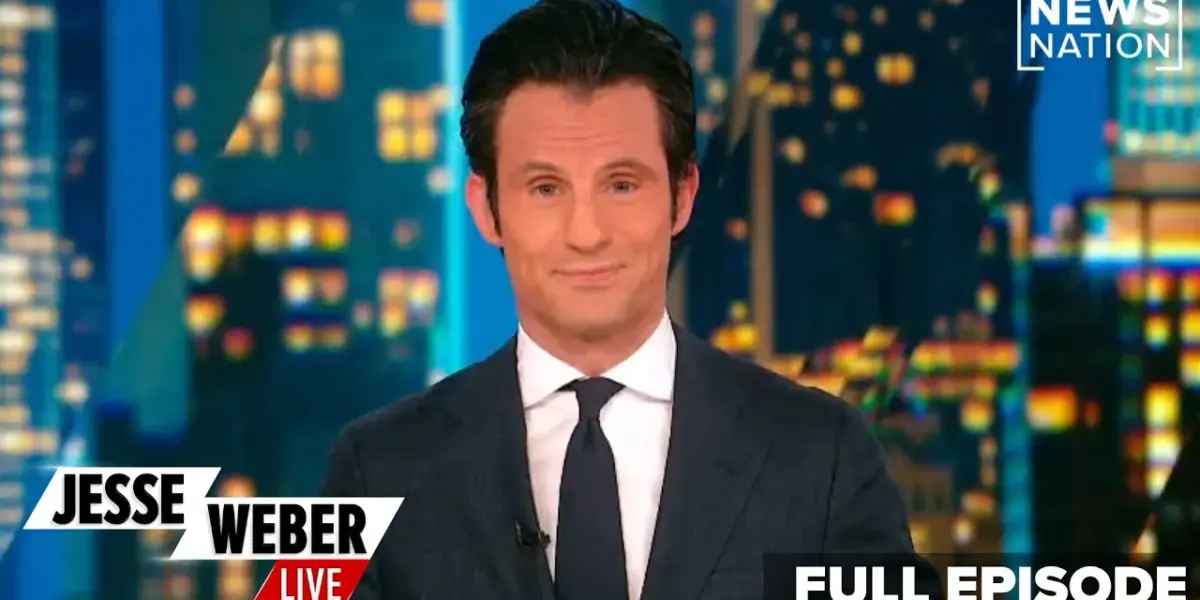
Middle East Ceasefire Sparks Global Market Rally, NATO Tensions Simmer
The world held its breath as a fragile ceasefire in the Middle East took effect, bringing a much-needed pause to conflict. However, confusion and conflicting reports quickly emerged regarding the status of a crucial waterway, the Strait of Hormuz, and the scope of the agreement. This delicate peace, brokered amidst ongoing hostilities and differing interpretations, has significant implications for global stability and economic markets.
Ceasefire Disputes Emerge
The one-day-old ceasefire in the Middle East faced immediate challenges. While the agreement was reportedly contingent on the Strait of Hormuz remaining fully open, uncertainty clouded its actual status. Missiles continued to fly across the region, and contradictory statements arose about whether air strikes on Lebanon were included in the deal. President Trump and Israeli Prime Minister Netanyahu stated that Lebanon was not part of the ceasefire. In contrast, Iran’s Foreign Minister insisted the terms were clear and that the United States had to choose between a ceasefire and continued war through Israel.
The Pentagon, in a briefing, confirmed that nearly 80% of Iran’s nuclear industrial base was targeted during what was called “Operation Epic Fury.” This operation aimed to degrade Iran’s ability to develop nuclear weapons and project power in the region. Despite the reported ceasefire, missile attacks were observed in Bahrain, the United Arab Emirates, and Kuwait, attributed to Iran. Simultaneously, Israeli forces conducted strikes in Lebanon, targeting a Hezbollah operative in Beirut.
Strait of Hormuz: A Crucial Chokepoint
A key point of contention was Iran’s commitment to opening the Strait of Hormuz. After initially allowing some ships through, Iran claimed to have halted traffic due to Israeli attacks on Lebanon. However, White House Press Secretary Caroline Levitt stated that President Trump was privately informed the Strait had reopened, calling closure reports false. This uncertainty over a vital oil shipping route added to the global unease.
Economic Relief and Market Reaction
The news of the ceasefire provided immediate economic relief. Oil prices plummeted, with the U.S. crude benchmark settling below $95 a barrel, marking the largest single-day drop since 2020. Despite this significant fall, prices remained higher than the pre-war level of $67 per barrel. Global stock markets rallied strongly. The Dow Jones Industrial Average surged over 1300 points, the Nasdaq gained significantly, and the S&P 500 also saw substantial increases. This worldwide rally reflected investor optimism about a de-escalation in the Middle East.
US Diplomatic Efforts and Internal Divisions
In Washington, administration officials, including White House Press Secretary Caroline Levitt and Vice President J.D. Vance, described the ceasefire as a victory. Vance, who is set to lead upcoming negotiations, expressed optimism about reaching an agreement, despite acknowledging the U.S. has pursued similar paths before, which previously led to prolonged U.S. military action against Iran. The U.S. delegation, including Jared Kushner and Special Envoy Steve Witkoff, was scheduled to travel to Pakistan for peace talks. However, the effectiveness of these talks remained uncertain given Iran’s stance on the ceasefire and the Strait of Hormuz.
NATO’s Tested Alliance
Amidst the Middle East developments, tensions within the NATO alliance were also highlighted. President Trump had previously stated that NATO was tested and failed. Following a meeting with NATO Secretary General Jens Stoltenberg, the administration offered little public clarity on the discussions. Stoltenberg described the conversation as “frank,” and later complimented President Trump in interviews. However, Trump used Truth Social to reiterate his view that NATO was not sufficiently helpful, also mentioning Greenland in his post. This suggests that potential U.S. withdrawal from NATO or other significant shifts in its commitment remain possibilities.
Internal Dissent in Iran
The discussion also turned to the internal situation in Iran. Before the recent conflict, the Iranian government faced widespread protests against its repressive policies, with estimates suggesting thousands were killed during crackdowns. While these protests largely quieted during the war, President Trump called for the Iranian people to rise up again if a ceasefire held, acknowledging the risks involved. Alireza Jafarzadeh, representing the U.S. office of the National Council of Resistance of Iran, stated that the Iranian people have long desired regime change, citing large-scale uprisings since 2017. He noted that the Iranian opposition, including the MEK (Mujahedin-e Khalq), has been actively confronting the Revolutionary Guards. Jafarzadeh urged the U.S. to recognize the right of the Iranian people to overthrow their government and to support the organized resistance, suggesting past international appeasement of the regime had been a mistake.
Journalist Released from Iraq
In a separate development, American journalist Shelly Kittleson, who had been held hostage in Iraq for two weeks, was released. She was abducted by the Iran-backed militia Kata’ib Hezbollah in Baghdad on March 31st. The group agreed to her release on the condition that she leave Iraq immediately. Kiran Nazish, founding director of the Coalition for Women in Journalism, confirmed Kittleson’s safety and highlighted the real threats journalists face in conflict zones. She also noted the coordination between Iraqi and U.S. officials, and the reported involvement of U.S. special envoy Tom Barrack in the negotiations, in securing Kittleson’s release. This incident underscores the dangers faced by journalists reporting from volatile regions.
Gilgo Beach Serial Killer Confesses
In a significant domestic development, Rex Heuermann confessed to being the Gilgo Beach serial killer. He admitted to strangling and dismembering eight women over a 17-year period, primarily sex workers, between the early 1990s and 2010. Heuermann pleaded guilty to killing seven women and admitted to an eighth victim not previously charged. In a surprising turn, he agreed to cooperate with the FBI’s behavioral analysis unit. Forensic psychologist Katherine Ramsland suggested Heuermann’s cooperation might stem from a desire for attention and control, while acknowledging the potential for him to manipulate the narrative. Law enforcement hopes to gain insights into his methods and potentially resolve other cold cases. Investigators seized over 350 electronic devices from his properties, which may contain further crucial information about his crimes. The victims’ families and Heuermann’s own family were present in court, facing the grim reality of his confessions.
Global Impact
The events surrounding the Middle East ceasefire demonstrate the interconnectedness of global affairs. A fragile peace deal, even with its ambiguities, can trigger significant shifts in financial markets, impacting economies worldwide. The disputes over the Strait of Hormuz highlight the strategic importance of energy routes and the potential for regional conflicts to disrupt global supply chains. Furthermore, the ongoing discussions about NATO’s role and the internal situation in Iran point to broader geopolitical realignments. The U.S. seeks to stabilize the Middle East while managing relationships with allies and adversaries, all while domestic issues, like the Gilgo Beach case, capture national attention. The release of journalist Shelly Kittleson also brings attention to the perilous conditions faced by reporters in conflict zones and the complex diplomatic efforts required for their safety.
Source: Journalist Shelly Kittleson is out of Iraq & Gilgo Beach will work with FBI | JWL Full Show 4/8 (YouTube)

Related Articles
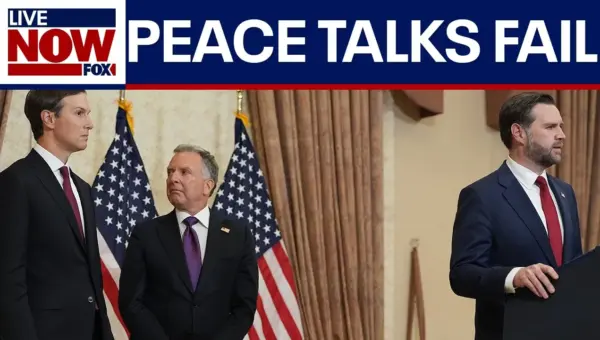
US-Iran Nuclear Talks Collapse; Ceasefire Remains Fragile
U.S. and Iran ceasefire talks in Pakistan have ended without an agreement after 21 hours, with both sides blaming each other. Key sticking points included Iran's nuclear program and its refusal to accept American terms. The fragile two-week ceasefire remains in place, but regional tensions are high.
US-Iran Peace Talks Collapse Amid Nuclear Standoff
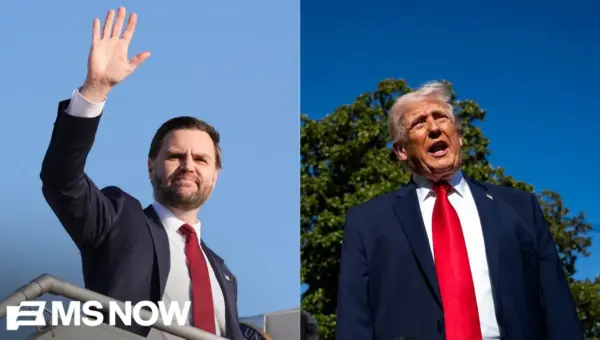
High-level peace talks between the United States and Iran have collapsed, with Vice President J.D. Vance announcing no agreement was reached after 21 hours of discussions. The primary sticking point was Iran's nuclear ambitions, with the U.S. seeking a clear commitment against developing nuclear weapons. Despite the failure, the historic nature of the meeting and the continuation of a fragile ceasefire offer a sliver of hope for future diplomacy.
US-Iran Nuclear Talks Collapse, Raising Regional Tensions
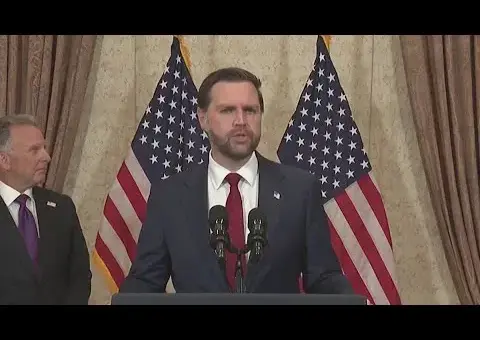
High-level U.S.-Iran nuclear talks have collapsed due to significant differences on key issues, leaving diplomatic channels strained. Both sides remain prepared for military action, while the security of the Strait of Hormuz remains a critical concern for global energy markets.