California Loses $180B to Fraud, Officials Accused of Lax Oversight
California is reportedly facing $180 billion in losses due to fraud and abuse, with allegations of lax enforcement by state officials. The scale of the problem, particularly in healthcare and home services programs, has drawn criticism and fueled public concern over government spending. Experts believe the pandemic significantly worsened the situation by increasing the amount of money in circulation without adequate oversight.


California Faces Massive Fraud Losses Amid Accusations of Weak Enforcement
California has reportedly lost an estimated $180 billion to fraud and abuse, with critics pointing fingers at state officials for what they describe as a failure to prosecute offenders. A recent report alleges that the state’s Attorney General’s office has been slow to act against fraudulent institutions, particularly in the healthcare sector. This inaction has allowed scams, especially involving hospice care and home services, to flourish, costing taxpayers billions annually.
Hospice Care Fraud Exposed
In Los Angeles alone, hundreds of hospice facilities were identified as having numerous red flags indicating fraudulent operations. Despite thousands of individuals potentially involved in these schemes, only a handful have reportedly been arrested. This contrasts sharply with efforts under the Trump administration, where a former appointee oversaw the shutdown of 200 fraudulent hospices in the same area. California is responsible for licensing many of these institutions, including child care and adult care facilities, which are central to the fraud schemes receiving significant federal funding.
Home Services Program Under Scrutiny
The issue extends to the state’s Home Services program, a $30 billion-a-year initiative. One estimate suggests that taxpayers are losing up to $12 billion annually to scams within this program. Official responses from the Governor’s office have been criticized as dismissive, with claims of visiting care recipients to ensure needs are met being labeled as “hogwash.” The scale of alleged fraud is immense, with indictments revealing sums like $267 million, though the total losses are believed to be in the billions.
Pandemic Exacerbated Fraud Landscape
Experts suggest that while fraud has always existed in government programs, the COVID-19 pandemic significantly amplified the problem. The rapid distribution of trillions of dollars in pandemic relief created an environment where oversight was challenging. The sheer volume of money flowing through the system made it difficult to track every dollar, leaving opportunities for fraudulent actors to exploit the situation. This period exposed weaknesses in how government funds are managed and protected.
Public Dissatisfaction with Government Spending Grows
A growing number of Americans are expressing frustration with wasteful government spending. A recent poll indicates that 53% of Americans believe a great deal of government money is wasted, an increase from 44% in March. This sentiment is fueled by revelations of mismanagement and fraud, particularly highlighted during the pandemic. Many feel that government is inefficient in its spending, and that these funds are often taken directly from their own pockets.
Shifting Workforce Dynamics
Amidst concerns about spending, there are signs of a shift in government employment. The number of government workers has reportedly decreased, while private sector employment has risen. This trend could potentially lead to cost savings for taxpayers, as fewer individuals are on government payrolls. However, any proposed cuts to government spending are often met with resistance due to the numerous vested interests involved.
Market Impact and Investor Considerations
The scale of alleged fraud in California raises concerns about the efficiency and accountability of state and federal programs. For investors, this highlights the importance of understanding the regulatory environment and the potential for financial impropriety to impact government contracts and public funds. Sectors heavily reliant on government funding, such as healthcare and social services, may face increased scrutiny and potential reforms. The growing public demand for fiscal responsibility could also influence future government spending priorities and oversight measures. While the direct impact on specific stock prices is difficult to predict, a general increase in regulatory risk and a focus on efficient spending could favor companies with strong governance and transparent operations. Investors should remain aware of how these issues might affect the broader economic landscape and the allocation of public resources.
“The pandemic put that fraud on steroids. Trillions of dollars, $5.5 trillion were spent during the pandemic on all kinds of programs, and there is no way anyone could follow the money there.”
Source: ‘FRAUD MAGNET’: California has lost $180B to fraud under Newsom, report alleges (YouTube)

Related Articles


DOJ Cracks Down on $1 Trillion Fraud Spree
The Justice Department is intensifying its efforts to combat fraud in government programs, targeting an estimated $1 trillion in misused funds. Recent cases highlight significant losses in areas like insurance and Medicaid, fueling public anger over wasteful spending. This crackdown signals a push for greater fiscal accountability.


California Busts $267M Hospice Fraud Ring
California Attorney General Rob Bonta announced Operation Skip Trace, a massive investigation that uncovered a $267 million hospice fraud scheme. The operation led to felony charges against 21 suspects and the arrest of five individuals so far. This bust highlights California's ongoing efforts to combat healthcare fraud and protect taxpayer dollars.

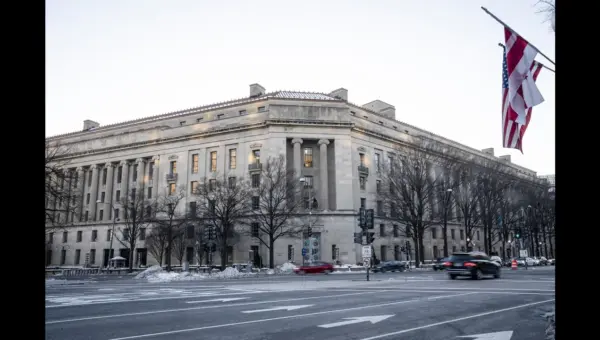
DOJ Declares War on Fraudsters Stealing Billions
The Justice Department has launched its most aggressive anti-fraud crackdown in U.S. history, aiming to recover billions stolen by criminals. A new national division and 93 additional prosecutors will target increasingly sophisticated schemes, with early actions already recovering over half a billion dollars.